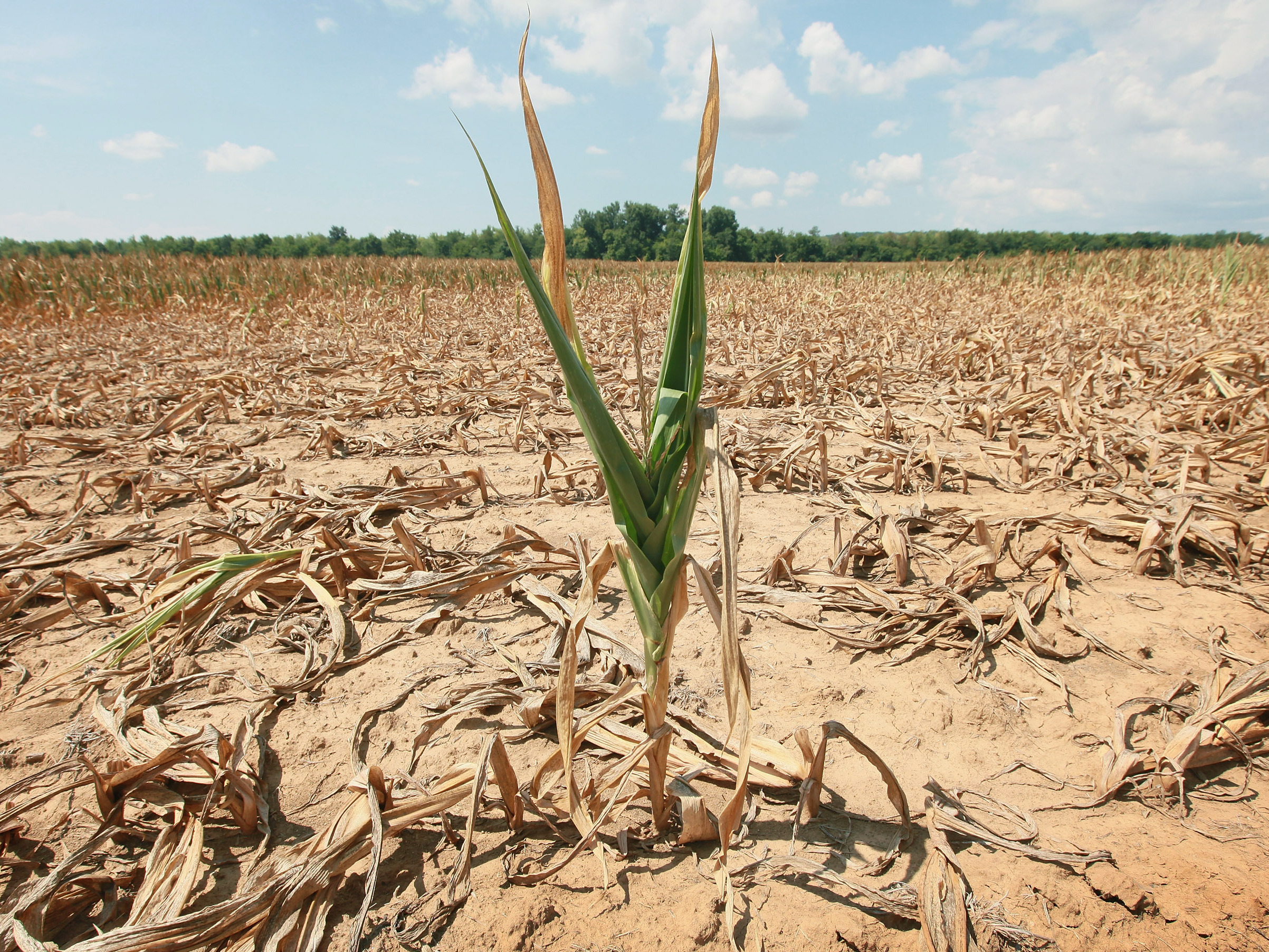
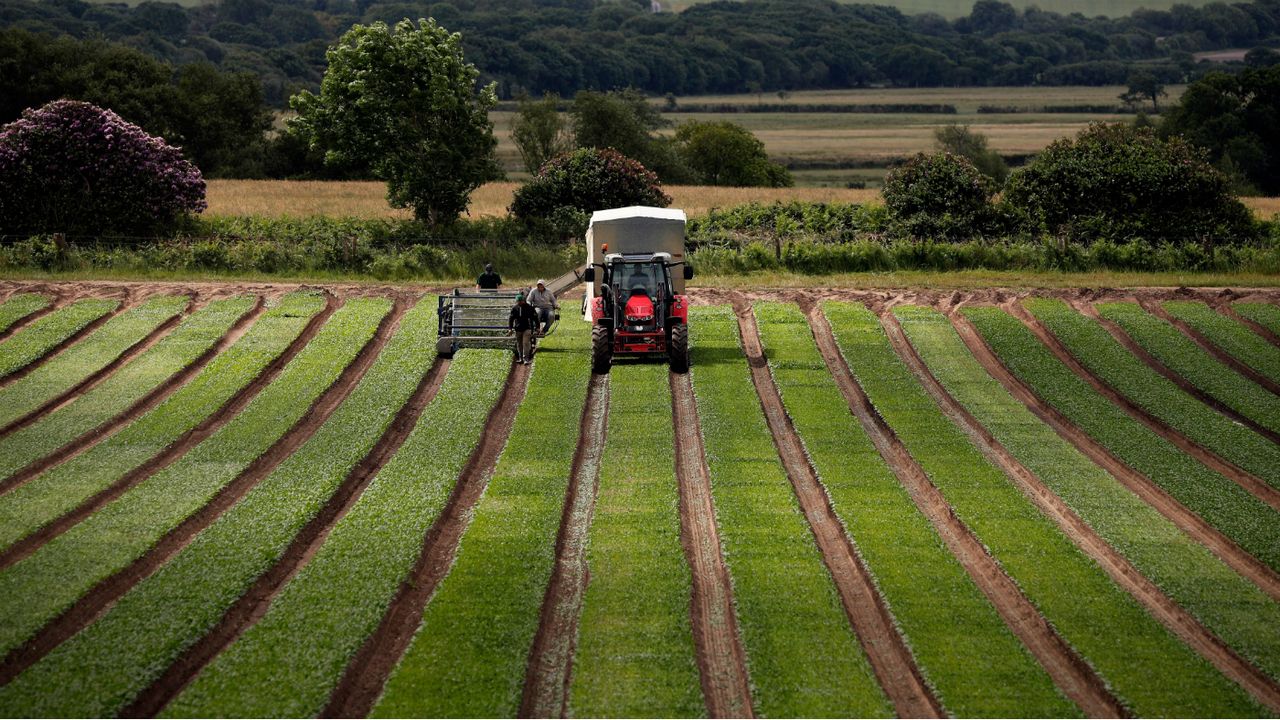
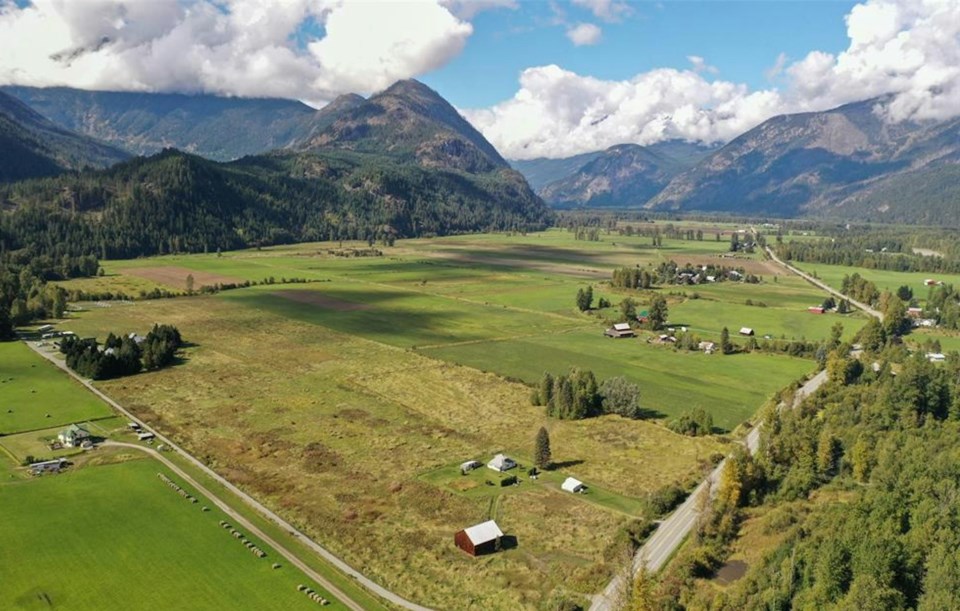
Despite the huge risk of growing a crop each year, only a fraction of farmers take out appropriate insurance.
The multi-peril crop insurance cover is very young and a handful of companies offer it.
Some companies have made big payouts for failed crops, which is unsustainable unless more farmers come on board to spread the risks across the regions.
Jay Horton, an agribusiness consultant with Strategis Partners is studying crop insurance as a Research Fellow at the Business School of the University of Sydney.
He said given the failure of many farmers to take up the insurance, in 2015 — it was 1 per cent — there needed to be a new approach to spread the risk.
"Australia is one of the riskiest agricultural country in the world in terms of agricultural production; second to Uruguay.
"We have to be very good at risk management in all of its forms and we could do better.
"We should understand that farm production risk is not just the farmer's problem, it's a supply chain problem, a systemic problem.
"If the farmers don't do well, the input suppliers don't do well, the buyers of grain and livestock also don't do well."
Jay Horton said supply chain partners to the farm enterprise needed to become involved.
"What if the input suppliers were to say to the farmer customers 'No need to pay in full for the seed we supplied you this year.'
"Or the buyers of crops could say, 'You weren't able to supply the target volume, we will give you an income to cover this year's costs anyway!'"
He said banks could waive interest on a loan, and farmland owners leasing land to young farmers could reduce rent for a year.
That would be backed up with an insurance policy and risk management and is then simply another service that is offered.
Mr Horton said the emergence of big data, from weather stations, markets and on-farm operations, about prices, soil fertility and moisture, would help to provide objective information.
"Insurance reduces the likelihood that the company will have to raise costly external capital at the wrong time."
Index insurance
Only a hand full of companies in Australia are offering multi-peril crop insurance (MPCI), but even fewer offer the alternative, index insurance.
MPCI has to be taken out at the beginning of the season, at the point of sowing the crop, and will cover the loss of revenue or yield from a poor season.
By contrast, index insurance is taken out later, and for single events that a grower fears will downgrade the quality or yield.
Jonathan Barratt set up the index insurer Celsius Pro that has grown steadily and has written $330 million worth of cover this past year.
Index insurance covers for triggers; rainfall, temperature, flood which can be verified by the weather bureau data.
The Bureau of Meteorology (BOM) has produced a new service that provides objective confirmation of a weather event, heavy rain or hot days, by interpolative data, after developing a 5km scale grid across Australia.
"This year we had payouts after big deluges of rain in north-west NSW, " Mr Barratt said.
"Those same growers decided not to take wet harvest cover, but had cover for a deluge.
"The BOM came in and said 'Hey, it's going to be very wet'.
He said the smart farmer took up rain cover and was paid out.
"Then we had even smarter farmers, particularly with chickpeas, who said 'It cost me $500 to put in, the price is currently $1000'."
They calculated that if there was a deluge they would lose the whole crop.
"So they took our wet harvest cover, because they realised, 'I'm not going to lose $1000 per tonne just because it rains".
Mr Barratt said MPCI needed to be modified because there was a lack of continuity of product, and a limited number of underwriters willing to take the risk after big payouts several years in a row.
"Index insurance has any number of five up to 10 underwriters. Each one vies for the business and we can shop around for the best one for the grower.
"That spreads the risk among reinsurers and it's fast.
"If it rains, and the BOM says it rains, the grower gets paid," Mr Barratt said.
Source - http://www.abc.net.au