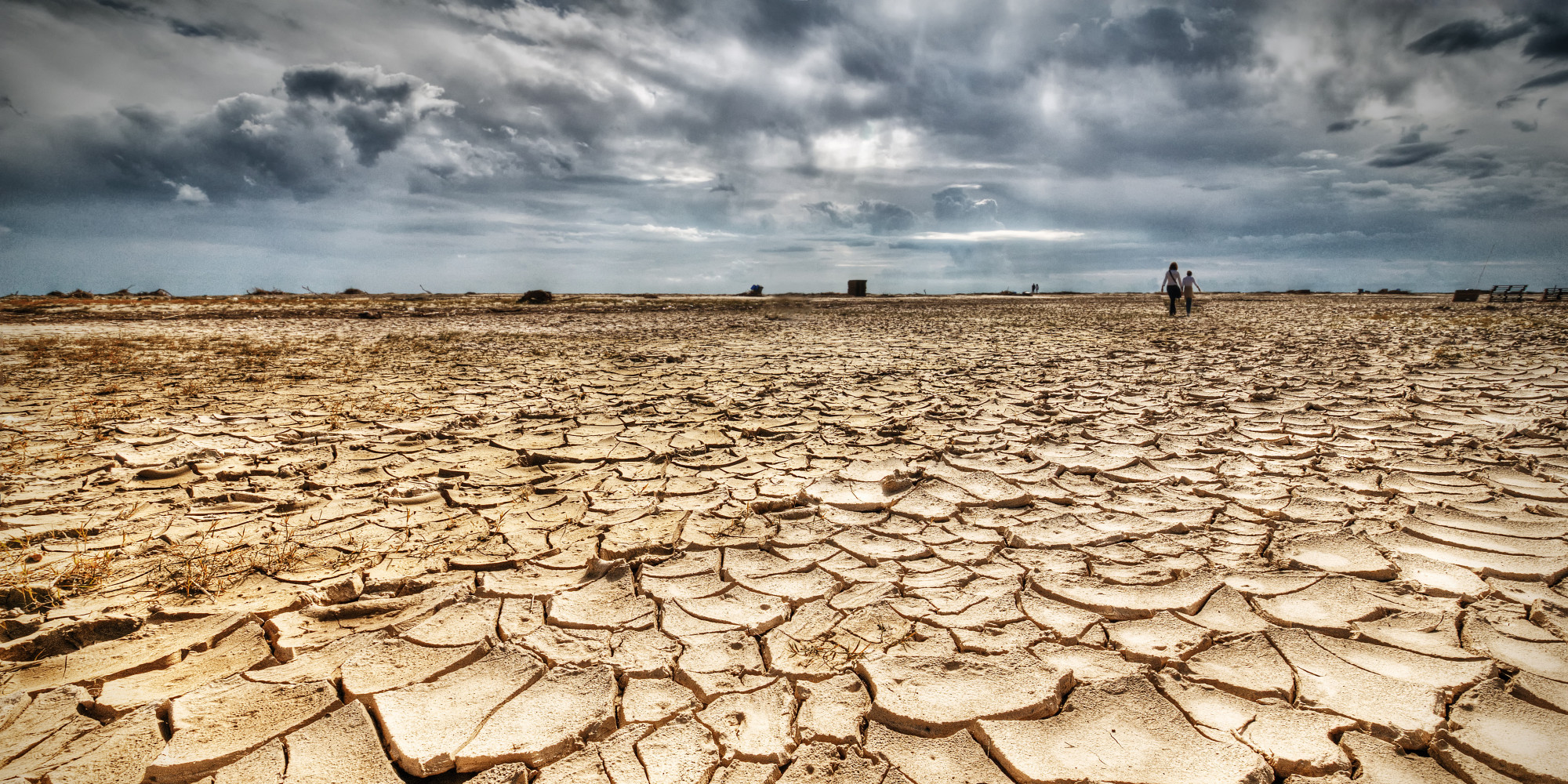
Australia - WA farmers and government at odds on drought assistance

07.12.2018 358 views
Tony Griffiths, a sheep and barley farmer, is facing hard times. He's sold 1500 of his 3000 sheep and plans to sell 700 more in 2019 to curb the growing loss he’s facing, already at $150,000 this year.

"Rainfall’s usually 400-450mm, it’s 180mm this year," he said. "We don’t have enough feed for our sheep. This year’s the worst on record since 1966 and no one’s doing anything about it."

Mr Griffiths said he reached out via phone to Albany MP Peter Watson to no avail in mid-November and emailed federal O’Connor MP Rick Wilson for help on November 14.
Mr Watson's office the lack of response was a mishap and later called Mr Griffiths to survey the situation. As for Tony's email to Mr Wilson, the federal MP said he was "aware of the difficulties"  but the "(state) government had to apply for federal assistance." Relief packages are available but the WA government is hesitant to declare the situation a drought.

The Australian Bureau of Meteorology defines a drought as a prolonged, abnormally dry period with insufficient water availability for normal use. To qualify for relief under drought conditions, a state must not have any rainfall for 12 consecutive months.

According to WA Department of Primary Industries and Regional Development's Ian Foster, the region's rainfall is in the lowest 10% of records.
According to WA Department of Primary Industries and Regional Development's Ian Foster, the region's rainfall is in the lowest 10% of records. CREDIT:BUREAU OF METEREOLOGY
WA Farmers Federation president Tony York said the Jerramungup pocket was an anomaly to the fruitful harvest season in other parts of the state.
"I don’t have enough people to call for a drought declaration — it’s a small part of the Southern," he said. "In the past 20 years, there was a tiny bit of farmers getting $10,000 to $20,000 (assistance packages) but nothing specific. We haven’t had any significant drought so we have to rely on our own resources."

Mr Griffiths said he sent a long letter to WA Agriculture Minister Alannah McTiernan’s office, dated November 27, asking for household financial assistance, a drought pilot program and grants to build additional dams for preservation.

Ms McTiernan’s office assistance was available without a drought declaration and pointed to the Farm Household Allowance payments, an income and assets-based financial package. But for farmers like Mr Griffiths, going through the process of proving his income and assets, as well as the time taken to call the hotline, remains troublesome.
"After my income was null in 2017, I rung them up, they put me on hold for four hours," he said.
"The forms — we figured we needed a financial counselor and it was too much of a task. Plus, we feared that our previous year’s good income would disqualify us."

A spokesman at the Federal Department of Agriculture said the payment was a point-in-time system that didn't take into account the previous year’s income.

"The FHA is an uncapped, demand-driven program," he said. "Farmers should not self-assess their eligibility for FHA, with the free Rural Financial Counselling Service able to assist farmers in applying." In terms of application difficulty, the spokesman said the application had been cut by a third and eligibility criteria was at the front.
In the application, net assets can’t surpass five million and couples must have a combined income of under $52,000 to receive payouts. However, Jeff McTaggart, a farming contractor whose contracts have halved with the bad crop season, says such assistances don’t cross farmers' minds.

"I haven’t looked that far myself. I’ll sum it all up when my accounts come in," he said.

"You don’t want to be the first one to receive a bail-out. It’s always pride that gets in the way of business decisions."
Mr McTaggart said he and his wife had saved up enough to weather this season's tough spell.
Sheeps don't have enough feed in the current drought situation. With the high grain prices, it's becoming difficult for farmers to get an adequate supply without loosing too much.
Sheeps don't have enough feed in the current drought situation. With the high grain prices, it's becoming difficult for farmers to get an adequate supply without loosing too much. CREDIT:TONY GRIFFITHS
"My wife works at a local school, four days a week so we have a little bit of that extra cheque. Even farmers, in the good years, they have to save anything the tax department doles out," he said.

Mr McTaggart has cut down labour costs to only two people and has performed five to six full night shifts himself in the past two weeks to cope.

Sheep Producers Australia chief executive Graham Smith said the gap between the government’s services and farmers had become an increasing problem.
"They need to find new ways to engage farmers — better broadband, the ability for us to use mobile phones in low signal, rural areas," he said. "State governments need to work more with farming organisations to indicate what’s available.

"Sometimes, it’s better to tell a farming group; farmer-to-farmer would go down a lot better."

A spokeswoman for the WA Department of Primary Industries and Regional Development said the department was working with groups like Fitzgerald Biosphere to help producers. "The staff provide producer groups with cropping, pasture and livestock technical information to assist producers with decision making in tough times," she said.
She said farmers in trouble should enrol in the free five-to-six day Plan, Prepare Workshops to handle seasonal variability. One farming family in Jerramungup has already reached out. Mr Griffiths has indicated interest in attending the workshop too.

However Belinda Lay, a farmer in the Country Woman’s Association WA, said fear of government interest meant more may look towards keeping silent or sourcing non-state grant options.

"When you reach out to a government handout, you're on their radar, they’ll want to know what you're doing and you can lose your autonomy. At CWA, we’ve made our $5000 grant application process anonymous," she said. "Farming is quite isolated. Being able to get help without disclosing to everybody is important."


The CWA grant, in association with Coles, asks farmers for photos, three months bank statements, and proof of residency to get the grant for household, medical and school expenses. It is slated to expire in May next year. Source - https://www.watoday.com.au
20.01.2026

Maltese hailstorm damages vegetable crops in Rabat and Dingli

Farmers in Rabat and Dingli reported widespread crop damage following a sudden hailstorm that hit the area overnight on Saturday. 

20.01.2026

New Zealand - Storms cause $10m in crop losses

Arable growers are reeling from up to $10 million in crop losses after a trio of widespread hail storms whipped through Canterbury farms.

20.01.2026

Romania - Agra Asigurari launches the 2025-2026 agricultural season with solutions for unpredictable climate

Agra Asigurari, the national leader in agricultural insurance, is launching the new sales season for the 2025-2026 farming year. The announcement comes at a challenging time for Romanian farmers, marked by the intensification of extreme weather events, which are affecting crops earlier and earlier, causing considerable losses for farmers.

20.01.2026

USA - Federal Crop Insurance Changes Good for Producers

Two major changes are coming to federal crop insurance. There are two major changes to federal crop insurance.

20.01.2026

Payments by Azerbaijan Agricultural Insurance Fund 43% up in 2025

Last year, the Agricultural Insurance Fund of Azerbaijan paid farmers 9.147 million manats ($5.38 million) in insurance compensations.

20.01.2026

Ukraine launches state support for farmers’ agricultural insurance

The state budget for 2026 allocates ₴60M ($1.43M) for agricultural insurance assistance, the first time that this support has been offered. 

19.01.2026

FAO issues new guidance on food safety risks linked to climate mitigation chemicals in agriculture

As governments and agribusinesses race to curb greenhouse gas emissions while feeding a growing global population, the UN’s Food and Agriculture Organization (FAO) has released new guidance to help policymakers and industry assess food safety risks linked to emerging climate-mitigation chemicals used in agriculture.

19.01.2026

Indonesia pushes agricultural downstreaming to boost farmers’ income

Agriculture Minister Andi Amran Sulaiman has called on regional governments to accelerate downstreaming of local agricultural commodities - particularly coconuts, cashew nuts, and cocoa - to increase added value and raise farmers’ incomes.