
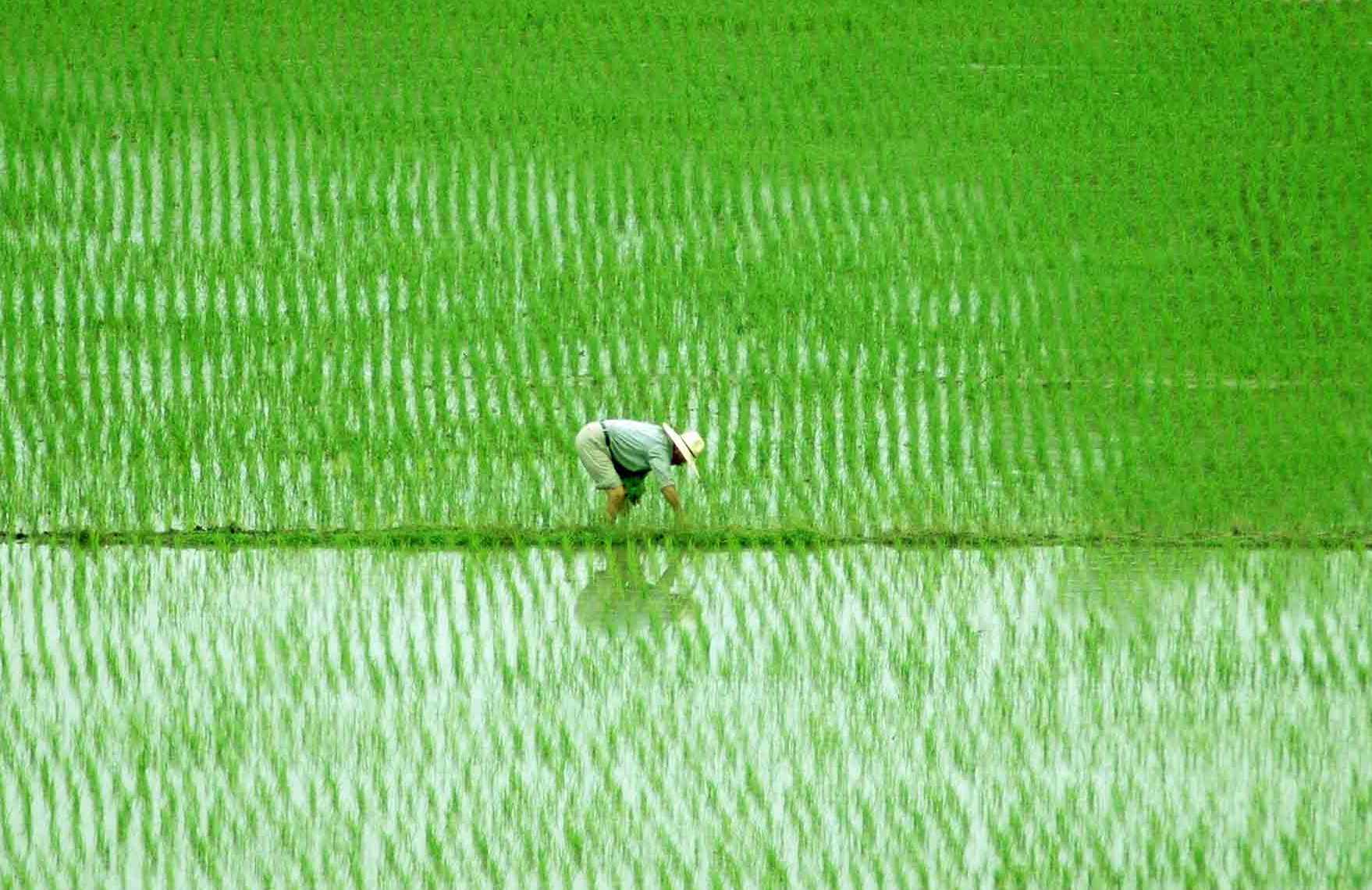
The German Corporation for International Cooperation (GIZ) held a workshop last week to raise farmers’ awareness of the importance of insuring crops, as the Kingdom’s journey to implement a full crop insurance policy to help rice farmers at risk of losing crops drags on.
GIZ Country Director Günter Riethmacher said crop insurance is a shelter for farmers, mitigating the risk of having their fields destroyed by flooding and drought.
“With this security, farmers can recover quickly and are able to continue production [after their crops are destroyed], concentrate more on quality of production, invest in agricultural land and thus increase productivity,” he said, adding that policies can be obtained through the government or private insurance companies.
He said GIZ, together with the Ministry of Agriculture, Forestry and Fisheries and the Ministry of Economy and Finance, have come to realise that there many challenges that need to be solved.
As reported in a previous report, flooding cost Cambodia some $356 million in 2013.
In the second half of 2015, the Cambodian Center for Study and Development in Agriculture (CEDAC) implemented a two-year pilot project, the Cambodia Micro Agriculture Insurance Scheme (CAMAIS), aiming to support local smallholder farmers by providing insurance payouts to those affected by severe weather-related events.
Say Sopheatra, a former CAMAIS project manager, said the scheme needs more funding, while farmers’ understanding of crop insurance remains limited and more time is required to build up awareness.
“We have no more funds to continue. Operation costs are higher and the sector needs at least five years’ investment."
“Seventy per cent of farmers have expressed their willingness to join the project,” she said.
Rice farmers who join the micro-insurance scheme pay a premium at the start of the growing season based on the size of their farm, type of crop grown and technical tools used.
In return, they receive consultation on farming techniques and an insurance payout if their crop is damaged by flood or drought. During the project’s two-year operation, 48 farmers out of a total 157 members made claims.
The scheme was launched with $96,000 of funding from the Netherlands-based Achmea Foundation and was implemented in nine districts across Kampong Chhnang, Takeo and Kampong Speu provinces.
Youk Chamroeunrith, managing director of Forte Insurance (Cambodia) Plc, which has been running a pilot project on crop insurance since 2015, said that while the scheme is important for agriculture, challenges remain.
“While we have already researched and enacted the crop insurance pilot project, the results so far are a bit slow and success is hard to come by."
“There is a lack of awareness of crop insurance among stakeholders and farmers, as well as a lack of support from the government,” he said.
Since 2015, Chamroeunrith said, Forte’s crop insurance pilot scheme, which focused on paddy rice production, has benefited 200 households in Banteay Meanchey, Battambang, Kampong Thom, Pursat and Siem Reap provinces.
The company is yet to make a profit from the project, having collected $5,200 in premiums per season but paying out approximately $7,000, he said.
Chamroeunrith said that for crop insurance to be a success, the sector needs to be subsidised by the government.
“It still needs time to implement crop insurance successfully. We need to build the framework, study costs and comply with government policy and law. We need at least 3 to 5 years more to promote awareness of crop insurance."
“Promotion from traders and inclusion of crop insurance into contract farming schemes will [help],” he said.
Agriculture ministry secretary of state Mam Amnot said crop insurance is already part of government policy to promote the agriculture sector. However, he says the policy needs time.
“The government intends to make crop insurance happen. We need to study the framework. The first step is to establish the challenges and build farmers’ trust,” he said.
Source - https://www.phnompenhpost.com











