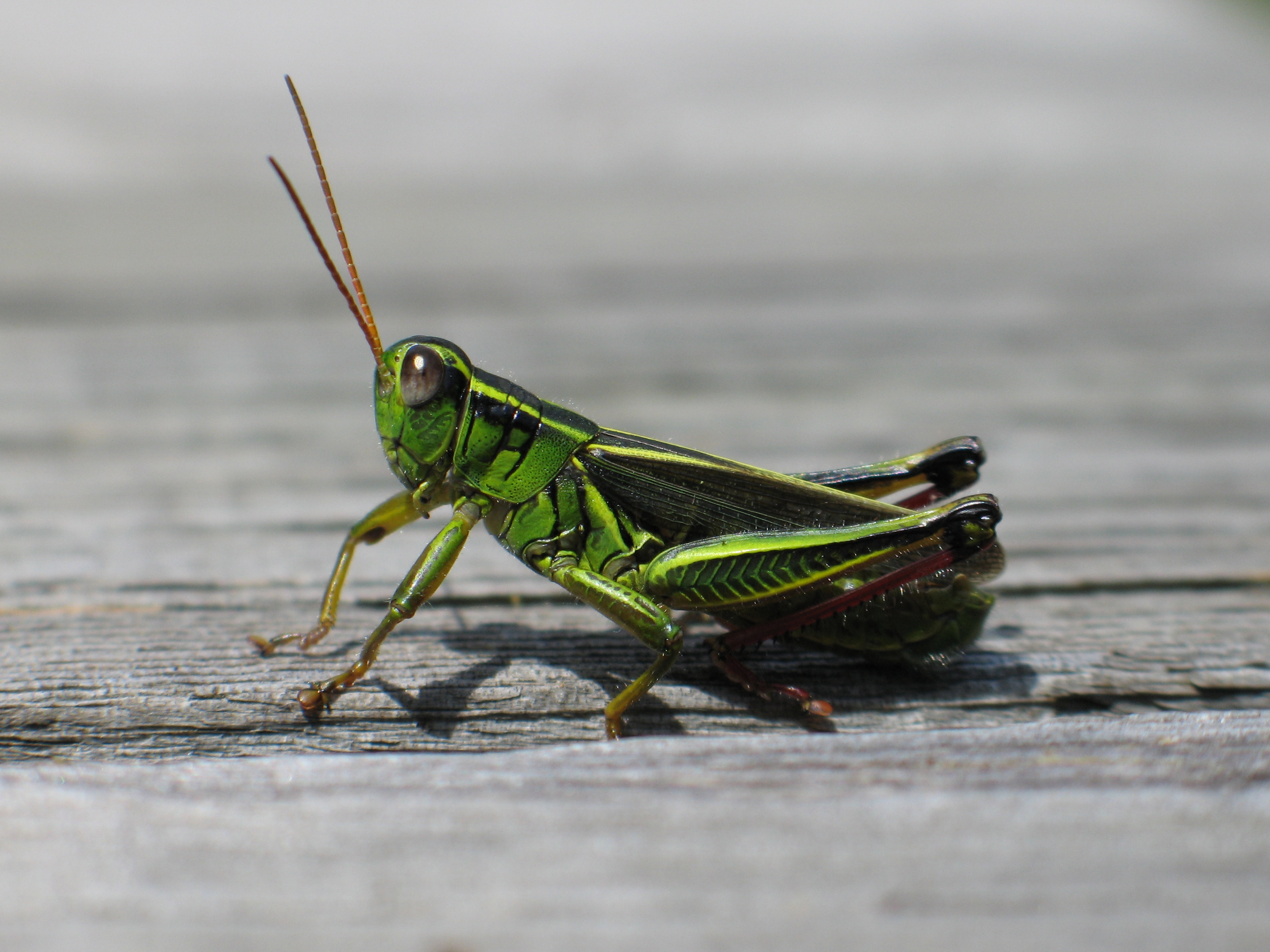
Grasshoppers were found in higher numbers in 2015 in Alberta. Unfortunately, the same is expected for 2016, says Scott Meers, Alberta Agriculture insect management specialist. The Peace region, the extreme north and northwest areas of Alberta, are expected to have high grasshopper numbers. Farmers west of Edmonton also saw high populations last year and the same is expected this year. Meers says, even areas where the threat isn’t at the highest level could experience hot spot pockets of high populations.
Saskatchewan’s grasshopper populations aren’t expected to be very high this year, except for possibly in the extreme northern part of the province.
Environmental conditions do play a role with grasshoppers, so it makes sense to hope for rain in late spring. “If we get some good torrential downpours in May and June when they’re emerging,” says Meers, then grasshopper numbers could be lower than predicted. “They favour warm and dry conditions, and are really susceptible to wet and rainy conditions when they first emerge from eggs.”
If conditions end up being warm and dry, it doesn’t really matter which crops you’re growing this year in terms of grasshopper threat, because they’ll “attack virtually any crop,” says Meers, though in some cases it does depend on the species of grasshopper. “They tend to not be as serious in peas,” says Meers, but some species couldn’t care less about which crop they’re in — they’ll eat everything.
The most susceptible plant in the pulses is lentil, says Sherrilyn Phelps of the Saskatchewan Pulse Growers. “Yield losses can result if entire pods are consumed but even moderate feeding on the pods will break the integrity of the pod, resulting in premature shattering and subsequent yield loss. If the feeding on the pod is less severe but still results in holes in the pod it increases the risk of disease and staining of the seeds which will result in a grade loss. Because of these factors the economic threshold in lentil is considered to be only two grasshoppers per square metre,” says Phelps.
Managing grasshoppers
It can be frustrating to get a handle on grasshoppers if their numbers are high where you farm, says Meers, “unlike some other insects where we can do a treatment and manage our way through.” But what’s the best way to get a handle on grasshoppers?
First, keep an eye out in the areas where grasshoppers were seen last fall, says Meers, because that’s where the eggs were laid and that’s where newly emerging grasshoppers will come onto the scene in May and June. The key thing to do is to watch for their emergence, through scouting your fields early in the season and knowing where you’ve seen them before.
If you’re seeing high numbers in the field, you can “go into specific areas and do a targeted application of insecticide to reduce their impact,” says Meers. It’s much easier to kill grasshoppers when they first emerge from eggs rather than when they’re fully grown. In August, when they’re flying around the fields, it can be tough to do anything about them.
“If the leaves stay dry, though, and when we get into a full-out grasshopper outbreak, it’s tough to get absolute control,” says Meers. “It’s never a great situation when we get big grasshopper populations.”
In the regions where high numbers of grasshoppers are expected, early monitoring is the best bet. But if grasshoppers take over, total crop loss, while not common, is a possibility — unlike some other pests, like the cabbage seedpod weevil in canola, which, if untreated, can net a yield loss of 15 to 25 per cent, says Meers. In that case, it’s still a huge chunk of the yield, but it’s not complete loss.
“Grasshoppers can be completely devastating,” especially in really dry years, says Meers. Even producers who use irrigation can feel the hit if grasshopper numbers are high because even if they’re able to get them off their own land, roadsides and pivots will still be dry and grasshoppers will be thriving close to their land.
Grasshopper numbers may be high now, but “they always go away,” says Meers, because of change in weather conditions and the emergence of “natural enemies.” They are somewhat cyclical “in the sense that weather is cyclical.”
So what else can you do? “Pray for rain,” Meers says.
Source - http://www.grainews.ca/