Agriculture and Agri-Food Minister Lawrence MacAulay made the announcement of the investment for the Manitoba Forage and Grassland Association (MFGA) on Monday.
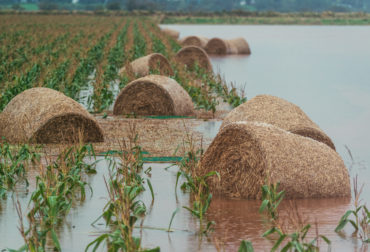
A press release from the MFGA said that recent flood events in the Assiniboine River Basin have resulted in significant crop losses, property and infrastructure damage, leading to unprecedented agri-recovery claims “above and beyond crop insurance.”
The MFGA reported that the project, which runs until March 31, 2018, will construct a hydrology model of the basin to model the effects of flood and drought on soils and topography, as well as simulating various mitigation measures to lessen flood and drought event impacts on agricultural lands. The model will encompass the Assiniboine, Qu’Appelle and Souris sub-basins, as well as a more detailed drill down on the Birdtail watershed located in the upper reaches of the Assiniboine sub-basin.
“The project seeks to develop new risk management tools to reduce the impact of extreme flood or drought events for the agricultural industry within the basin by identifying preventative measures, implementing risk prevention and mitigation activities, all with the intention of lessening the need for government disaster programming in response to such events,” the release said.
The model will be multi-faceted, in that it will have the utility for assessing flood, drought and excess moisture risks to agricultural producers; flood risks to urban centers; as well as both flood and drought risk mitigation strategies within the basin. It will also serve as a tool to test the hydrologic sensitivity of the Assiniboine River Basin to projected future climate conditions and different synthetic flood inducing snow melt and precipitation scenarios, MFGA said in the release.
“It is anticipated that the model could become a standardized platform for a number of different stakeholders, including multiple levels of government, research institutes, and NGOs who want to perform targeted hydrologic analyses and research across a wide range of temporal and spatial scales within the [Assiniboine River Basin],” the release said. “Individuals such as primary agricultural producers and/or the business sector, such as the oil and gas sector, may utilize the model on a much smaller scale, right down to individual fields or properties.”
According to a statement from AAFC, based on the new model, a web-based tool will be developed that farmers can use to gather information on their farmland to help effectively manage moistures levels and mitigate risk associated with drought and flooding. Information collected will contribute to better risk management strategies for farmers and the agricultural sector and could potentially lead to the development of new and improved insurance products, the federal government suggested in the statement.
“Extreme weather events have created many challenges for Prairie farmers in recent years,” MacAulay said in the statement. “We’re committed to working together with the agriculture sector to equip farmers with the tools they need to proactively manage business risks such as these.”
Source - canadianunderwriter.ca
Canada - Federal investment will help Manitoba farmers predict the effects of flood and drought on farmland
14.06.2016 335 views
Agriculture and Agri-Food Minister Lawrence MacAulay made the announcement of the investment for the Manitoba Forage and Grassland Association (MFGA) on Monday.
A press release from the MFGA said that recent flood events in the Assiniboine River Basin have resulted in significant crop losses, property and infrastructure damage, leading to unprecedented agri-recovery claims “above and beyond crop insurance.”
The MFGA reported that the project, which runs until March 31, 2018, will construct a hydrology model of the basin to model the effects of flood and drought on soils and topography, as well as simulating various mitigation measures to lessen flood and drought event impacts on agricultural lands. The model will encompass the Assiniboine, Qu’Appelle and Souris sub-basins, as well as a more detailed drill down on the Birdtail watershed located in the upper reaches of the Assiniboine sub-basin.
“The project seeks to develop new risk management tools to reduce the impact of extreme flood or drought events for the agricultural industry within the basin by identifying preventative measures, implementing risk prevention and mitigation activities, all with the intention of lessening the need for government disaster programming in response to such events,” the release said.
The model will be multi-faceted, in that it will have the utility for assessing flood, drought and excess moisture risks to agricultural producers; flood risks to urban centers; as well as both flood and drought risk mitigation strategies within the basin. It will also serve as a tool to test the hydrologic sensitivity of the Assiniboine River Basin to projected future climate conditions and different synthetic flood inducing snow melt and precipitation scenarios, MFGA said in the release.
“It is anticipated that the model could become a standardized platform for a number of different stakeholders, including multiple levels of government, research institutes, and NGOs who want to perform targeted hydrologic analyses and research across a wide range of temporal and spatial scales within the [Assiniboine River Basin],” the release said. “Individuals such as primary agricultural producers and/or the business sector, such as the oil and gas sector, may utilize the model on a much smaller scale, right down to individual fields or properties.”
According to a statement from AAFC, based on the new model, a web-based tool will be developed that farmers can use to gather information on their farmland to help effectively manage moistures levels and mitigate risk associated with drought and flooding. Information collected will contribute to better risk management strategies for farmers and the agricultural sector and could potentially lead to the development of new and improved insurance products, the federal government suggested in the statement.
“Extreme weather events have created many challenges for Prairie farmers in recent years,” MacAulay said in the statement. “We’re committed to working together with the agriculture sector to equip farmers with the tools they need to proactively manage business risks such as these.”
Source - canadianunderwriter.ca
ScaleAgData Stakeholder Engagement Event
22.10.2024The ScaleAgData project is pleased to invite you to our second stakeholder event. Building on the discussions and connections formed during our first webinar, this event will focus on fostering collaboration among stakeholders, providing updates on our project’s progress, and outlining future opportunities for engagement.
Moldova - May frosts caused heavy damage to fruit orchards
10.05.2026The first frosty nights of May have significantly worsened estimates of damage to Moldova's fruit sector from spring frosts. According to initial assessments by fruit market operators, between a quarter and a third of the country's total orchard area was seriously affected.
India - Delhi raises crop damage compensation after 10 years by over 50% to Rs 75,000 per hectare
In a major relief for farmers, the Delhi government has increased compensation for crop loss caused by rain and hailstorms from Rs 20,000 per acre to Rs 75,000 per hectare.
Why Tech-Driven Agro-Insurance Has Stumbled in Ethiopia
For decades, Ethiopia’s agricultural sector has remained trapped in a dangerous paradox.
UK - Rural crime cost Wales £2.2m last year despite fall in offences
Rural crime cost Wales an estimated £2.2 million last year, with organised criminals continuing to target tractors, livestock and farming equipment despite an overall fall in offences, according to a new report.
Kenyan Agro-Insurance Startup, Pula Raises US$ 20 Million in Series B Round
Pula, a Kenyan startup that offers insurance to small-scale farmers, aims to serve more than 100 million farmers in Africa after raising US$ 20 million in its Series B round.
USA - USDA announces $52M to boost public access to private lands for hunting, fishing
The U.S. Department of Agriculture is announcing $52 million to help state and tribal governments encourage private landowners to allow public access to their land for hunting, fishing and other wildlife-dependent recreation through the Voluntary Public Access and Habitat Incentive Program (VPA-HIP).
Hope Grows in Malawi’s Grain Stores as Farmers Battle Post-Harvest Losses
Some grain rots in poorly ventilated storage. Some is eaten by pests. Some is damaged during drying or transportation before it ever reaches the market.
Canada - AFSC extends several northern Alberta seeding dates for 2026
Alberta’s Agriculture Financial Services Corp. (AFSC) is extending the recommended seeding dates in the province’s northeast, northwest and Peace regions for several crops for the 2026 growing season only.
India - Elephants run amok in Konaje agricultural farm, cause massive crop damage
A herd of elephants, including calves, wreaked havoc on an agricultural farm belonging to Yashodhara Gowda at Pallattadka in Konaje village of Kadaba taluk.






