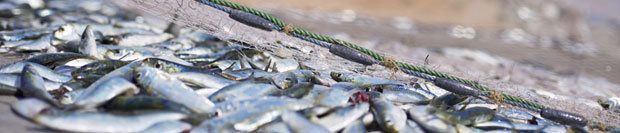
How do you protect an industry responsible for USD 100 million exports a year? That was the question Ecuador faced as it sought to protect its artisanal fishing industry. Swiss Re experts helped the government find an answer.
Artisanal fishing involves using smaller fishing vessels and traditional techniques. There are around 54,000 artisanal fishermen in Ecuador, operating in a sector that is a major source of employment and food production.
With artisanal fishing being an important part of Ecuadorian life, Swiss Re believes that protecting its fishermen - and the vessels they use – is the essence of "smarter together."
Protecting fishermen and families
In July 2015, Swiss Re's Erika Schoch and Alejandro García went to Ecuador, which lies on the Pacific Coast of South America, to help develop fishing vessel insurance to protect the country's fishermen and their families. Schoch, Regional Manager Marine Latin America, and García, Senior Marine Underwriter, worked with state-owned insurer Seguros Sucre and Ecuador's Ministry of Agriculture, Livestock, Aquaculture and Fishing to find a solution.
The result was a multi-faceted solution that includes as part of the insurance portion indemnification for physical assets - such as boats – and personal accident insurance for the captain and crew.
"We visited the ports of call and spoke with some of the local artisanal fishermen, and it was so inspiring to see how we were contributing to a program that will financially protect this beloved trade and the families who depend so much on its sustainability," commented García.
Analysing the benefits
The program is a win-win for all involved: the fishermen will receive subsidies of 60% of the costs per vessel as well as part of the fuel costs; and the government will gain a broader overview of the industry by issuing fishing permits only with proof of coverage. This means that the program will allow the government to have a registry of every professional fisherman in Ecuador.
Funds from the larger government program will also be used to renovate ports of call, with the plan to turn them into industry managed commercial centres.
"We're really proud to have been able to contribute to the stability and resilience of Ecuadorian families as well as the country's infrastructure. The social impact of this program will have an effect for years to come," Marine Head Peter Sydenham said.
Source - http://www.swissre.com