

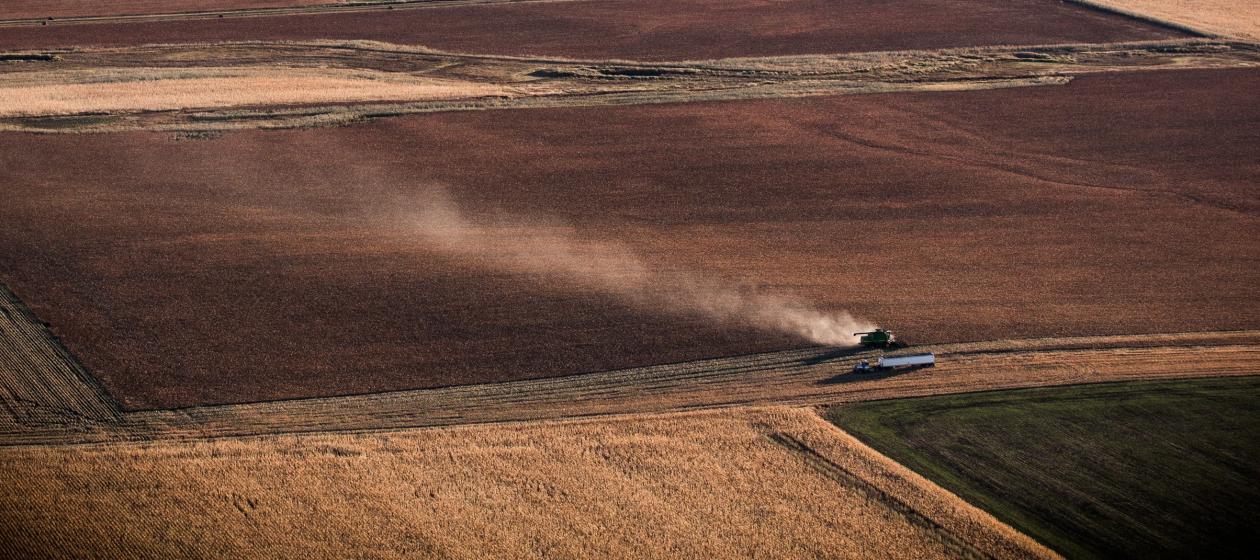
How climate change is causing a bumper crop
27.04.2016 479 views
Climate change is ruining our planet, increasing the rates of extreme weather events, helping spread dangerous diseases, killing off endangered wildlife and bringing ruin to local farmers — with exceptions. In fact, a new study in Nature Climate Changesuggests that some local farmers are actually seeing higher crop yields because of the carbon that we're pumping into the atmosphere.
Now this does not mean climate change and carbon emissions are good for the planet, but it does suggest that the impacts of global warming are far more complex than we once thought. "Most of the discussion around climate impact focuses only on changes in temperature and precipitation," said lead author Delphine Deryng of NASA's Goddard Institute in a press statement. "To adapt adequately, we need to understand all the factors involved."
Let's get one thing out of the way — carbon emissions are not good. While it is technically true that plants require carbon dioxide to survive, studies have shown that many crops suffer when fed too much CO2. Besides, climate change causes heat waves, droughts, and flooding, none of which are exactly healthy for our crops. Of course, anti-climate change politicians are invariably baffled by scientific nuance, and have nonetheless taken every opportunity to argue that plants need carbon, so we shouldn't try to stop climate change.
But in this new study, scientists claim that too much carbon isn't always bad news for crops — and that, indeed, some crops may flourish even as our seas rise and our planet careens toward utter destruction. Comforting, right?
The key, the authors write, is water storage. Plants usually take in carbon dioxide through tiny holes in their leaves known as stomata. When these holes open, water inevitably leaks out. If there is a high concentration of carbon in the air, plants seldom need to open their stomata and so conserve moisture. Scientists call this phenomenon carbon fertilization.
But until now, there was scant evidence that carbon fertilization could occur outside of a laboratory setting. So 16 top climate and plant scientists from around the world scoured the latest crop models and data from ongoing field experiments, and calculated how much more efficiently crops will use water if climate change continues unimpeded.
Their results suggest that wheat crops will begin to use water 27 percent more efficiently, soybeans will increase their efficiency by 18 percent, and that corn and rice would both become roughly 10 percent more water efficient. Then, the scientists calculated the expected crop losses due to rising temperatures, including extreme weather conditions. They conclude that we'll probably see a net gain in wheat crops despite rising temperatures, but that corn is in trouble and expected to take a net loss. Meanwhile, the losses and gains for soybeans and rice are still too close to call.
Still, greater crop yield is not necessarily a win. Since prior studies have shown that high levels of carbon increase biomass but not nutrition in crops (because nitrogen and other mineral levels cannot keep up with the carbon boost) it is possible that even wheat may suffer under climate change — albeit not in crop quantity, but in crop quality. Worse, Bruce Kimball of the U.S. Department of Agriculture reviewed the paper, and noted that other studies have shown that the benefits of higher carbon concentrations eventually bottom out, but that the damage caused by rising temperatures continue to multiply with every degree.
"Thus, for greater warming and higher CO2 the results would likely be more pessimistic than shown in this paper," he says.
Source - theweek.com
EVENTS

ScaleAgData Stakeholder Engagement Event
22.10.2024The ScaleAgData project is pleased to invite you to our second stakeholder event. Building on the discussions and connections formed during our first webinar, this event will focus on fostering collaboration among stakeholders, providing updates on our project’s progress, and outlining future opportunities for engagement.
RISK EVENTS

Moldova - May frosts caused heavy damage to fruit orchards
10.05.2026The first frosty nights of May have significantly worsened estimates of damage to Moldova's fruit sector from spring frosts. According to initial assessments by fruit market operators, between a quarter and a third of the country's total orchard area was seriously affected.
04.06.2026

India - Delhi raises crop damage compensation after 10 years by over 50% to Rs 75,000 per hectare
In a major relief for farmers, the Delhi government has increased compensation for crop loss caused by rain and hailstorms from Rs 20,000 per acre to Rs 75,000 per hectare.
04.06.2026

Why Tech-Driven Agro-Insurance Has Stumbled in Ethiopia
For decades, Ethiopia’s agricultural sector has remained trapped in a dangerous paradox.
04.06.2026
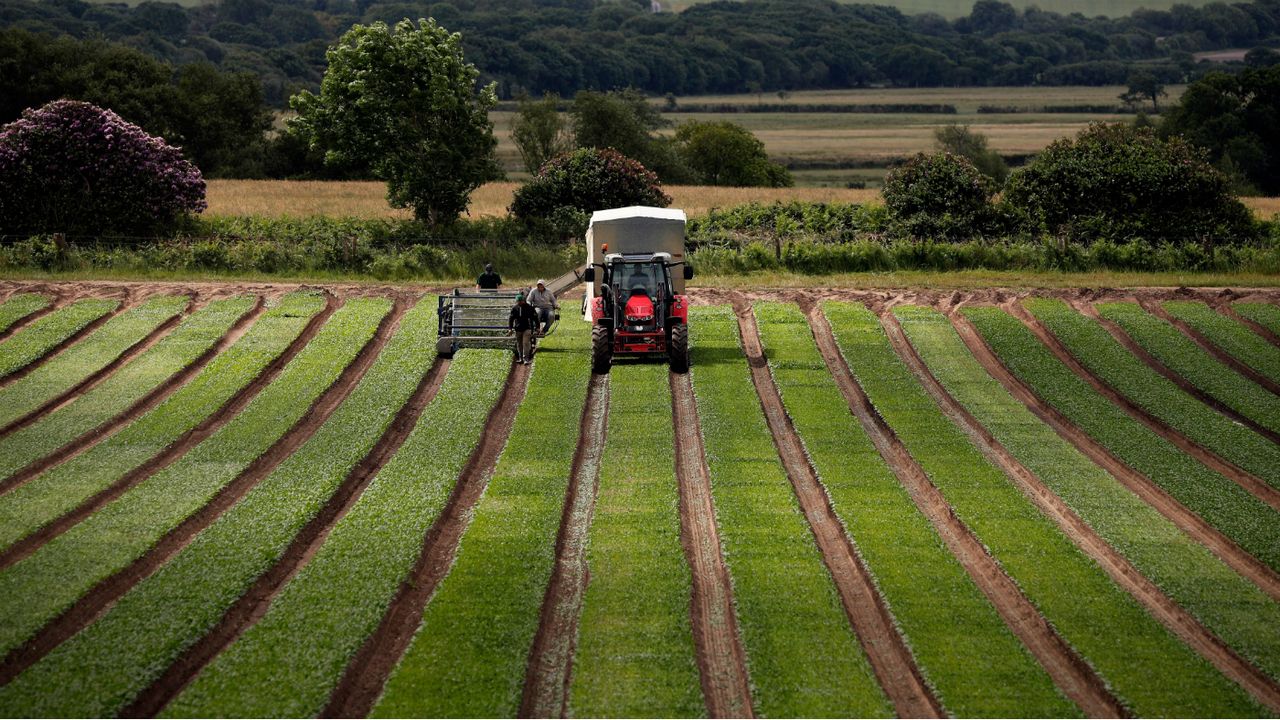
UK - Rural crime cost Wales £2.2m last year despite fall in offences
Rural crime cost Wales an estimated £2.2 million last year, with organised criminals continuing to target tractors, livestock and farming equipment despite an overall fall in offences, according to a new report.
04.06.2026

Kenyan Agro-Insurance Startup, Pula Raises US$ 20 Million in Series B Round
Pula, a Kenyan startup that offers insurance to small-scale farmers, aims to serve more than 100 million farmers in Africa after raising US$ 20 million in its Series B round.
04.06.2026
USA - USDA announces $52M to boost public access to private lands for hunting, fishing
The U.S. Department of Agriculture is announcing $52 million to help state and tribal governments encourage private landowners to allow public access to their land for hunting, fishing and other wildlife-dependent recreation through the Voluntary Public Access and Habitat Incentive Program (VPA-HIP).
04.06.2026

Hope Grows in Malawi’s Grain Stores as Farmers Battle Post-Harvest Losses
Some grain rots in poorly ventilated storage. Some is eaten by pests. Some is damaged during drying or transportation before it ever reaches the market.
03.06.2026
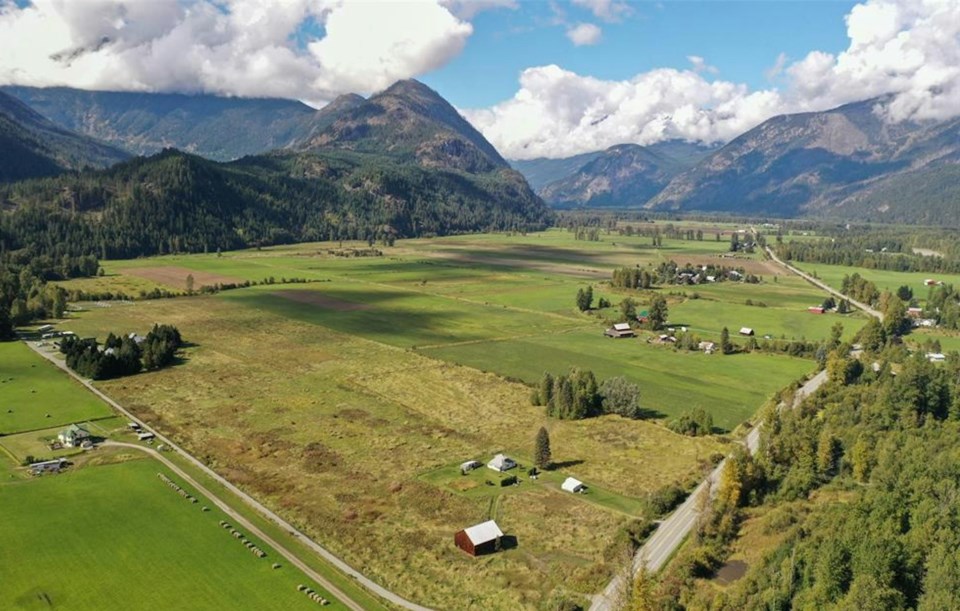
Canada - AFSC extends several northern Alberta seeding dates for 2026
Alberta’s Agriculture Financial Services Corp. (AFSC) is extending the recommended seeding dates in the province’s northeast, northwest and Peace regions for several crops for the 2026 growing season only.
03.06.2026

India - Elephants run amok in Konaje agricultural farm, cause massive crop damage
A herd of elephants, including calves, wreaked havoc on an agricultural farm belonging to Yashodhara Gowda at Pallattadka in Konaje village of Kadaba taluk.
