

India - Combining traditional wisdom with scientific methods can tackle drought
26.05.2016 297 views
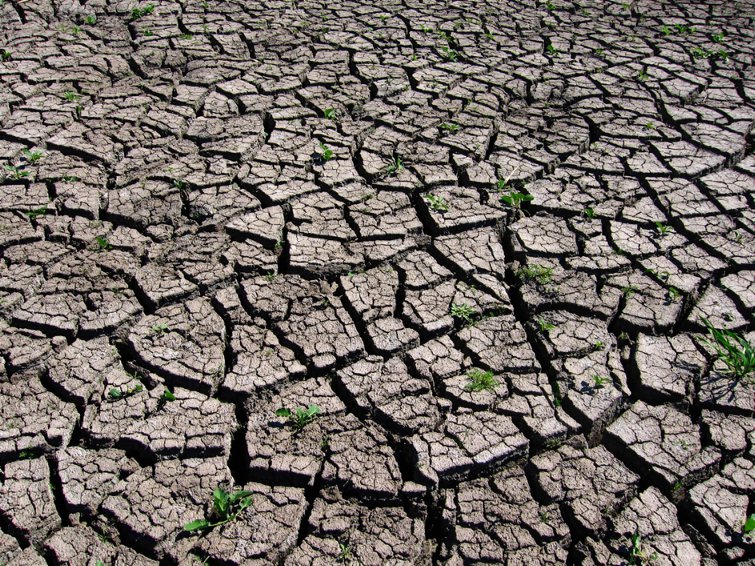
India is going through severe water shortage in several states. The scarcity is mainly due to the dry season, but it has been exacerbated by our inability to manage water resources, and ignorance. Of course, added to that is our lack of understanding, or respect, for our environment.
The water shortage is being perceived as drought. Dry condition is a natural phenomenon, which is bound to happen three to four times out of ten seasons. Drought is a man-made condition. Despite these being two distinct concepts, it is often wrongly used synonymously.
The present water scarcity is due to less than average rains for two consecutive years. However, the adversity has increased several folds due to human factors like water mismanagement, policy failures, improper water distribution and inadequate management of public water sources.
To make the situation more complex, the water scarcity is now being presented as a natural disaster.
According to official statistics of the Central Government, about 330 million people have been affected by drought in 10 states in India.
The nature of water shortage in each area is location specific. For instance, in Maharashtra, lack of irrigation facilities and wrong crop selection is one of the main reasons. Sugarcane is grown in Maharashtra despite lack of irrigation, and where, all the other crops are monsoon fed.
The central government has come up with several "solutions" including the Pradhan Mantri Fasal Bima Yojna (PMFBY) which is a crop damage insurance scheme where farmers pay a premium of 1.5 percent of the value of a crop.
A relief package of Rs.3,049 crore has been sanctioned by the Central Government to Maharashtra for drought relief aid, while the Maharashtra government has itself granted about 10,000 crore to farmers.
Water trains to Latur have been pressed into action.
The main drawback of the solutions is that they are dole-oriented. Instead of getting to the root of the problem or foreseeing the causes and working on them, a symptom-based remedy is being offered to the people.
These kind of solutions only provide temporary relief and take us a step backwards economically. There has also been lack of political will on this issue. For instance, the India Meteorological Department's prediction of a second consecutive drought was ignored for a private company's prediction of a normal monsoon. It has also been alleged that the lack of national attention is because it is not affecting urban consumers.
In India's 6,000-year-long rich history, we have not only learnt to adjust to diverse environmental conditions but have also developed traditional knowledge. The management of our water resources through water harvesting and the use of local wisdom can any day beat concepts like National Water Grid, whose by-products happens to be a string of environmental problems, the most notable of them being a drop in water table, fragmentation of habitats and biodiversity loss.
The problem arising out of water resource mismanagement can be tackled through efficient utilisation of water through new, advanced and efficient methods, including sprinkler and drip irrigation.
Additionally, cropping patterns should be changed. For instance, in major parts of Punjab and Haryana, crops like paddy, wheat and sugarcane are dominant and use more water compared to other competitive crops like maize, rapeseed-mustard seed and vegetables.
But it is extremely difficult to bring change because farmers get better returns from high water-intensive crops than low intensive ones. It has been suggested that Punjab's groundwater depletion problem could be easily resolved, if its export of virtual ground water in the form of rice could be reduced or stopped through the policy tool of making energy prices market-determined. This is likely to work in areas largely dependent on groundwater for irrigation purpose.
Further, rain-water harvesting and groundwater recharging is necessary. In many areas, the groundwater table is falling due to over-exploitation. Capturing, collecting and storing available rainwater and/or surface run offs during wet season can prove to be a significant tool to turn around the situation. In traditional practices, collected rainwater was used resourcefully but these were forgotten (or neglected) with the development of modern facilities like canals and groundwater extraction.
Some other traditional methods in India include diversion channels called Kuhls in Himalayan region to make use of hill streams and springs; underground tanks called Kunds in desert areas and tunnels dug through hillocks where there is seepage of water, used in South India.
Apart from these, several new scientific methods such as check dams, roof-water harvesting, recharge pits, recharge wells, vertical recharge shafts and lateral trenches with bore wells help.
Water problems are unknown in places where water harvesting has been a part of culture of the people -- Ralegaon Siddhi, Sukhomajri and many areas of Rajasthan.
In urban areas, allowing more open areas and protecting the green belt can do what a lot of technology cannot. Also, weather prediction can help farmers know beforehand the situation they have to cope with.
Nature is man's friend and not his adversary. Application of traditional wisdom and modern technology can aptly address the man-made disaster of droughts.
Source - http://www.daijiworld.com
EVENTS

ScaleAgData Stakeholder Engagement Event
22.10.2024The ScaleAgData project is pleased to invite you to our second stakeholder event. Building on the discussions and connections formed during our first webinar, this event will focus on fostering collaboration among stakeholders, providing updates on our project’s progress, and outlining future opportunities for engagement.
RISK EVENTS

Moldova - May frosts caused heavy damage to fruit orchards
10.05.2026The first frosty nights of May have significantly worsened estimates of damage to Moldova's fruit sector from spring frosts. According to initial assessments by fruit market operators, between a quarter and a third of the country's total orchard area was seriously affected.
04.06.2026

India - Delhi raises crop damage compensation after 10 years by over 50% to Rs 75,000 per hectare
In a major relief for farmers, the Delhi government has increased compensation for crop loss caused by rain and hailstorms from Rs 20,000 per acre to Rs 75,000 per hectare.
04.06.2026

Why Tech-Driven Agro-Insurance Has Stumbled in Ethiopia
For decades, Ethiopia’s agricultural sector has remained trapped in a dangerous paradox.
04.06.2026

UK - Rural crime cost Wales £2.2m last year despite fall in offences
Rural crime cost Wales an estimated £2.2 million last year, with organised criminals continuing to target tractors, livestock and farming equipment despite an overall fall in offences, according to a new report.
04.06.2026

Kenyan Agro-Insurance Startup, Pula Raises US$ 20 Million in Series B Round
Pula, a Kenyan startup that offers insurance to small-scale farmers, aims to serve more than 100 million farmers in Africa after raising US$ 20 million in its Series B round.
04.06.2026

USA - USDA announces $52M to boost public access to private lands for hunting, fishing
The U.S. Department of Agriculture is announcing $52 million to help state and tribal governments encourage private landowners to allow public access to their land for hunting, fishing and other wildlife-dependent recreation through the Voluntary Public Access and Habitat Incentive Program (VPA-HIP).
04.06.2026

Hope Grows in Malawi’s Grain Stores as Farmers Battle Post-Harvest Losses
Some grain rots in poorly ventilated storage. Some is eaten by pests. Some is damaged during drying or transportation before it ever reaches the market.
03.06.2026

Canada - AFSC extends several northern Alberta seeding dates for 2026
Alberta’s Agriculture Financial Services Corp. (AFSC) is extending the recommended seeding dates in the province’s northeast, northwest and Peace regions for several crops for the 2026 growing season only.
03.06.2026

India - Elephants run amok in Konaje agricultural farm, cause massive crop damage
A herd of elephants, including calves, wreaked havoc on an agricultural farm belonging to Yashodhara Gowda at Pallattadka in Konaje village of Kadaba taluk.
