

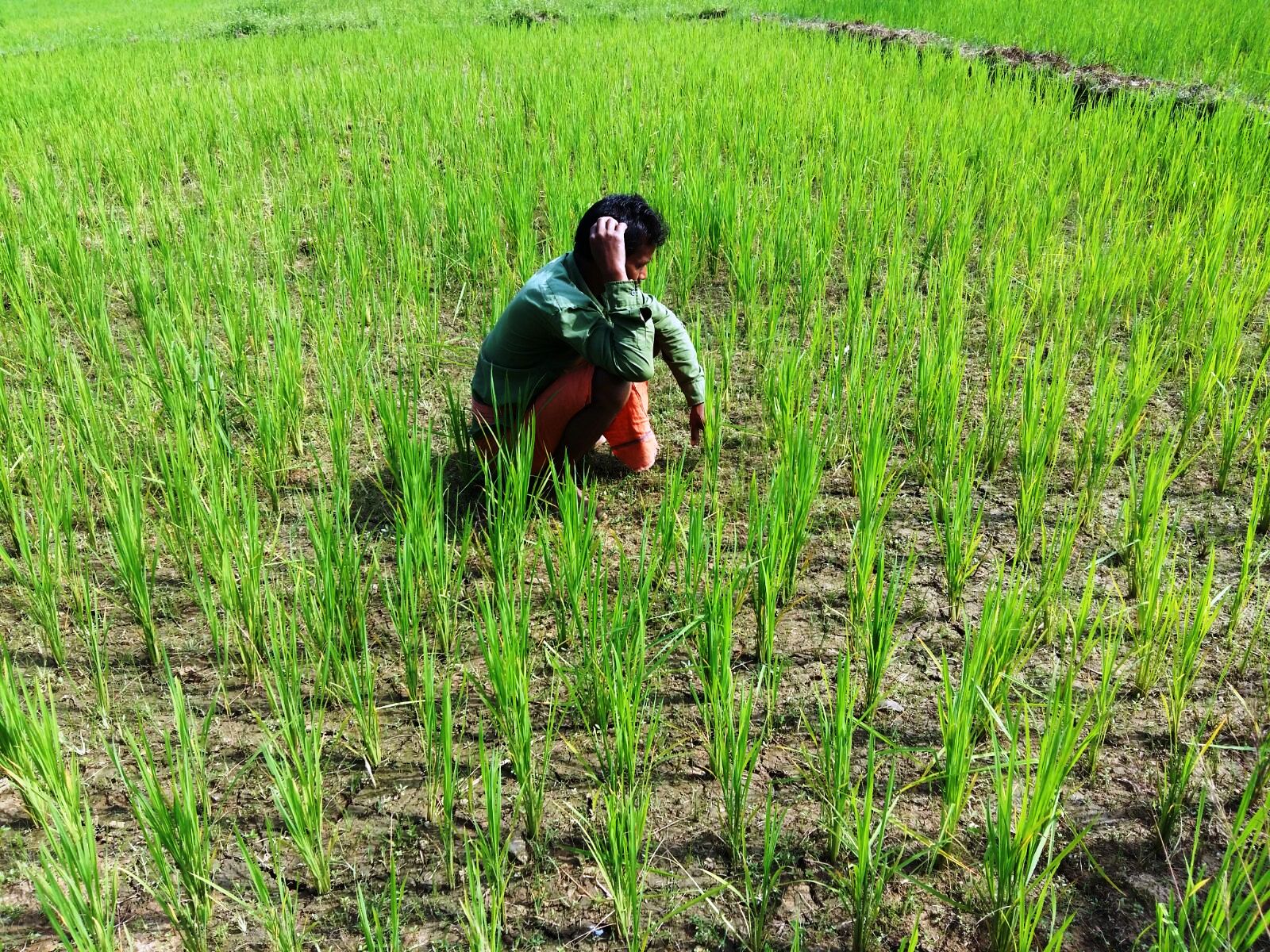
India - Crop insurance: new dawn for farmers?
04.04.2016 359 views
Crop insurance schemes have not been a hit with Indian farmers in the past. High premia, limited coverage, complicated ways of assessing losses and delayed payment of compensation have kept farmers away from them.
Given the high risk of crop damage in India, with significant loss in food grain production in 18 of the last 54 years (which is once in every three years as per data from the Commission for Agriculture Costs and Prices), it has become vital to address the flaws in the existing crop insurance schemes — the National Agriculture Insurance scheme (NAIS) and MNAIS (modified NAIS).
Out of the total farm land of 195.26 million hectares in the country, only 42.82 million hectares or 22 per cent is insured. It is in this backdrop that the Centre launched the Pradhan Mantri Fasal Bima Yojana in January this year. While the outline of the scheme looks attractive, the success of the plan lies in its implementation.
Adequate sum insured
The main setback with the existing crop insurance schemes is that the sum insured (SI) is too small to make any difference to the farmer. In 2013-14, for instance, while the average per hectare output was worth ₹41,442, the sum insured (SI) under various crop insurance schemes was just ₹18,464 (kharif - ₹19,141 and rabi - ₹16,927).
While the insured sum here looks sufficient to cover the cost of production, it is way less than a farmer’s income in a normal season. In MNAIS, the Centre capped the maximum premium that can be paid for a crop. So, in crops where actuarial rates were higher, insurers reduced the sum insured proportionately, says Ashish Agarwal, Head - Agri Business, Bajaj Allianz General Insurance, which covers about 38 lakh farmers under its crop insurance scheme in 2015-16.
For instance, suppose in Uttar Pradesh’s Lalitpur district, the actuarial premium (based on the assessment of risk by the insurer) was fixed at 22 per cent for paddy, but 11 per cent was the cap on premium fixed by the Centre. So, even if the farmer wanted SI of ₹30,000/hectare, he would get cover for only ₹15,000 (₹30,000* 11% = ₹3,300 = is the maximum amount that can be collected as premium, but the insurer can go only with his actuarial rate, so he will reduce the SI to ₹15,000: ₹15,000*22% =₹3,300). This, however, will change with the new scheme. Under the Pradhan Mantri Fasal Bima Yojana, there is no cap on premium. So the farmer will be covered for the full ₹30,000 and the premium will be paid to the insurer — ₹600 by the farmer and ₹6,000 by the State and the Centre (earlier, the farmer paid ₹900 and the Centre ₹2,400).
In the new scheme, the sum insured is the average of the past seven years ‘threshold’ yield for the specific crop (excluding calamity years) in the village it is grown, multiplied by the minimum support price (MSP).
Lower premium
In the existing crop insurance schemes, farmers cough up substantial costs for insurance. In the Pradhan Mantri Fasal Bima Yojana, however, the premium outgo will drop substantially. Farmers will have to pay just 2 per cent of the SI for all kharif crops, 1.5 per cent for rabi and 5 per cent for commercial or horticulture crops.
Wider coverage
Unlike in the earlier schemes, in the new one, there is greater risk coverage. For instance, there was no cover for risks specific to a region (landslide, inundation) in NAIS. In MNAIS, risk of loss to cyclonic rains was given only to coastal regions.
Under the Pradhan Mantri Fasal Bima Yojana all risks are covered. Post-harvest losses due to cyclonic rain or thunder are covered for farmers across India. Also, unlike in NAIS, the new scheme covers loss due to adverse weather conditions preventing sowing of crops after expenditure has been incurred.
Faster settlement
A delayed settlement process for crop loss defeats the very purpose of insurance. The delay in settling claims for existing schemes was sometimes as long as six months to a year. Amit Bhandari, Head – Health & Agriculture, Underwriting and Claims at ICICI Lombard General Insurance, says, “Estimation of yield through manual crop cutting experiments and the time lag in sharing the yield data with insurance companies results in delay in settlement.”
To expedite the process, the Centre has directed the use of drones and other satellite-based technology when assessing crop damage and estimating acreage. It has also mandated authorities to use smart phones to capture images of crops to improve the quality of yield data. As the images come with GPS time stamping, the process will be more reliable.
Another leading general insurer says the Centre has now laid down the deadlines clearly. From the number of days within which the State has to give the certified yield data to the insurance company, to the maximum number of days within which the Centre/State has to pay their premium subsidy to the insurer, and the number of days for the insurance company to settle claims — everything has been put down on paper.
Source - m.thehindubusinessline.com
EVENTS

ScaleAgData Stakeholder Engagement Event
22.10.2024The ScaleAgData project is pleased to invite you to our second stakeholder event. Building on the discussions and connections formed during our first webinar, this event will focus on fostering collaboration among stakeholders, providing updates on our project’s progress, and outlining future opportunities for engagement.
RISK EVENTS

Moldova - May frosts caused heavy damage to fruit orchards
10.05.2026The first frosty nights of May have significantly worsened estimates of damage to Moldova's fruit sector from spring frosts. According to initial assessments by fruit market operators, between a quarter and a third of the country's total orchard area was seriously affected.
04.06.2026

India - Delhi raises crop damage compensation after 10 years by over 50% to Rs 75,000 per hectare
In a major relief for farmers, the Delhi government has increased compensation for crop loss caused by rain and hailstorms from Rs 20,000 per acre to Rs 75,000 per hectare.
04.06.2026

Why Tech-Driven Agro-Insurance Has Stumbled in Ethiopia
For decades, Ethiopia’s agricultural sector has remained trapped in a dangerous paradox.
04.06.2026
UK - Rural crime cost Wales £2.2m last year despite fall in offences
Rural crime cost Wales an estimated £2.2 million last year, with organised criminals continuing to target tractors, livestock and farming equipment despite an overall fall in offences, according to a new report.
04.06.2026

Kenyan Agro-Insurance Startup, Pula Raises US$ 20 Million in Series B Round
Pula, a Kenyan startup that offers insurance to small-scale farmers, aims to serve more than 100 million farmers in Africa after raising US$ 20 million in its Series B round.
04.06.2026
USA - USDA announces $52M to boost public access to private lands for hunting, fishing
The U.S. Department of Agriculture is announcing $52 million to help state and tribal governments encourage private landowners to allow public access to their land for hunting, fishing and other wildlife-dependent recreation through the Voluntary Public Access and Habitat Incentive Program (VPA-HIP).
04.06.2026

Hope Grows in Malawi’s Grain Stores as Farmers Battle Post-Harvest Losses
Some grain rots in poorly ventilated storage. Some is eaten by pests. Some is damaged during drying or transportation before it ever reaches the market.
03.06.2026

Canada - AFSC extends several northern Alberta seeding dates for 2026
Alberta’s Agriculture Financial Services Corp. (AFSC) is extending the recommended seeding dates in the province’s northeast, northwest and Peace regions for several crops for the 2026 growing season only.
03.06.2026

India - Elephants run amok in Konaje agricultural farm, cause massive crop damage
A herd of elephants, including calves, wreaked havoc on an agricultural farm belonging to Yashodhara Gowda at Pallattadka in Konaje village of Kadaba taluk.
