

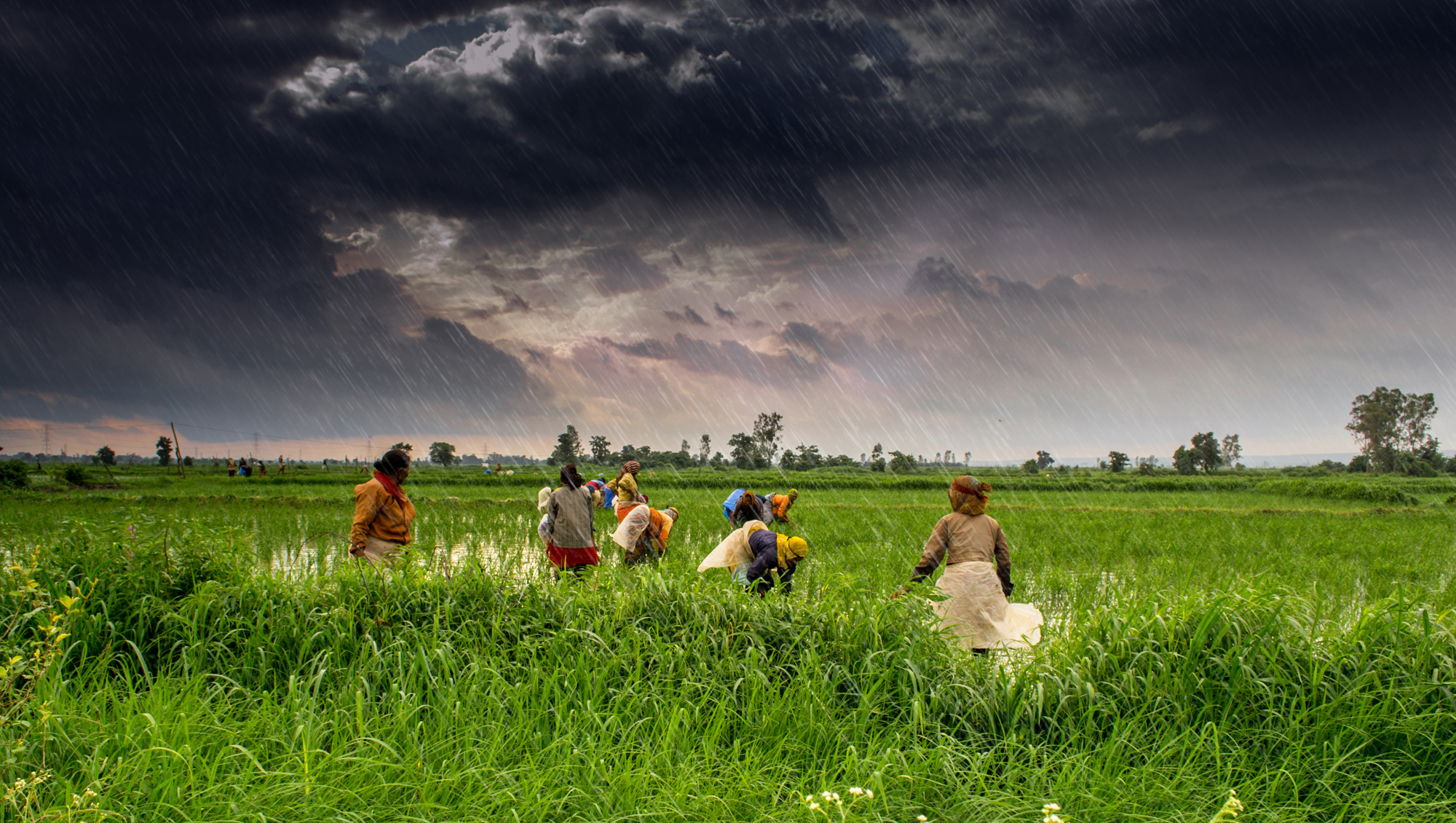
India - Crop insurance not within reach
16.01.2017 440 views
Agriculture insurance has a long way to go in helping farmers manage risks in farming. A lot of awareness and simplification of norms are the need of the hour, say stake holders from the sector.
In a country, where agriculture is largely influenced by climatic conditions and remunerative prices for farm produce are a distant dream, crop insurance can be of great help. But, surprisingly, instead of being a sought-after avenue for risk management, crop insurance schemes failed the farmers when they needed it the most.
“Banks are deducting premium amount from the loan amount issued to us. But, farmers do not get any help from insurance company or the government in case of crop loss, due to complex rules and conditions. With no hope of reimbursement from any one, in case of crop loss, we feel even the amount deducted from banks towards premium as unnecessary burden,” rued P Komulaiah, a farmer from Wanaparthy in Telangana.
Meanwhile, when farmers are taking loans from banks, they are mandatorily charged insurance premium amounts, pushing them to opt for insurance in some states. When it comes to taking credit out of banking system, most do not even have an idea of insurance.
“Insurance is a tool for risk management, which is very essential for Indian farmers. While farmers are ignorant of agri-insurance, even a lack of will among governments and insurance companies to popularise agriculture insurance is adding to the problem. Awareness needs to be created about the benefits of insurance among farmers and agriculture insurance policies should be simplified to cover the actual losses,” said Vijay Sardana, noted agriculture and rural economist.
After the introduction of Pradhan Mantri Fasal Bima Yojana in February, 2016, the amount to be paid by the farmers towards premium has considerably decreased. Farmers need to pay only two per cent and 1.5 percent for regular crops in Kharif and Rabi seasons, respectively, and five per cent for commercial crops. The remaining amount of premium is paid by the state and the central government.
Besides Agriculture Insurance Company of India, private insurance companies such as Bajaj Allianz, Cholamandalam MS, Royal Sundaram, Iffco-Tokio, HDFC Ergo have also been operating in agriculture insurance sector.
With the entry of private companies, awareness on agriculture insurance is also likely to increase which would further help the area of crop insured to grow. “As farmers lack awareness and drive to get insured right now, we have ordered field-level agriculture officers to convince farmers to take farm insurance and accustom them to the culture of agriculture insurance,” said a senior official, who looks after agri-insurance in Telangana agriculture department.
From the last kharif season, the government has adopted villages as units for calculating compensation in case of crop loss instead of mandal, thus improving the prospects of farmers getting compensation in case of crop loss due to natural calamity. But farmers feel this as just a small step. Complexities in claims are another hindrance that needs to be addressed to win the trust of farmers in agri-insurance.
“The conditions of crop insurance change from crop to crop and from district to district, thus creating confusion among farmers. Will any farmer find an insurance agent in their village or nearby town, like they find vehicle insurers and life insurers? Unless the farmer is taken as unit or the extent of farm area decreased for compensating, agri-insurance will not serve the purpose,” says Yerneni Nagendranath, Chairman, Federation of Farmers.
Source - http://www.newindianexpress.com
EVENTS

ScaleAgData Stakeholder Engagement Event
22.10.2024The ScaleAgData project is pleased to invite you to our second stakeholder event. Building on the discussions and connections formed during our first webinar, this event will focus on fostering collaboration among stakeholders, providing updates on our project’s progress, and outlining future opportunities for engagement.
RISK EVENTS

Moldova - May frosts caused heavy damage to fruit orchards
10.05.2026The first frosty nights of May have significantly worsened estimates of damage to Moldova's fruit sector from spring frosts. According to initial assessments by fruit market operators, between a quarter and a third of the country's total orchard area was seriously affected.
04.06.2026

India - Delhi raises crop damage compensation after 10 years by over 50% to Rs 75,000 per hectare
In a major relief for farmers, the Delhi government has increased compensation for crop loss caused by rain and hailstorms from Rs 20,000 per acre to Rs 75,000 per hectare.
04.06.2026

Why Tech-Driven Agro-Insurance Has Stumbled in Ethiopia
For decades, Ethiopia’s agricultural sector has remained trapped in a dangerous paradox.
04.06.2026
UK - Rural crime cost Wales £2.2m last year despite fall in offences
Rural crime cost Wales an estimated £2.2 million last year, with organised criminals continuing to target tractors, livestock and farming equipment despite an overall fall in offences, according to a new report.
04.06.2026

Kenyan Agro-Insurance Startup, Pula Raises US$ 20 Million in Series B Round
Pula, a Kenyan startup that offers insurance to small-scale farmers, aims to serve more than 100 million farmers in Africa after raising US$ 20 million in its Series B round.
04.06.2026

USA - USDA announces $52M to boost public access to private lands for hunting, fishing
The U.S. Department of Agriculture is announcing $52 million to help state and tribal governments encourage private landowners to allow public access to their land for hunting, fishing and other wildlife-dependent recreation through the Voluntary Public Access and Habitat Incentive Program (VPA-HIP).
04.06.2026

Hope Grows in Malawi’s Grain Stores as Farmers Battle Post-Harvest Losses
Some grain rots in poorly ventilated storage. Some is eaten by pests. Some is damaged during drying or transportation before it ever reaches the market.
03.06.2026

Canada - AFSC extends several northern Alberta seeding dates for 2026
Alberta’s Agriculture Financial Services Corp. (AFSC) is extending the recommended seeding dates in the province’s northeast, northwest and Peace regions for several crops for the 2026 growing season only.
03.06.2026

India - Elephants run amok in Konaje agricultural farm, cause massive crop damage
A herd of elephants, including calves, wreaked havoc on an agricultural farm belonging to Yashodhara Gowda at Pallattadka in Konaje village of Kadaba taluk.
