


India - Despite severe setback to the crops on account of natural calamities, total food grains production had been increased to 253.16 million tones in FY16
12.04.2016 412 views
The farmers have worked hard and produced enough food grains in spite of adverse circumstances- Shri Singh
Union Agriculture & Farmers Welfare Minister, Shri Radha Mohan Singh said that government is taking concrete steps to remove debt problems of the farmers. He further said that Government has increased Agricultural Credit target Rs. 9 lakh crore for the year 2016-17 to bring the farmers within institutional fold. He added that government is taking long term measures to remove the problems of the farmers.
Shri Singh observed that inspite of a severe loss to the crops owing to unseasonable rainfall, hailstorm and other natural calamities, the whole food grain production which was 252.02 million tons in 2014-15 as per second advance estimate (15 February 2016), it has been increased to 253.16 million tones on 2015-16. He said that, the government has to double the farmers income in the next five years as is announced in the budget 2016-17. Hon'ble Prime Minister has suggested 7 points to achieve the target.
Increase in Production: The Government has increased budgetary provision in irrigation sector. Government aims at 'more crop per drop'. Government policy is focused on water preservation and irrigation. Government is working hard to increase the productions of other crops along-with paddy and oilseeds.
More income less input: We can get higher productivity from the seeds when it get right amount of nutrients from the soil. Soil health card scheme can help in this regard. We are providing useful information to the farmers. In this programme, farmers will invest less and get more. It is necessary to regularize the cost of farming and to maintain the productivity of crops. Soil health promotion programme has been initiated for the preservation of soil health.
Government has decided last year to produce only neem coated urea so that plants get nutrients easily. Rs 20,000 per acre are being provided to the farmers to encourage them to adopt organic farming.
To increase the income of farmers by reducing their marketing expenditure: A national agriculture market is being set up for electronic trading. In this programme, 585 agriculture mandis of India will be connected to each other. The farmers will get maximum price of their crops and the interference of mediators will be reduced to a greater extent. Direct foreign investment is also being encouraged in this field.
Agriculture risk security: Under Prime Minister Fasal Bima Yojana, the farmers will be benefited on account of natural calamities like storms, earthquake and cyclone etc.
To reduce post-production losses production: The government of India has promoted region based strategy according to the climatic diversity of every state and region by implementing unified Horticulture Development Mission so as to develop horticulture sector as a whole. Under this mission, the government aims to promote technical setup, extension of area under horticulture crops, post-harvest management, processing and marketing etc. India ranks second on global scenario in horticultural crops after China.
Value addition: Government is promoting processed food industry so as to make value addition in agricultural products. Not only this, but government is also chalking out its programme through different schemes to increase the production of fruits and vegetables and its processing with assistance of Ministry of Food Processing Industry. The government aims to increase it to 25% by 2025 in comparison of 10% in existing scenario.
Auxiliary Activities: With Hon'ble Prime Minister's vision, this task will be executed partly through livestock, dairy, poultry, bee keeping, agriculture ponds and fisheries. Simultaneously, the efforts are being made to increase the income of farmers by planting trees in fields and installing solar panels there.
Shri Singh informed that to increase availability of seeds in north east states, National Seeds Corporation had asked Govt of West Bengal, Jharkhand and Bihar to provide land to establish production centres. West Bengal and Jharkhand have given land and it is hoped that Bihar will do the same. Minister also said that to establish an institution like Central Institute of Agricultural Engineering, Bhopal, Maharashtra, Gujarat, Bihar were requested to provide land. Maharashtra, Gujarat and Uttar Pradesh have given land and it is hoped that Bihar will provide the land for the same.
Source - business-standard.com
EVENTS

ScaleAgData Stakeholder Engagement Event
22.10.2024The ScaleAgData project is pleased to invite you to our second stakeholder event. Building on the discussions and connections formed during our first webinar, this event will focus on fostering collaboration among stakeholders, providing updates on our project’s progress, and outlining future opportunities for engagement.
RISK EVENTS

Moldova - May frosts caused heavy damage to fruit orchards
10.05.2026The first frosty nights of May have significantly worsened estimates of damage to Moldova's fruit sector from spring frosts. According to initial assessments by fruit market operators, between a quarter and a third of the country's total orchard area was seriously affected.
04.06.2026

India - Delhi raises crop damage compensation after 10 years by over 50% to Rs 75,000 per hectare
In a major relief for farmers, the Delhi government has increased compensation for crop loss caused by rain and hailstorms from Rs 20,000 per acre to Rs 75,000 per hectare.
04.06.2026

Why Tech-Driven Agro-Insurance Has Stumbled in Ethiopia
For decades, Ethiopia’s agricultural sector has remained trapped in a dangerous paradox.
04.06.2026
UK - Rural crime cost Wales £2.2m last year despite fall in offences
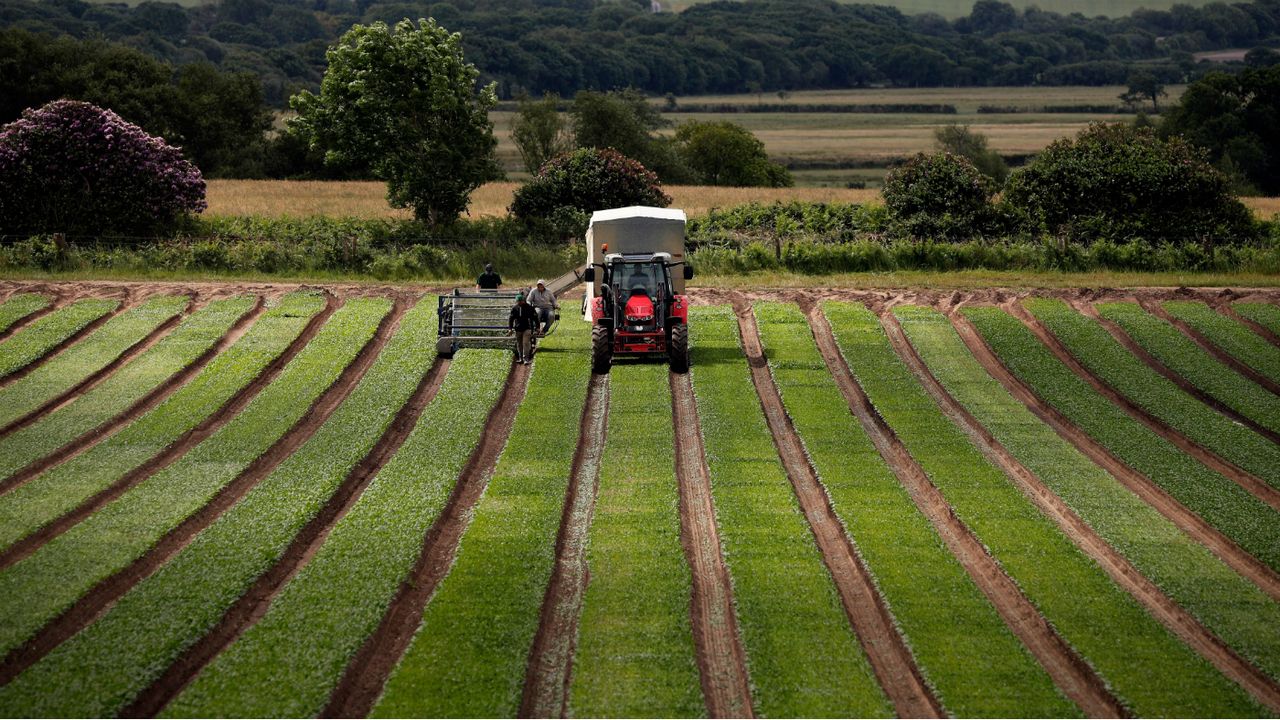
Rural crime cost Wales an estimated £2.2 million last year, with organised criminals continuing to target tractors, livestock and farming equipment despite an overall fall in offences, according to a new report.
04.06.2026

Kenyan Agro-Insurance Startup, Pula Raises US$ 20 Million in Series B Round
Pula, a Kenyan startup that offers insurance to small-scale farmers, aims to serve more than 100 million farmers in Africa after raising US$ 20 million in its Series B round.
04.06.2026
USA - USDA announces $52M to boost public access to private lands for hunting, fishing
The U.S. Department of Agriculture is announcing $52 million to help state and tribal governments encourage private landowners to allow public access to their land for hunting, fishing and other wildlife-dependent recreation through the Voluntary Public Access and Habitat Incentive Program (VPA-HIP).
04.06.2026

Hope Grows in Malawi’s Grain Stores as Farmers Battle Post-Harvest Losses
Some grain rots in poorly ventilated storage. Some is eaten by pests. Some is damaged during drying or transportation before it ever reaches the market.
03.06.2026

Canada - AFSC extends several northern Alberta seeding dates for 2026
Alberta’s Agriculture Financial Services Corp. (AFSC) is extending the recommended seeding dates in the province’s northeast, northwest and Peace regions for several crops for the 2026 growing season only.
03.06.2026

India - Elephants run amok in Konaje agricultural farm, cause massive crop damage
A herd of elephants, including calves, wreaked havoc on an agricultural farm belonging to Yashodhara Gowda at Pallattadka in Konaje village of Kadaba taluk.
