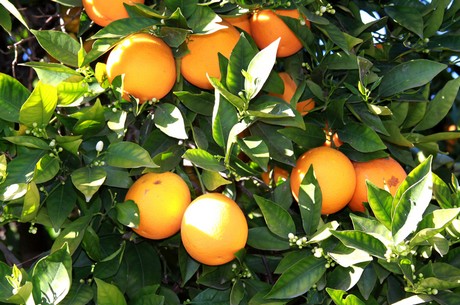
Changing weather conditions in Vidarbha over the past few years have spelt doom for orange cultivation in the region. In the near seven- decade history of orange plantations here, this is the first time that an alarming 60% orange orchards have gone completely dry and, for all purposes, died this year.
The loss is stark in Warud tehsil of Amravati district followed by Katol and Narkhed tehsils of Nagpur district. For the first time, big and rich farmers are talking about selling off their lands and switching to other occupations.
The vagaries of weather, scanty and erratic rains in last two years coupled with prolonged high temperatures throughout May and delayed pre-monsoon rains this year are responsible for this unheard-of plight of orange farmers. The loss caused to the ambia bahar crop alone (which fruits in September) is being pegged at about Rs1,620 crore. (mrig bahar, the other crop, fruits from February to April). However, the loss due to orchards (15-20 years) dying completely cannot be monetarily pegged.
Shridhar Thakre, one of the Maha Orange directors and a big farmer, told that he had stopped going to the orchards as he could not see the condition of the trees. He owns a 20-acre land with 3,500 orange trees in Talegaon village (Ashti) in Wardha district with irrigation facilities. But there is no water in the wells. The water table has gone below 1,000ft.
“It is for the first time that the temperatures continuously hovered between 44 degrees Celsius to 47.5 degrees in the month of May. This year, there has been no pre-monsoon showers too. Neither the agriculture nor the revenue department has visited the orchards even once,” said Thakre.
Rajendra Thakre from Benoda Shahid village in Warud tehsil says he has incurred a Rs1.5 crore loss this year. “I am 58 years old and have never seen such a situation in 30 years of agriculture. I have no option but to sell the land,” he said.
All four of Thakre’s wells have gone bone dry. He tried bringing water from Paknala dam about 11km from the orchard by spending Rs18 lakh but the water in the dam too dried out soon. “Electricity supply at odd hours — night and afternoon — doesn’t allow proper irrigation,” he said.
Ramhesh Jichkar, who heads the Vidarbha Agriculture and Allied Producers Association and has oranges in 30 acres in Nagziri in Warud tehsil, says that 30% of his orchard has been affected. The water table here too has gone below 1,000ft. An average orange tree needs about 240 litres per day. “Past three years has a rain deficit. Where will we get water from,” he asked.
Taj Khan, who has orchards in 200 acres and is a trader as well in Shahpur village, says that he deepened a water reservoir using own money so that “all can benefit but no rain means storage has been less”. “I have a farm pond too but when there is no rain there is no water to store too,” he said.
Small farmers from Madhav Taiwade (Jamgaon), Ganesh Dhote (Dawsa), Rambhau Kubade, Devnarayan Chaudhary and Durgabai Galbale (Umtha), Ramuji Deshbhratar (Arambi) — all in Narkhed Taluka — just point to their dry orchards.
Among the many farmers, only Manoj Jawanjal, a Maha Orange director and an organic orange grower, and Anil Junghare from Katol have managed to keep their orchards green. “I have farm ponds and bore wells. I pull out the water from wells also and store in ponds with polythene sheath at the bottom to prevent seepage,” said Junghare.
Source - https://timesofindia.indiatimes.com