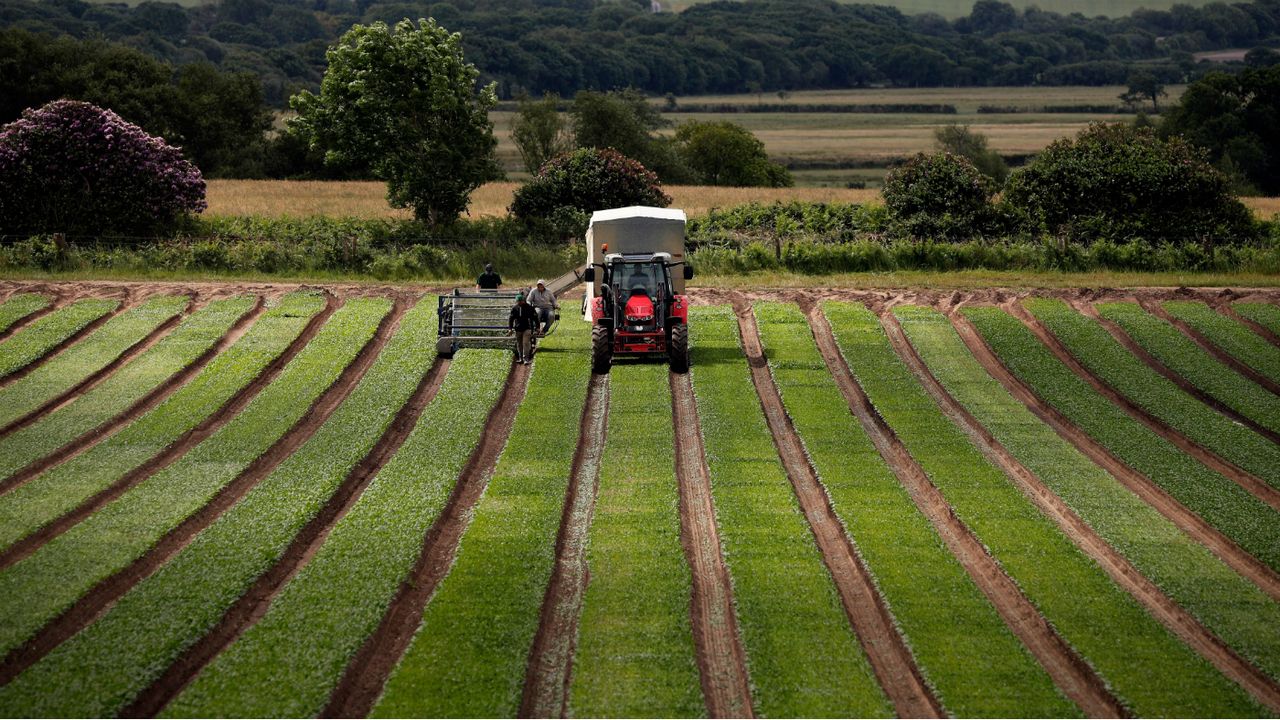
A task force on the use of technology for agriculture insurance, set up by government think-tank Niti Aayog, has recommended the use of technologies such as dedicated satellites, mobiles and global positioning system (GPS) devices to ensure better implementation of the agriculture insurance scheme in the country.
India has all the technologies that could be put to use for quicker assessment and disposal of agri-related insurance claims, the task force, which was constituted in June last year, said in a report submitted on Wednesday. The report was written by a 16-member committee headed by CCAFS (CGIAR research programme on climate change, agriculture and food security) global leader P.K. Aggarwal. The report explores the use of technologies like dedicated satellites available with Isro (Indian Space Research Organization) and mobile phones as key instruments to bring about the change, said a member of task force, speaking on condition of anonymity. There are various ways, like a mobile can capture physiological conditions of crops and crop fields and the photographs can be sent with GPS coordinates, reducing chances of cheating. Similarly, mobile applications can be developed where a claimant can track his case, etc, the task force member added. Niti Aayog member Ramesh Chand said India has been using old technologies like crop cutting method and physical assessment by officials which is a cumbersome process and leads to considerable delay. “We wanted to expedite insurance related issues and quick methods of loss assessment so the task force was formed. Besides, right now insurance has lot of subjectivity and we wanted experts to tell us technology that can impart objectivity to assessment as now crop insurance is very comprehensive and includes post harvest losses, etc which can’t be assessed by conventional methods.” Chand declined to comment further, saying the report was submitted on Wednesday and he had not gone through it. According to the terms of reference of the task force, it was asked to assess and analyse the availability and use of technology, globally and in India for insurance related to crop, livestock and aquaculture. They were also asked to tell how technologies can be used in estimation of damage and losses to crops, livestock and aquaculture due to natural calamities or other hazards. Source - http://www.livemint.com


ScaleAgData Stakeholder Engagement Event
22.10.2024The ScaleAgData project is pleased to invite you to our second stakeholder event. Building on the discussions and connections formed during our first webinar, this event will focus on fostering collaboration among stakeholders, providing updates on our project’s progress, and outlining future opportunities for engagement.
Moldova - May frosts caused heavy damage to fruit orchards
10.05.2026The first frosty nights of May have significantly worsened estimates of damage to Moldova's fruit sector from spring frosts. According to initial assessments by fruit market operators, between a quarter and a third of the country's total orchard area was seriously affected.
India - Delhi raises crop damage compensation after 10 years by over 50% to Rs 75,000 per hectare
In a major relief for farmers, the Delhi government has increased compensation for crop loss caused by rain and hailstorms from Rs 20,000 per acre to Rs 75,000 per hectare.
Why Tech-Driven Agro-Insurance Has Stumbled in Ethiopia
For decades, Ethiopia’s agricultural sector has remained trapped in a dangerous paradox.
UK - Rural crime cost Wales £2.2m last year despite fall in offences
Rural crime cost Wales an estimated £2.2 million last year, with organised criminals continuing to target tractors, livestock and farming equipment despite an overall fall in offences, according to a new report.
Kenyan Agro-Insurance Startup, Pula Raises US$ 20 Million in Series B Round
Pula, a Kenyan startup that offers insurance to small-scale farmers, aims to serve more than 100 million farmers in Africa after raising US$ 20 million in its Series B round.
USA - USDA announces $52M to boost public access to private lands for hunting, fishing
The U.S. Department of Agriculture is announcing $52 million to help state and tribal governments encourage private landowners to allow public access to their land for hunting, fishing and other wildlife-dependent recreation through the Voluntary Public Access and Habitat Incentive Program (VPA-HIP).
Hope Grows in Malawi’s Grain Stores as Farmers Battle Post-Harvest Losses
Some grain rots in poorly ventilated storage. Some is eaten by pests. Some is damaged during drying or transportation before it ever reaches the market.
Canada - AFSC extends several northern Alberta seeding dates for 2026
Alberta’s Agriculture Financial Services Corp. (AFSC) is extending the recommended seeding dates in the province’s northeast, northwest and Peace regions for several crops for the 2026 growing season only.
India - Elephants run amok in Konaje agricultural farm, cause massive crop damage
A herd of elephants, including calves, wreaked havoc on an agricultural farm belonging to Yashodhara Gowda at Pallattadka in Konaje village of Kadaba taluk.