
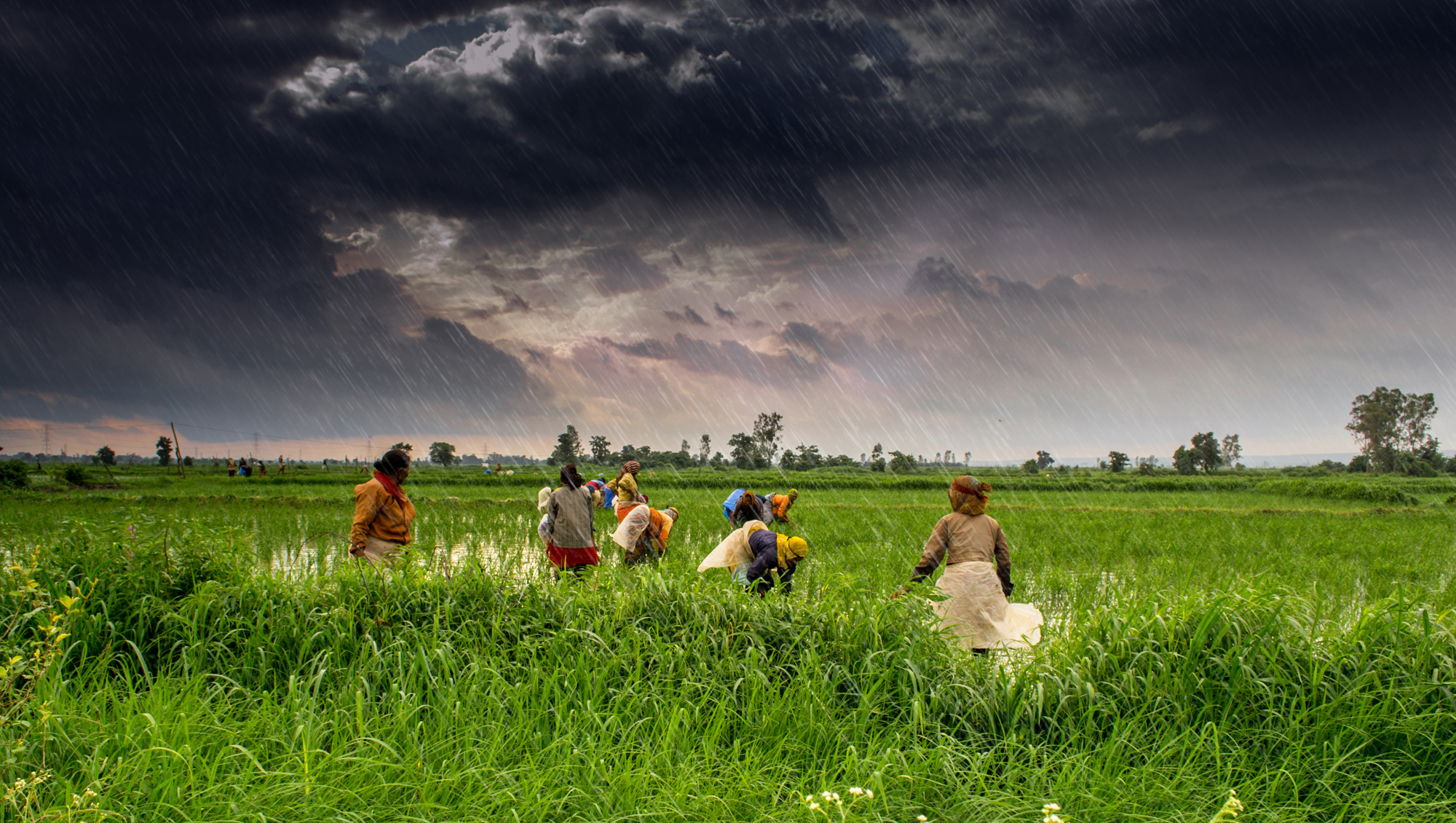
The government, in the budget for FY 2016-17, has come up with a number of ambitious programmes to boost the agriculture sector.
Even as the government struggles to implement programmes announced in the previous budget, the government has allocated Rs35.86 billion for agriculture development and livestock promotion—up 57 percent compared to last year’s allocation. The government plans to implement the “Prime Minister Agriculture Modernisation Project” to boost production and productivity. For the purpose, the government has allocated Rs5.78 billion. The project aims at making the country self-reliant in wheat and vegetables by the next fiscal year.
It also envisages making the country self-reliant in paddy and potato in the next two years; corn and fish in three years; banana, papaya and lichi in four years; and kiwi, apple, orange, sweet orange and mango in 10 years. “For the purpose, specialised agriculture production areas will be identified based on land fertility,” states the budget. Under the scheme, land will be divided into four categories—pocket, block, zone and super zone.
The pocket areas will get subsidies on fertilisers and irrigation canal construction, besides other technical support and ensuring easy availability of seeds and saplings. Farmers in blocks, zones and super zones will receive additional benefits including 85 percent subsidy on construction of agro production collection centres, warehouse, haat bazaar, processing and training centres. Those involved commercial farming in the blocks will get 50 percent grant on purchasing equipment. The government has also announced providing the services through 15 mobile laboratories in the specialised agriculture production areas.
Expert Hari Dahal hailed the government’s plan. “However, the effectiveness of the programmes will de- pend on implementation.”
The government will also divide farmers into four categories—agriculture labour, marginalised farmer, semi-commercial and commercial farmers. The budget has also announced forming a farmer’s commission, besides carrying out a study to set up a social security fund. Dahal said the commission, if represented by professionals, will help resolve problems being faced by the farmers. “Also, the commission should be free from any political intervention,” he said.
The budget has continued the government’s scheme of providing 75 percent on the premium of crops and livestock insurance. It has also raised the subsidy on interest on agriculture loans to 5 percent and removed the ceiling of Rs10 million on the agriculture credit to become eligible for the subsidy.
The government will provide the loans to the farmers on the basis of the crops they have planted. It will fix support prices for paddy, wheat, corn and sugarcane before harvest. Expanding the “Chaite Dhan Promotion Programme” to 35 districts, running aromatic paddy production in 20 districts, extending mid-hill corn production to 41 districts and developing fruits forest along the postal and mid-hill highways are other programmes the government has envisioned.
The budget has allocated Rs8.46 billion for boosting the production of egg, meat and milk. Under the scheme, the government aims at making the country self-relient in egg by the next fiscal year. It has also planned to make the country self-reliant in meat and milk in two and three years.
Dahal stressed on the need for increasing the budget for research and development. “Developing policies based on research, delegating power to local authorities to implement the programmes, increasing the efficiency of project implementation, and incorporating new farmers in the assigned programmes should be the government’s priorities,” he said.
Source - http://kathmandupost.ekantipur.com











