USA - 3 big things today

04.08.2020 455 views
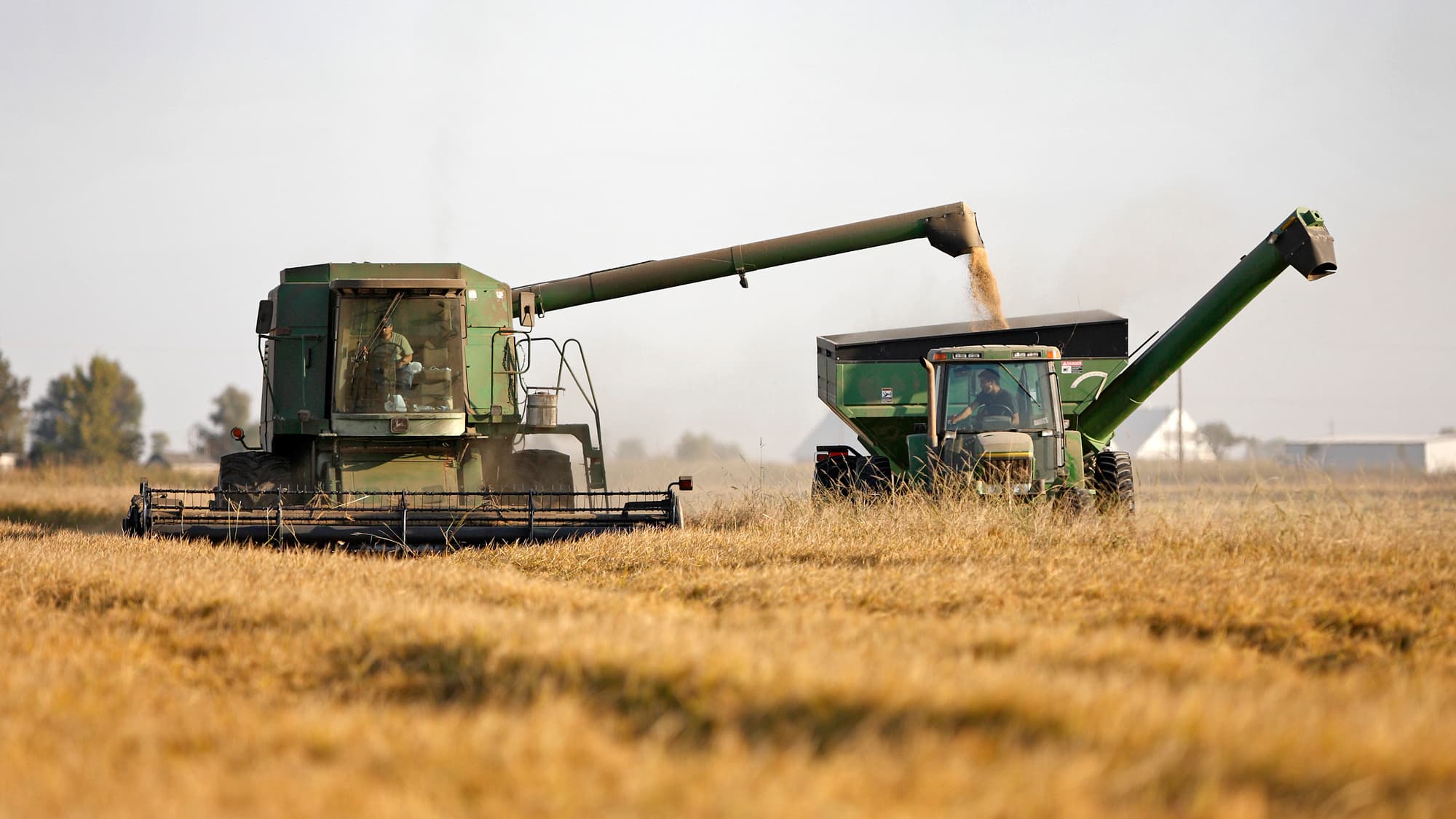
1. SOYBEANS DROP OVERNIGHT ON LOFTY CROP RATINGS Soybean futures dropped in overnight trading after the U.S. Department of Agriculture said in a report that crop conditions improved. About 73% of the U.S. crop was in good or excellent condition as of Sunday, up from 72% a week earlier. Only 54% of the crop earned top ratings at the same time last year, the USDA said. In Iowa, 73% was rated good or excellent and in Illinois, 76% earned top ratings. The states are the largest producers of soybeans and corn in the U.S. Some 59% of the crop was setting pods, up from 43% a week earlier and the prior five-year average of 54%. About 85% was blooming, up from 76% last week and the average of 82%. The corn crop was rated 72% good or excellent, unchanged from the previous week but still well ahead of the 57% that earned top ratings at this point in 2019, the agency said. About 39% was in the dough stage, up from 22% a week earlier and the average of 33% for this time of the year, the USDA said. Ninety-two percent was silking versus 82% a week ago and the average of 87%. The weather so far this year has been favorable for crop maturation, though some dry areas are starting to build in the Midwest. Parts of west-central Iowa are in a severe drought at this time, indicating water shortages and crop losses are likely, according to the U.S. Drought Monitor. Soybean futures for December delivery fell 4 3/4¢ to $8.91 ½ a bushel overnight on the Chicago Board of Trade. Soymeal dropped $1.90 to $293.80 a short ton and soy oil gained 0.13¢ to 31.45¢ a pound. Corn futures for December delivery lost 2 ½¢ to $3.26 a bushel. Wheat futures for September delivery fell 4 1/4¢ to $5.16 ¾ a bushel overnight while Kansas City futures dropped 1 3/4¢ to $4.29 a bushel. 2. EXPORT INSPECTIONS OF CORN AND WHEAT DOWN WEEK-TO-WEEK Export inspections of corn and wheat declined week-to-week while soybean assessments improved, according to the USDA. Corn inspections for overseas delivery fell to 716,127 metric tons in the seven days that ended on July 30, the agency said in a report.
Wheat assessments dropped to 500,110 metric tons from 544,010 tons, the USDA said. The total was still up from the 416,177 tons examined in the same week in 2019. Soybean inspections, meanwhile, rose to 551,543 metric tons, up from 504,645 tons a week earlier. That was, however, well below the 1.03 million metric tons assessed at the same point a year earlier, the agency said. Since the start of the marketing year on Sept. 1, the USDA has inspected 37.9 million metric tons of corn for offshore delivery. That’s well below the 44.9 million tons assessed during the same timeframe a year earlier. Soybean inspections since the start of last September now stand at 39.4 million metric tons, which compares with 41.4 million tons at the same point last year. Wheat assessments since the start of the grain’s marketing year on June 1 now stand at 4.63 million metric tons, up slightly from the 4.25 million tons inspected during the same period last year, the USDA said in its report. 3. THUNDERSTORMS ROLLING THROUGH KANSAS MAY TURN SEVERE Storms are likely this morning in much of Kansas with some potentially turning severe, according to the National Weather Service. Some of the stronger storms that result from the system will be capable of producing pea-sized hail, the NWS said in a report early this morning. They may become stronger as the day goes on. “Storms are expected to move out of western Kansas tonight and affect central and south central portions of the state after 10 p.m.,” the agency said. “Areas generally along and southwest of a Great Bend to Hutchinson to Wichita line will have better chances to experience storms. The stronger storms tonight may produce hail up to quarter size along with 50 to 60 mph winds. Heavy rain will also be possible with the more intense storms.” Scattered thunderstorms also are expected in parts of southeastern South Dakota, southern Minnesota and northwestern Iowa today and tonight. Severe weather isn’t expected. Some of the storms will linger into tomorrow and tomorrow night with the potential for hail and strong winds, the NWS said. Source - https://www.agriculture.com
11.01.2026

USA - USDA’s Agricultural Research Service (ARS) helping wheat farmers fight a devastating crop disease

Researchers released a new spring wheat germplasm line with resistance to Fusarium head blight.

11.01.2026

Kenya - Government Mobilises Food and Livestock Relief for Mandera Amid Drought

The Government of Kenya has mobilised food and non-food essentials for urgent delivery to areas affected by food and nutrition shortages caused by adverse weather and low rainfall during the recently ended short rains.

11.01.2026

Indonesia - Govt identifies 30,000 hectares of fish ponds damaged by Aceh flooding

The Ministry of Marine Affairs and Fisheries has identified around 30,000 hectares of aquaculture ponds damaged by floods that hit several regions in Aceh.

11.01.2026

India - Pests and climatic factors damage tomato crop in Haldwani

The Gaulapar area in Haldwani, known for tomato cultivation, has been hit hard by pests and climatic factors this season. 

11.01.2026

Ethiopia’s Agricultural Reforms Attract Global Partners as Food Sovereignty Gains Momentum

Ethiopia’s ongoing agricultural reforms are reinforcing national food self-reliance while attracting growing interest from international development partners, according to a senior official from the Canadian Food Grains Bank (CFGB).

11.01.2026

India - Delhi to digitise agriculture under federal support scheme

Delhi Chief Minister Rekha Gupta has announced plans to fully digitise the city’s agricultural system, introducing digital records for farmers and farmland. 

08.01.2026

Pakistan - Balochistan Agriculture Secretary inspects vegetable seed research farm

Balochistan Secretary of Agriculture, Noor Ahmed Parkani, inspected the Vegetable Seed Breeding Division on Mastung Road. 

08.01.2026

Vietnam pushes biopesticides to support green farming

Biological plant protection products have emerged as an important solution to gradually reduce dependence on chemical pesticides, support integrated pest management (IPM), and advance ecological and organic farming.