

USA - An Economic Assessment of Crop Revenue Insurance
11.03.2016 373 views
Revenue protection for crop insurance is commonplace in the United States and is emerging in other markets around the world. In the U.S., about 80% of crop insurance policies are categorized as revenue protection; that is, the farmer is paid an indemnity based on the difference between what their actual farm revenue is versus the revenue that the farm could potentially earn had prices or yields not fallen. In effect, the insurance offers protection from production risk due to natural perils, such as weather and disease, as well as the price risk as a result of turbulent commodities markets.
In order for revenue insurance to have a viable place in the marketplace there has to be a few prerequisites. As with all crop insurance, data needs to be available for calculating the expected yield distribution, for calculating the farm’s expected yield and determining the probability distribution of indemnity payments and the size of those payments. The naïve view would be that one also needs historical data for calculating probability distribution of prices since revenue = prices*yields. However, historical data on price distributions are seldom enough to properly account for the risk of insuring the price component of revenue insurance. When oil is trading at $30/barrel, it would be silly to insure based on the average price of the past 5 years (~$100/barrel). The same is true for commodity crops whose prices go through cycles of boom and bust. Another problem is that historical price volatility is not a reliable measure of volatility for purposes of calculating revenue insurance premium. Therefore, revenue insurance programs based solely on historical data are fundamentally flawed. In order for crop revenue insurance to be viable, there needs to be an unbiased way of calculating expected future prices and expected future volatility.
Fortunately, these two things are exactly what well-functioning commodities futures markets provide: an unbiased estimate of the future price and the implied volatility from the commodity futures options market. The unfortunate part is that futures markets are only well-functioning in certain regions for certain crops. From the futures market there might exist an unbiased estimate for the price of corn in the Midwest in September, but we do not know what almonds in California should fetch in the future because there are no contracts traded for almonds. That suggests that revenue insurance for corn farmers in Iowa is possible but not for almond farmers in California.
Contrary to the above, revenue insurance products not based on well-functioning commodity futures markets do exist in the marketplace. However, the industry needs to be mindful of the shortfalls in providing revenue insurance products without well-functioning commodities market providing information about the underlying price risk. If the insurer’s expectation of price is higher than the farmer’s, the farmer might over-insure. If the insurer’s expectation of price is lower than the farmer’s, the farmer might under-insure or not purchase insurance at all (let’s call this the value misjudgment). Likewise, if the insurer misjudges the volatility of prices, the rates will either be too high or too low for the risk. Farmers often have a better sense of the expected price and expected volatility than insurers (let’s call this the rating misjudgment). Actuaries might look to rating these policies based on historical ‘as-if’ analysis, but this type of analysis will fail to capture the participation differential for periods when the farmer judges that the price/risk tradeoff is favorable. When the farmer judges it to be unfavorable, the insurer may end up underwriting more policies that have a higher likelihood of producing claims (let’s call this the participation misjudgment).
This type of information asymmetry exists in many types of insurance, where a great deal of effort is spent dealing with adverse selection (e.g., only people of poor health purchase health insurance). Some solutions are to sell to groups instead of individuals so that the average risk is known even if individual risks are not. In crop insurance, price impacts everyone to a similar degree and insuring groups does not reduce the value misjudgment or the rating misjudgment. However, the market might think about averaging over time instead of averaging over individuals in a group so that periods of overestimating price/volatility risk and underestimating it are canceled out. In practice, it is very difficult to have crop insurance contracts span a significant period of time due to changes in crop types, size of fields, etc. from year to year. Another possible solution is to insure many crops instead of individual crops so that the risk is averaged out. This would be a good solution if crop prices were not highly correlated; yet data tend to show that commodity prices are becoming more correlated over time not only among crops but also between all commodities. Even if crop prices were not highly correlated the uneven sales of policies from year to year, the participation misjudgment, would still occur.
To provide revenue insurance for crops without sufficiently liquid commodity futures markets is a challenge. Even when there is a sufficiently liquid commodity futures market, price risk is non-diversifiable for the insurer since corn prices in Iowa are most likely going in the same direction as corn prices in Indiana. Reinsuring price risk may be one solution but, in general, non-diversifiable risks require special attention from risk managers.
An innovative approach would be to become the market maker in these risk markets. A corn price rise is beneficial for corn farmers but causes pain for consumers of corn, such as livestock producers or ethanol plant operators. There are natural gains from trade if price risk from one industry can be easily transferred to another with the opposite risk profile. As the market for offering price risk and revenue insurance matures, it becomes incumbent upon the insurance industry to seek innovative solutions for reducing risks that farmers and agricultural firms face, but must always do so with a view toward the long-term viability of the product in mind.
Source - ironshore.com
EVENTS

ScaleAgData Stakeholder Engagement Event
22.10.2024The ScaleAgData project is pleased to invite you to our second stakeholder event. Building on the discussions and connections formed during our first webinar, this event will focus on fostering collaboration among stakeholders, providing updates on our project’s progress, and outlining future opportunities for engagement.
RISK EVENTS

Moldova - May frosts caused heavy damage to fruit orchards
10.05.2026The first frosty nights of May have significantly worsened estimates of damage to Moldova's fruit sector from spring frosts. According to initial assessments by fruit market operators, between a quarter and a third of the country's total orchard area was seriously affected.
04.06.2026

India - Delhi raises crop damage compensation after 10 years by over 50% to Rs 75,000 per hectare
In a major relief for farmers, the Delhi government has increased compensation for crop loss caused by rain and hailstorms from Rs 20,000 per acre to Rs 75,000 per hectare.
04.06.2026

Why Tech-Driven Agro-Insurance Has Stumbled in Ethiopia
For decades, Ethiopia’s agricultural sector has remained trapped in a dangerous paradox.
04.06.2026
UK - Rural crime cost Wales £2.2m last year despite fall in offences
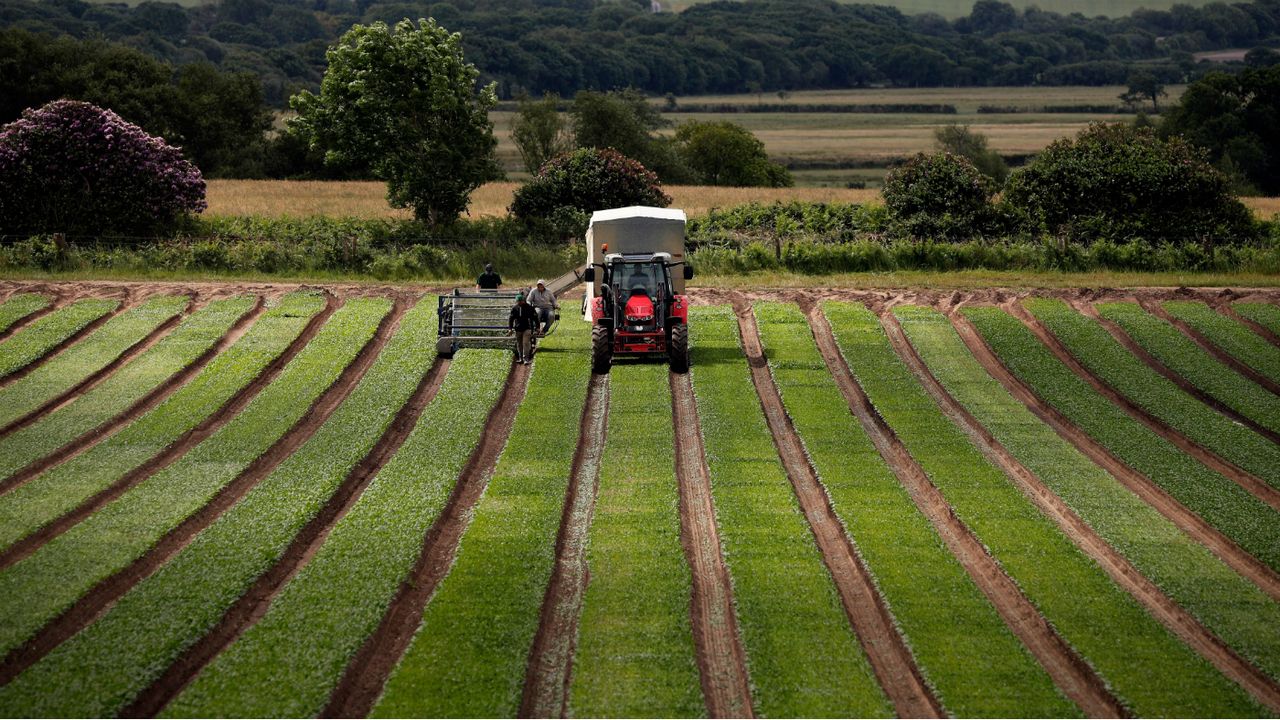
Rural crime cost Wales an estimated £2.2 million last year, with organised criminals continuing to target tractors, livestock and farming equipment despite an overall fall in offences, according to a new report.
04.06.2026

Kenyan Agro-Insurance Startup, Pula Raises US$ 20 Million in Series B Round
Pula, a Kenyan startup that offers insurance to small-scale farmers, aims to serve more than 100 million farmers in Africa after raising US$ 20 million in its Series B round.
04.06.2026
USA - USDA announces $52M to boost public access to private lands for hunting, fishing
The U.S. Department of Agriculture is announcing $52 million to help state and tribal governments encourage private landowners to allow public access to their land for hunting, fishing and other wildlife-dependent recreation through the Voluntary Public Access and Habitat Incentive Program (VPA-HIP).
04.06.2026

Hope Grows in Malawi’s Grain Stores as Farmers Battle Post-Harvest Losses
Some grain rots in poorly ventilated storage. Some is eaten by pests. Some is damaged during drying or transportation before it ever reaches the market.
03.06.2026
Canada - AFSC extends several northern Alberta seeding dates for 2026
Alberta’s Agriculture Financial Services Corp. (AFSC) is extending the recommended seeding dates in the province’s northeast, northwest and Peace regions for several crops for the 2026 growing season only.
03.06.2026

India - Elephants run amok in Konaje agricultural farm, cause massive crop damage
A herd of elephants, including calves, wreaked havoc on an agricultural farm belonging to Yashodhara Gowda at Pallattadka in Konaje village of Kadaba taluk.
