USA - Buy Crop Insurance, Double Your Money

12.02.2016 421 views
Deep in the heart of the arcane laws that give farmers a helping hand, there's something called "crop insurance." It's a huge program, costing taxpayers anywhere from $5 billion to $10 billion each year. It's called an insurance program, and it looks like insurance. Farmers buy policies from private companies and pay premiums (which are cheap because of government subsidies) to insure themselves against crop failures and falling prices. It's mainly used by corn, soybean, cotton and wheat farmers. Defenders of the program call it a safety net. But according to Bruce Babcock, an economist at Iowa State University who's also a long-time critic of this program, it's far more generous than a safety net — and really, it's not insurance at all. Normal insurance is something that you buy while hoping that you'll never use it. Crop "insurance," Babcock says, is really a lottery: You play because you hope to win. Farmers do win. A lot, in fact. And in this casino game, the house — meaning you, the taxpayer — loses every year. Here are the numbers, which Babcock just released in a new report for the Environmental Working Group. For every $1 that farmers spent on crop insurance premiums over the past 15 years, they got more than twice that much back in payouts. Even more startling is the disparity across different regions of the country. In the Corn Belt states of Indiana and Illinois, the program was not nearly as profitable for farmers. Soybean farmers in Illinois, for instance, got only 12 percent more money back than they paid into the program. But in the South and the Great Plains, it was a different story. Cotton farmers in Texas, and corn farmers in Arkansas, got more than $3 back for every $1 that they paid into the program from 2000 to 2014.
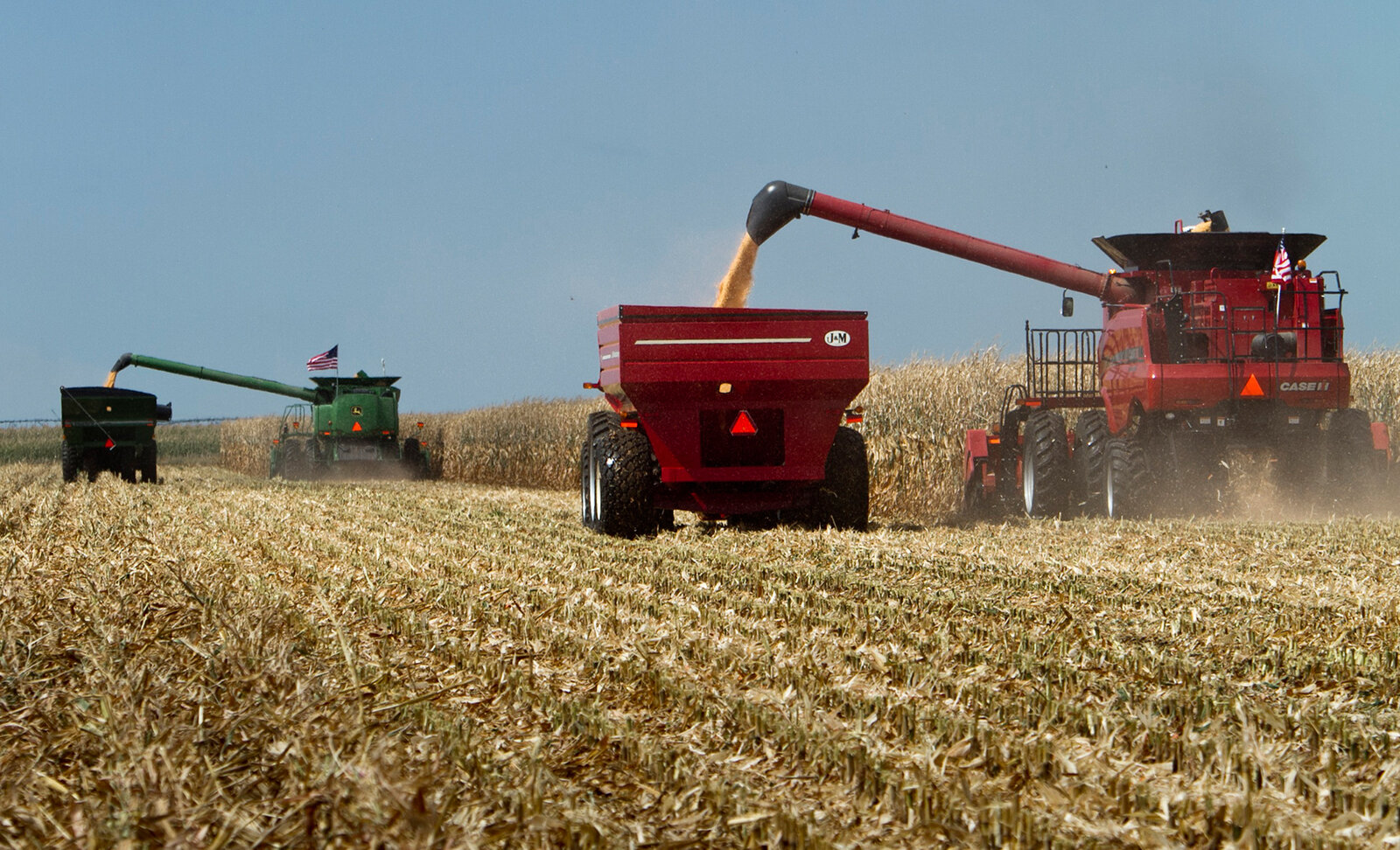
[caption id="" align="alignnone" width="1600"]Combines harvest a corn field in Grand Island, Neb. Combines harvest a corn field in Grand Island, Neb. Nati Harnik/AP[/caption]
Perhaps, Babcock says, the U.S. Department of Agriculture is setting insurance premiums too high in the Corn Belt and far too low in places where risks are actually higher, like the Great Plains. Babcock, whose academic specialty is risk management in agriculture, actually likes true insurance policies. In fact, he designed many of the insurance policies that farmers now purchase. His problem is with the generous subsidies that the government gives farmers to make these purchases, which he says are a waste of the public's money. He's been pushing an alternative. Under the Babcock plan, the government would give each farmer a grant that he or she could use to buy insurance. That grant would be enough to pay for catastrophic coverage on crops: It would pay farmers if their revenues were less than, say, 65 percent of an average year. But farmers would have to buy private insurance, with no government subsidy, for anything beyond that. Right now, the government pays part of the insurance premium for policies that cover up to 85 percent of a farm's expected revenue. The insurance covers not just crop losses, due to things like bad weather, but also losses due to falling corn or soybean prices. Babcock thinks this plan would cost taxpayers less than half what they currently are paying — perhaps $3 billion each year. But it would be a true safety net, not a lottery that farmers expect to win. Source - npr.org
04.06.2026

India - Delhi raises crop damage compensation after 10 years by over 50% to Rs 75,000 per hectare

In a major relief for farmers, the Delhi government has increased compensation for crop loss caused by rain and hailstorms from Rs 20,000 per acre to Rs 75,000 per hectare.

04.06.2026

Why Tech-Driven Agro-Insurance Has Stumbled in Ethiopia

For decades, Ethiopia’s agricultural sector has remained trapped in a dangerous paradox. 
04.06.2026

UK - Rural crime cost Wales £2.2m last year despite fall in offences

Rural crime cost Wales an estimated £2.2 million last year, with organised criminals continuing to target tractors, livestock and farming equipment despite an overall fall in offences, according to a new report.

04.06.2026

Kenyan Agro-Insurance Startup, Pula Raises US$ 20 Million in Series B Round

Pula, a Kenyan startup that offers insurance to small-scale farmers, aims to serve more than 100 million farmers in Africa after raising US$ 20 million in its Series B round. 
04.06.2026

USA - USDA announces $52M to boost public access to private lands for hunting, fishing

The U.S. Department of Agriculture is announcing $52 million to help state and tribal governments encourage private landowners to allow public access to their land for hunting, fishing and other wildlife-dependent recreation through the Voluntary Public Access and Habitat Incentive Program (VPA-HIP). 

04.06.2026

Hope Grows in Malawi’s Grain Stores as Farmers Battle Post-Harvest Losses

Some grain rots in poorly ventilated storage. Some is eaten by pests. Some is damaged during drying or transportation before it ever reaches the market.
03.06.2026

Canada - AFSC extends several northern Alberta seeding dates for 2026

Alberta’s Agriculture Financial Services Corp. (AFSC) is extending the recommended seeding dates in the province’s northeast, northwest and Peace regions for several crops for the 2026 growing season only.

03.06.2026

India - Elephants run amok in Konaje agricultural farm, cause massive crop damage

A herd of elephants, including calves, wreaked havoc on an agricultural farm belonging to Yashodhara Gowda at Pallattadka in Konaje village of Kadaba taluk.