

USA - Changing crop insurance program pushes taxpayer bill
12.05.2016 332 views
The way farmers use crop insurance has fundamentally changed — and that’s been costly for taxpayers.
Instead of buying insurance policies that exclusively protect their crop’s yields from disastrous weather, federal data shows that the majority of farmers are purchasing revenue-based plans that also guard incomes when crops are hit by dismal market prices.
The change has helped push the crop insurance program’s price tag from about $3 billion per year to more than $8 billion.
“The story used to be that this was a program to manage weather risk farmers could not control,” said Ohio State University professor Carl Zulauf. “It was a very short, a very concise, a very simple story, but over the years crop insurance has moved away from that.”
The U.S. Department of Agriculture’s Risk Management Agency now administers more than a dozen different types of government-subsidized insurance policies, and farmers can pick plans based on individual or county production history.
Overall, insurance policies exist for more than 100 crops.
Revenue-protection policies that jointly insure yields and revenue have rapidly grown in popularity, according to data.
In 2011, about half of all crop insurance policies sold were for revenue-protection plans.
By 2015, more than two-thirds of the 2.24 million policies sold were for revenue-protection.
“The program has become increasingly complex over time,” Zulauf said. “It’s clear that it’s not just yield anymore that you’re insuring.”
Low prices hurting farm income
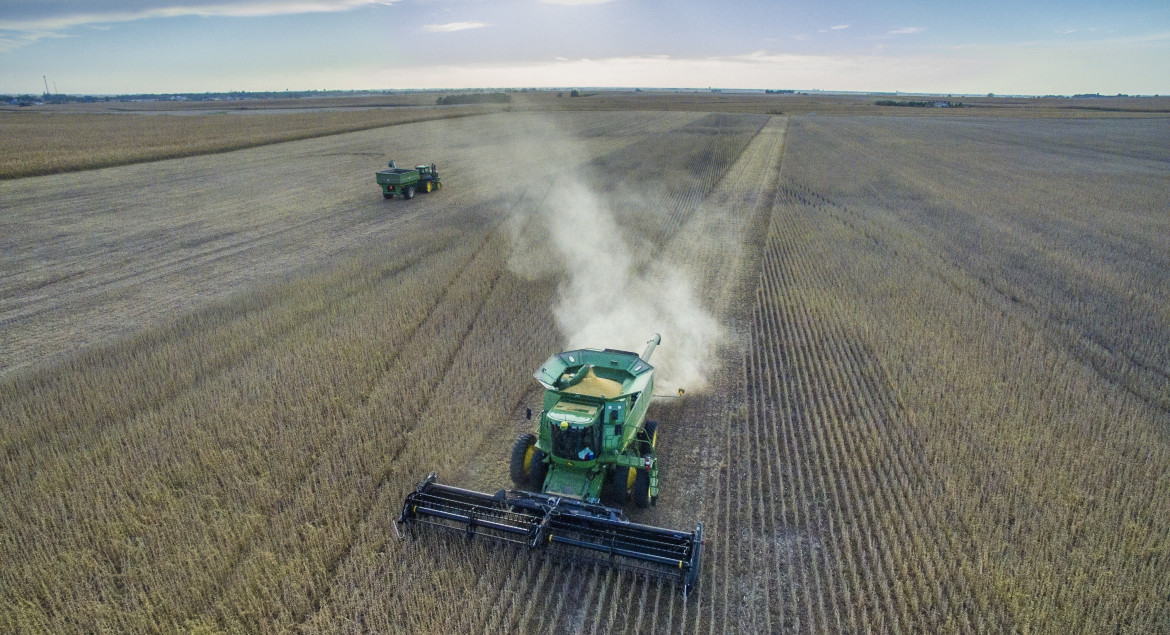
In the United States, corn and soybeans are the top commodities and the most heavily insured crops.
Consecutive growing seasons with record harvests have created a huge grain surplus and slashed the price of both.
After peaking at more than $8 per bushel in drought-stricken 2012, the price of corn has fallen to less than $4 per bushel. Soybeans have experienced similar but not as dramatic price declines, as well.
Although production has thrived, farmers’ incomes have plummeted and triggered major crop insurance payouts.
“When production is fine, it leads to lower prices,” said Doug Yoder, crop agency manager for Country Financial. “And that’s what we’re seeing right now.”
Revenue-protection crop insurance policies paid out $14.5 billion the past two years combined.
That accounted for the bulk of all insurance payouts.
Agriculture officials say that revenue-based insurance policies are essential to modern agriculture because farmers have little control over what their product ultimately sells for, and that leaves them uniquely vulnerable to price drops compared to other jobs. Farmers can just as easily go out of business from bad prices as bad weather, but revenue-protection plans provide stability, they say.
“For taxpayers, if you want to have a readily available and affordable food supply, if you want to preserve rural economies, then I think it’s important to protect these revenue-based insurance policies,” said Sam Willett, a senior director of public policy for the National Corn Growers Association.
Recent USDA estimates predict that 2016 will likely see the lowest farm income since 2002, which could mean another year of large insurance payouts.
“We’re probably going to have average to above average yields this year,” Yoder said. “But we still anticipate farmers having significant losses.”
Critics call for cuts amid rising costs
Despite its established role as a key risk management tool for farmers, critics continue to argue that the multibillion dollar crop insurance program has grown far too costly.
“The cost of the program has expanded for a number of reasons,” Zulauf said. “You have increased participation, the number of acres in the program has increased, coverage levels have increased and the number of crops being covered has increased.”
“Crop insurance is now a large expenditure item,” he said.
While farmers pay expensive out-of-pocket premiums, more than 60 percent of that cost is subsidized by the federal government, though crop-insurance supporters point out that farmers do not directly receive any funds.
Subsidies did not consistently exceed $1 billion until after 2000.
In 2015, they totaled $6.1 billion, according to data.
Government subsidies going to pay for revenue-protection policies accounted for more than three-quarters of that amount.
“Does the public really want to insure something other than yield?” Zulauf asked. “That’s the underlying question here, and I think that we really haven’t discussed it in a full-blown sense.”
The federal government also covers administrative expenses for the group of companies authorized to sell crop insurance.
A White House budget proposal released in February recommended slashing subsidies by $18 billion over the next 10 years, but so far policymakers have rejected proposed cuts.
“The price tag of crop insurance is now probably the largest single expenditure related to agriculture, even though funding for other ag programs has dissipated and gone away,” Yoder said. “Crop insurance is the largest remaining pot of money that goes to agriculture.”
Source - http://cu-citizenaccess.org
EVENTS

ScaleAgData Stakeholder Engagement Event
22.10.2024The ScaleAgData project is pleased to invite you to our second stakeholder event. Building on the discussions and connections formed during our first webinar, this event will focus on fostering collaboration among stakeholders, providing updates on our project’s progress, and outlining future opportunities for engagement.
RISK EVENTS

Moldova - May frosts caused heavy damage to fruit orchards
10.05.2026The first frosty nights of May have significantly worsened estimates of damage to Moldova's fruit sector from spring frosts. According to initial assessments by fruit market operators, between a quarter and a third of the country's total orchard area was seriously affected.
04.06.2026

India - Delhi raises crop damage compensation after 10 years by over 50% to Rs 75,000 per hectare
In a major relief for farmers, the Delhi government has increased compensation for crop loss caused by rain and hailstorms from Rs 20,000 per acre to Rs 75,000 per hectare.
04.06.2026

Why Tech-Driven Agro-Insurance Has Stumbled in Ethiopia
For decades, Ethiopia’s agricultural sector has remained trapped in a dangerous paradox.
04.06.2026
UK - Rural crime cost Wales £2.2m last year despite fall in offences
Rural crime cost Wales an estimated £2.2 million last year, with organised criminals continuing to target tractors, livestock and farming equipment despite an overall fall in offences, according to a new report.
04.06.2026

Kenyan Agro-Insurance Startup, Pula Raises US$ 20 Million in Series B Round
Pula, a Kenyan startup that offers insurance to small-scale farmers, aims to serve more than 100 million farmers in Africa after raising US$ 20 million in its Series B round.
04.06.2026

USA - USDA announces $52M to boost public access to private lands for hunting, fishing
The U.S. Department of Agriculture is announcing $52 million to help state and tribal governments encourage private landowners to allow public access to their land for hunting, fishing and other wildlife-dependent recreation through the Voluntary Public Access and Habitat Incentive Program (VPA-HIP).
04.06.2026

Hope Grows in Malawi’s Grain Stores as Farmers Battle Post-Harvest Losses
Some grain rots in poorly ventilated storage. Some is eaten by pests. Some is damaged during drying or transportation before it ever reaches the market.
03.06.2026

Canada - AFSC extends several northern Alberta seeding dates for 2026
Alberta’s Agriculture Financial Services Corp. (AFSC) is extending the recommended seeding dates in the province’s northeast, northwest and Peace regions for several crops for the 2026 growing season only.
03.06.2026

India - Elephants run amok in Konaje agricultural farm, cause massive crop damage
A herd of elephants, including calves, wreaked havoc on an agricultural farm belonging to Yashodhara Gowda at Pallattadka in Konaje village of Kadaba taluk.
