

USA - Farmers hope heavy rains do not hurt 2016 crops
24.06.2016 403 views
Very heavy rainclouds traveled up from Iowa and swept north across eastern Minnesota and into Wisconsin in mid-June.
Big storms passed through Goodhue County from June 10 through June 14, filling rain gauges.
Some farmers also experienced pea-sized hail and wind on June 10, said Ryan Buck, giving his report on June 15.
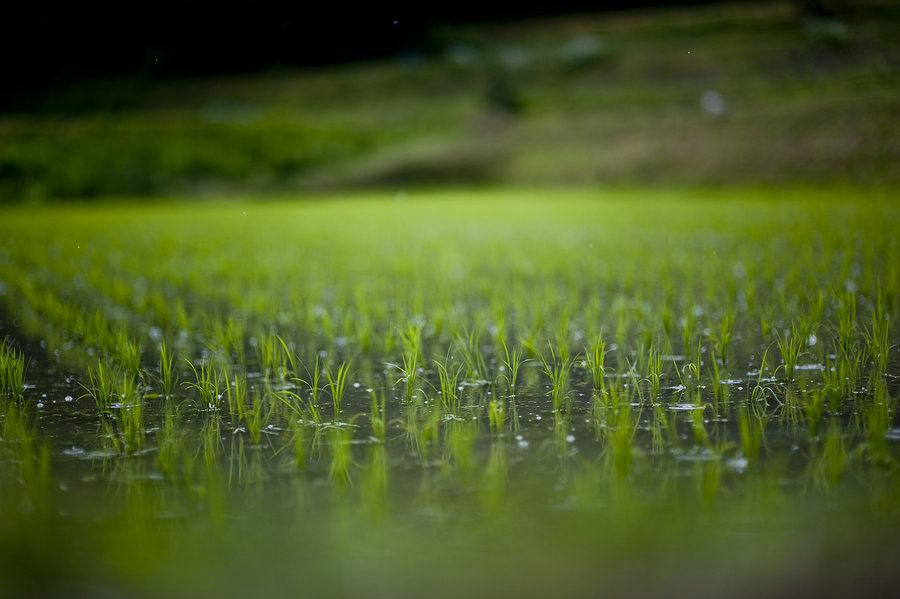
Rainwater flooded creeks and streams, as well as some gravel roads and fields.
The area had already received plenty of rain – Goodhue County received about 4.5 inches of rain in May.
The region received about 1 inch of rain during the first 10 days of June. Then, heavy rain during June 10-12 left 1.0-5.5 inches of rain, according to anecdotal comments. Rainfall on June 14 brought another 1.0-2.0 inches across the county.
The Carlson/Buck farmland received 2.0-4.5 inches of rain during June 10-14.
“Up until June 10, things were doing pretty well, but now the water runs are all full,” Ryan said. “The majority of the rain all arrived in 45 minutes to one hour. The rainfall hasn’t been long, soaking rains – they’ve been short and heavy rains.”
Ryan said there were about 30 hail claims at the insurance office, and another four or five property hail damage claims from the June 10 hail event.
“We’re just getting everything turned in, and the adjuster doesn’t come out for seven days. They want to see the new growth and if things are starting to come back,” he said. “We’ll know more what the damage will be around June 22 – once the adjuster looks at it.
“Maybe because I am an insurance agent, I never get too excited about it, because you can’t control it. If it happens, it happens. You just have to make sure you’re covered.”
Prior to the heavy rain, farmers took care of field applications.
The Bucks/Carlsons had urea broadcast with a dry box spreader around June 6. The corn was at the V5-V6 stage.
Ryan had 60-84 pounds of N applied to his farmland. Along with pre-plant rates of 70 pounds, that gave the corn fields 130-154 pounds of N per acre.
The corn plants began really growing and developed a nice dark green color.
Ryan figured that by Summer Solstice on June 20, the corn would be from knee-high to thigh-high – unless significant weather problems developed.
Herbicide applications for corn were also completed. The Bucks/Carlsons used a variety of weed control methods.
“Some we put pre-emerge down, and some we came and sprayed earlier when it was V2-V3, and used Resicore Herbicide with a little longer residual. That seemed to work, and we’re pretty happy with that,” he said.
On some other fields, they used a combination of Roundup, Interlock adjuvant, Sterling Blue herbicide and Class Act adjuvant, plus a couple other products.
“It will be a few weeks before we start spraying soybeans.”
The grain markets caught Ryan’s attention with the July soybean future trading above $12 on June 10, before losing 30 cents in two trading days. The July corn future traded at $4.37 on June 13. It seemed amazing that cash corn and soybeans were worth $4 and $10 in June, when those prices had seemed so remote back in late April.
“It sure is fun to look at the markets when they offer a positive cash flow,” he said.
In early June, Ryan traveled to Shakopee for a Minnesota Corn Growers Association government relations meeting. He was updated on the Minnesota 2016 Legislative Session that could have a special session at some point this summer. He was looking forward to attending a board meeting on June 22.
“That will be our first board meeting back since planting,” he said.
EVENTS

ScaleAgData Stakeholder Engagement Event
22.10.2024The ScaleAgData project is pleased to invite you to our second stakeholder event. Building on the discussions and connections formed during our first webinar, this event will focus on fostering collaboration among stakeholders, providing updates on our project’s progress, and outlining future opportunities for engagement.
RISK EVENTS

Moldova - May frosts caused heavy damage to fruit orchards
10.05.2026The first frosty nights of May have significantly worsened estimates of damage to Moldova's fruit sector from spring frosts. According to initial assessments by fruit market operators, between a quarter and a third of the country's total orchard area was seriously affected.
04.06.2026

India - Delhi raises crop damage compensation after 10 years by over 50% to Rs 75,000 per hectare
In a major relief for farmers, the Delhi government has increased compensation for crop loss caused by rain and hailstorms from Rs 20,000 per acre to Rs 75,000 per hectare.
04.06.2026

Why Tech-Driven Agro-Insurance Has Stumbled in Ethiopia
For decades, Ethiopia’s agricultural sector has remained trapped in a dangerous paradox.
04.06.2026

UK - Rural crime cost Wales £2.2m last year despite fall in offences
Rural crime cost Wales an estimated £2.2 million last year, with organised criminals continuing to target tractors, livestock and farming equipment despite an overall fall in offences, according to a new report.
04.06.2026

Kenyan Agro-Insurance Startup, Pula Raises US$ 20 Million in Series B Round
Pula, a Kenyan startup that offers insurance to small-scale farmers, aims to serve more than 100 million farmers in Africa after raising US$ 20 million in its Series B round.
04.06.2026

USA - USDA announces $52M to boost public access to private lands for hunting, fishing
The U.S. Department of Agriculture is announcing $52 million to help state and tribal governments encourage private landowners to allow public access to their land for hunting, fishing and other wildlife-dependent recreation through the Voluntary Public Access and Habitat Incentive Program (VPA-HIP).
04.06.2026

Hope Grows in Malawi’s Grain Stores as Farmers Battle Post-Harvest Losses
Some grain rots in poorly ventilated storage. Some is eaten by pests. Some is damaged during drying or transportation before it ever reaches the market.
03.06.2026

Canada - AFSC extends several northern Alberta seeding dates for 2026
Alberta’s Agriculture Financial Services Corp. (AFSC) is extending the recommended seeding dates in the province’s northeast, northwest and Peace regions for several crops for the 2026 growing season only.
03.06.2026

India - Elephants run amok in Konaje agricultural farm, cause massive crop damage
A herd of elephants, including calves, wreaked havoc on an agricultural farm belonging to Yashodhara Gowda at Pallattadka in Konaje village of Kadaba taluk.
