Kyle Funseth said he has seen hail damage crops in his five years of farming, but nothing like the hail that pummeled his soybean crop Saturday near his home west of Hatton.
"A storm of this size, especially with such a wide swath of hail, is very unusual," he said, adding hail is often localized.
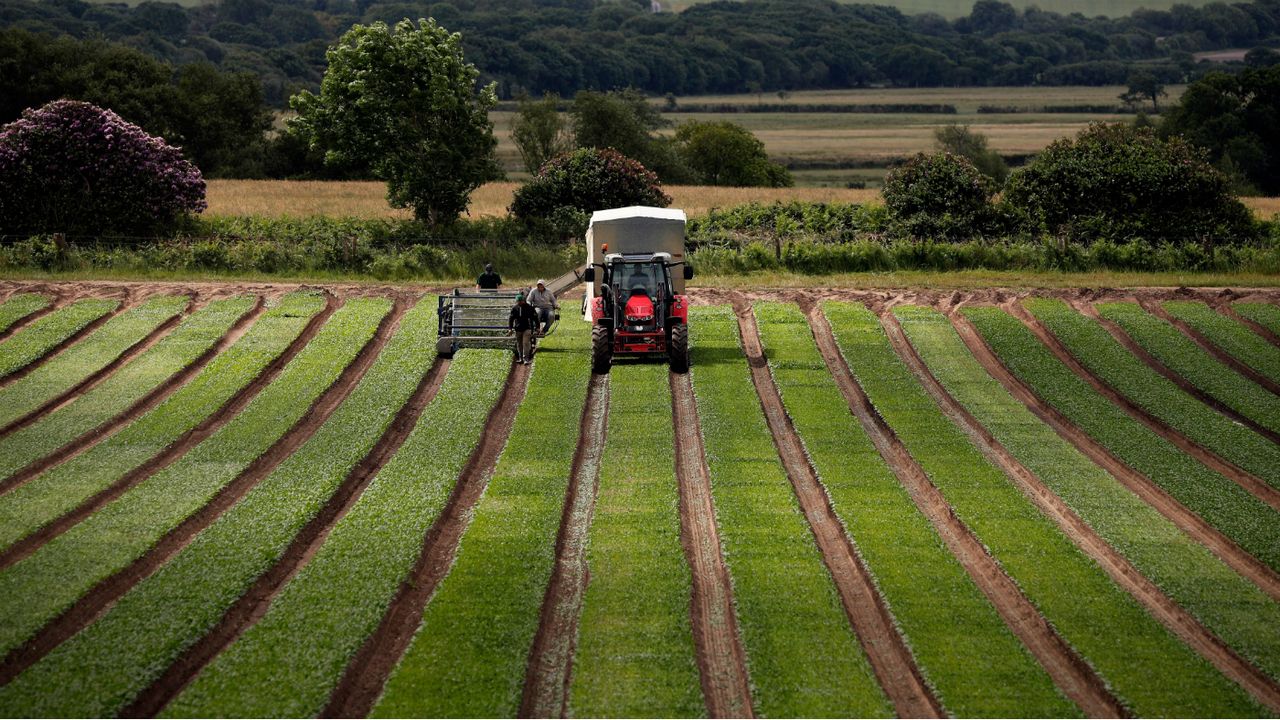
As a fifth-generation farmer, Funseth farms about 1,000 acres. Hail from Saturday hit almost all of his land, but the damage came in patches. Marble- to golf ball-sized hail damaged the 50 acres of soybeans near his house, leaving virtually nothing but stems.
"Certain crops are better at recovering from injuries than others," he said. "Some farmers got hit harder than others."
About 10 percent of eastern North Dakota was hit by hail, according to some estimates, but 35 percent of Traill County, just west of Funseth's farm, suffered crop damage in Saturday's hail storm, Traill County Extension Agent Alyssa Scheve said.
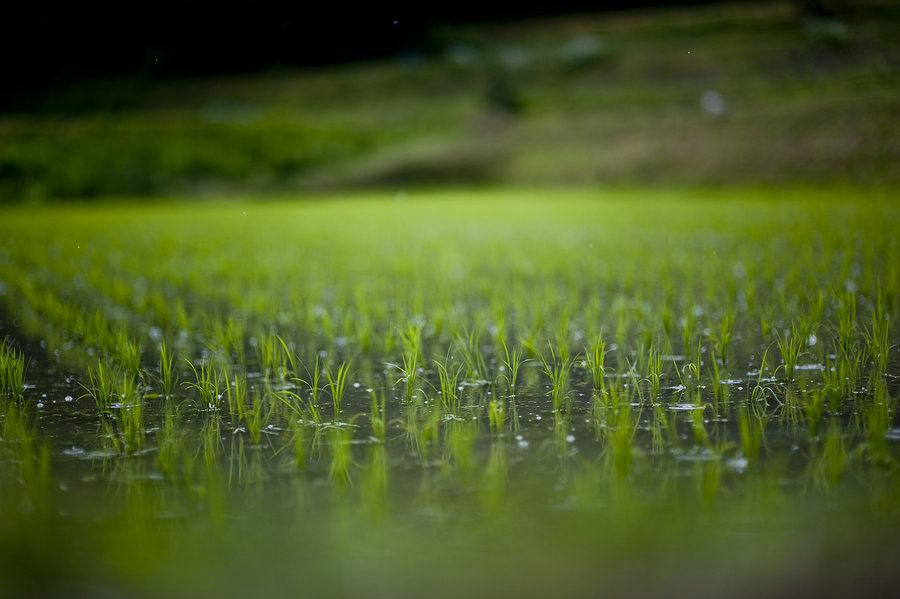
The hail is one of multiple weather problems farmers in the region have faced this season. Several storms over the past weeks have brought more than enough rain to the Red River Valley, causing standing water to drown portions of crops. Heavy winds also have damaged plants, some to the point of falling over, Grand Forks County Extension Agent Michael Knudson said.
"The hardest-hit part of the county is the northwestern part of the county and moving into the north central part of the county," he said. "There's a lot of windbreaks and tree rows that blew down and are lying on the edge of the fields. There are many fields that are flooded out. Some of them had to be replanted. Some of them were left fallow."
Drought broken
It's a stark contrast to spring, when growers and experts feared a drought was on the way. With little snowpack from the winter melting into the soil combined with a dry spell, at least 85 percent of the state experienced some type of drought from mid-March to mid-April, according to the National Drought Mitigation Center in Lincoln, Neb. "This time of year we are usually burning up," Funseth said. A microblast in late May brought much-need moisture to the Grand Forks area, and the last 10 days of that month saw 3.7 inches of rain, bringing year-to-date totals back to normal. June rain was on par with normal levels, but July storms has pushed most of North Dakota into the above-average range, Greg Gust of the National Weather Service in Grand Forks said. Precipitation has varied across the region, he said. Grand Forks and Devils Lake saw about 1½ to 2 inches of rain over the weekend, but parts in southeastern North Dakota, including near Fargo, saw as much as 8 inches of rain in the last three days. "Much of that area, especially the Fargo area and south, was roughly 4 inches below normal for the calendar year," Gust said, adding most of the state is caught up on rainfall. About 80 percent of the state was classified as having no drought as of July 5, and Gust said he expected that number to shrink after this weekend's storms. In the northeastern corner of the state, crops are well saturated, and some areas are as much as 12 inches above normal for year-to-date precipitation. "That scenario is really exasperated this year," Knudson said. "We've gone back and forth with 'It's dry, we need more rain,' and 'OK, we don't need anymore rain.' " The flooding and wind damage seem to be sporadic in Traill County, but the weather from this weekend likely will affect crop yields, Scheve said. "With those fields that maybe weren't as impacted by hail, there will be added disease pressure for those damaged crops because they are more susceptible to those diseases," she said. The Grand Forks area likely won't get much sunshine over the next week. The National Weather Service forecast rain for Wednesday and Thursday, with thunderstorms possible this weekend. Overall, the harvest should be average, if not above average, this year, at least for Grand Forks County, Knudson said. The southeast corner could have slightly above-average yields and farmers in the northwest could suffer from the excess rain and wind, he said. "It's going to more affect individual farmers and where their farms are geographically located," he said. Funseth said most of his crops should bounce back from the hail, though he expects 10 percent will be zeroed out by insurance adjusters. As for how the moisture will affect the harvest, farmers will have to wait and see. "I'd imagine we will start to see some crop loss show up this week or next week because it is too wet," Funseth said. Source - http://www.grandforksherald.com