USA - Peach harvest in southwestern Michigan nearly wiped out by last winter’s polar vortex

10.06.2019 1247 views

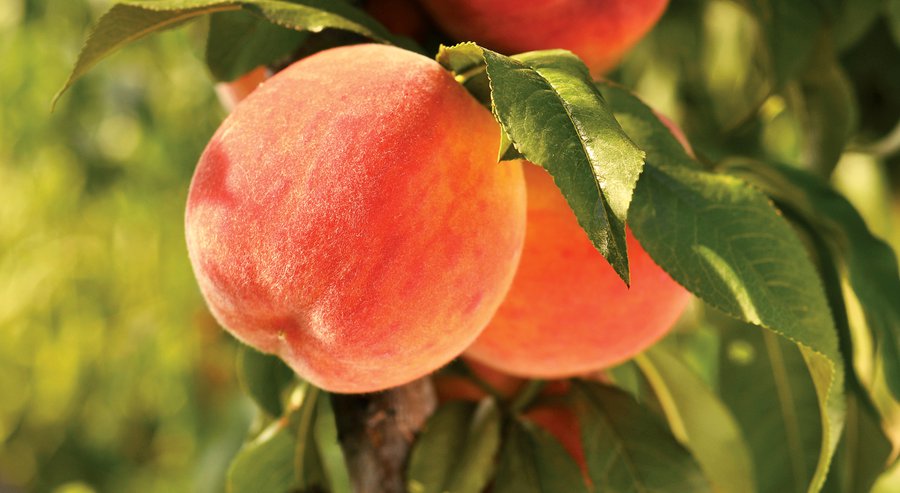
The polar vortex that enveloped much of the Midwest early this year has nearly wiped out the peach crop in southwestern Michigan.

And it’s not just peaches, which Michigan is known for. Some of the region’s apricot, plum and apple crops also might be affected after the blast of polar air plummeted temperatures to minus 20 degrees in late January around the state.

Bill Shane, a tree fruit specialist at Michigan State University, says Michigan’s southwestern counties will suffer millions of dollars in losses from damage to fruit crops. The polar vortex also might have shortened the lifespan of trees that were severely damaged, according to Shane.

Bill Teichman recently inspected his peach trees at Tree-Mendus Fruit Farm, a 500-acre orchard in Eau Claire, Michigan, and found deep, vertical cracks in some of their trunks. Others were bleeding sap. Some were hardly able to produce leaves, Teichman said.

He said he doubts that his peach trees will be able to produce fruit at all this year and that he already can tell that several need to be replaced.

A peach tree in Eau Claire, Michigan, that was badly damaged by last winter’s polar vortex.
AP

He also found that some of his apple varieties aren’t bearing fruit, either. He hopes to help cover his losses through an insurance claim.

His farm is still recovering from a late cold snap in 2012 that killed the farm’s peach trees.

“We’ve lost our peach crop twice in the past seven years,” he said.

Ben Smith, who manages Hinkelman Farms in Benton Harbor, Michigan, said some of the farm’s grape varieties were killed. It could take a couple of years before it can get its grapes back to full production, according to Smith.

Source - https://chicago.suntimes.com


01.12.2025

India - KPRS sees irregularities in crop loss assessment, disbursal of relief

Karnataka Pranta Raitha Sangha (KPRS) has said that there are widespread irregularities in assessment and disbursal of compensation for crop loss caused due to the recent heavy rain and floods in Kalaburagi district.

01.12.2025

China - ADB Approves USD 141M Loan to Support Low-Carbon, Climate-Smart Agriculture in Sichuan Province

The Asian Development Bank (ADB) has approved a ¥1 billion (US$140.89 million) loan to advance low-carbon and climate-resilient agriculture in Sichuan Province in the People’s Republic of China.

01.12.2025

Australia - WA livestock methane startup Freemantle Seaweed raises $2.2 million in crowdfunded Seed round

Another startup looking to deal with cattle methane emissions using seaweed has raised $2.176 million in Seed funding.

01.12.2025

Bindwell Announces $6M to Advance AI-Designed Pesticides and Modernize Crop Protection

Bindwell, an AI-driven agricultural science startup founded by teenage entrepreneurs Tyler Roseand Navvye Anand, has secured $6 million in seed funding co-led by General Catalyst and A Capital, with additional investment from Paul Graham. 

01.12.2025

“Stagnant markets and aggressive imports call for a reflection at a European level"

As is typical for late November, Italian garlic supplies are dwindling, creating more space in the market for imported products.

01.12.2025

New study reveals barriers stopping Scottish farmers joining schemes

A new University of Stirling study has shed light on the obstacles preventing Scottish farmers from joining agri-environmental schemes, warning that red tape and financial uncertainty are discouraging widespread participation.

30.11.2025

EPA urged to ban spraying of antibiotics on US food crops amid resistance fears

Use of 8m pounds of antibiotics and antifungals a year leads to superbugs and damages human health, lawsuit claims.

30.11.2025

Desert locust outbreak threatens agriculture in southern Morocco, warns FAO

The desert locust outbreak in Mauritania and Morocco’s southern provinces persisted throughout November, with numerous hopper groups, bands, and small swarms continuing to move north, according to the latest FAO update.