Gov. Doug Burgum, working in cooperation with state Agriculture Commissioner Doug Goehring, North Dakota’s congressional delegation, the federal Farm Service Agency and agencies across state government, sent a letter today to U.S. Secretary of Agriculture Sonny Perdue requesting a secretarial disaster designation to make federal assistance available to agricultural producers struggling with extremely wet harvest conditions.
“We’re committed to making sure North Dakota’s farmers and ranchers have access to every available resource to cope with these unprecedented and miserably wet fall harvest conditions,” Burgum said. “Secretary Perdue has been very responsive and understanding of the extremely difficult situation facing our ag producers, and we appreciate his consideration of a disaster designation to help them through these stressful times.”
To qualify for a secretarial designation, a county must have experienced a minimum 30 percent production loss of at least one crop due to natural disaster, and 45 of North Dakota’s 53 counties report meeting that threshold. Two additional counties with losses under the 30 percent threshold, Morton and Billings, also are eligible for the secretarial designation because of the inability to secure commercial financing to cover losses.
The six other counties – Barnes, Burleigh, Dickey, Logan, McLean and Richland – are requesting a deferral from the secretary to allow more time to harvest fall crops to determine if there is a loss.
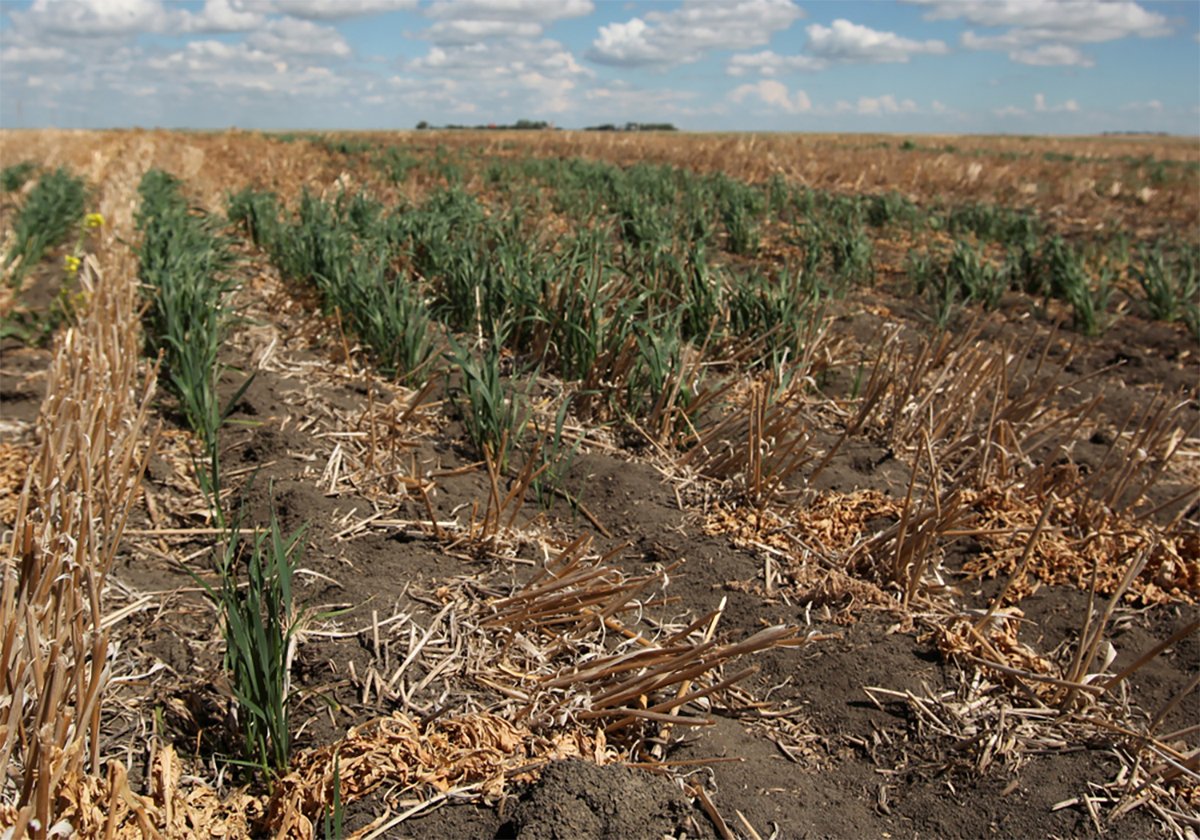
Excessive rain, an early October snowstorm, widespread flooding and high winds have caused hundreds of millions of dollars in commodity losses in North Dakota, according to estimates reported to the federal Farm Service Agency. The estimated lost value is nearly $423 million just for the one crop in each county with at least 30 percent loss, and billions of dollars in additional crop value is at risk. Those crop loss estimates don’t include significant livestock losses suffered by cattle ranchers across the state.
On Thursday, the U.S. Department of Agriculture’s State Emergency Board for North Dakota voted to concur with the crop loss reports from county FSA boards and forward that information to the national FSA office with a request for a secretarial disaster declaration.
A secretarial disaster designation allows for implementation of FSA’s Emergency Farm Loan Program and the Small Business Administration’s Economic Injury Loan Program for farm-related business. The Wildfires and Hurricanes Indemnity Program Plus (WHIP+) is also available to eligible producers in presidential disaster-declared and secretarial-designated primary counties for 2018 and 2019 qualifying disaster events, which are flooding, snowstorm, tornado and wildfire in North Dakota, according to FSA.
If a county is not listed as a primary county with a presidential declaration or a secretarial designation, producers in those counties may still be eligible for WHIP+, but they need to provide documentation to FSA showing the loss was due to a 2018 or 2019 qualifying disaster event or related condition.
To date, 22 North Dakota counties have declared emergencies related to flooding, excessive rain and/or the October blizzard: Barnes, Cass, Cavalier, Dickey, Grand Forks, Emmons, Foster, Griggs, Kidder, LaMoure, McIntosh, Nelson, Pembina, Ransom, Richland, Rolette, Sheridan, Steele, Stutsman, Traill, Walsh and Wells. The cities of Grand Forks, Jamestown, LaMoure, Lisbon, Valley City and West Fargo also have declared emergencies. Burgum declared a statewide flood emergency on Oct. 21.
The North Dakota Department of Emergency Services continues to assess damage to public infrastructure for a potential request for a presidential disaster declaration, which would unlock public assistance for emergency work and the repair or replacement of damaged road infrastructure.
Burgum and Goehring also have urged USDA to release the next round of Market Facilitation Program payments, due out in November, as soon as possible.
“We are continuing to look at solutions for other situations that may not be covered by a secretarial designation,” Goehring said.
Source - https://www.agweek.com