

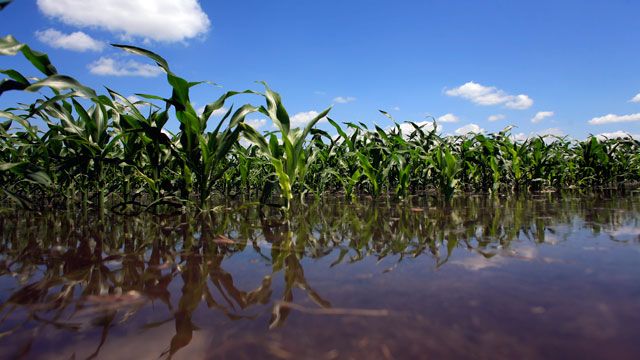
USA - USDA offers flood impacted Louisiana farmers, ranchers immediate disaster assistance
17.03.2016 373 views
U.S. Department of Agriculture(USDA) Louisiana Farm Service Agency (FSA) State Executive Director, Craig A. McCain, reminds farmers and ranchers across the State of federal farm program benefits that may be available to help eligible producers recover from recent heavy rains and flooding.
“These significant rain and flood events which are ongoing across Louisiana have left extensive damage in their wake,’” said McCain. “As such, many farmers and ranchers are experiencing prevented planting, failed acres, displaced and deceased livestock and property damage.”
FSA offers disaster assistance and low-interest loan programs to assist agricultural producers in their recovery efforts following floods or similar qualifying natural disasters. Available programs and loans include:
•Non-Insured Crop Disaster Assistance Program (NAP) - provides financial assistance to producers of non-insurable crops when low yields, loss of inventory, or prevented planting occur due to natural disasters (includes native grass for grazing). Eligible producers must have purchased NAP coverage for 2015 crops.
•Livestock Indemnity Program (LIP) - offers payments to eligible producers for livestock death losses in excess of normal mortality due to adverse weather. Eligible losses may include those determined by FSA to have been caused by hurricanes, floods, blizzards, wildfires, tropical storms, tornadoes, lightening, extreme heat, and extreme cold. Producers will be required to provide verifiable documentation of death losses resulting from an eligible adverse weather event and must submit a notice of loss to their local FSA office within 30 calendar days of when the loss of livestock is apparent.
•Tree Assistance Program (TAP) – provides assistance to eligible orchardists and nursery tree growers for qualifying tree, shrub and vine losses due to natural disaster.
•Emergency Assistance for Livestock, Honeybees, and Farm-Raised Fish Program (ELAP) - provides emergency relief for losses due to feed or water shortages, disease, adverse weather, or other conditions, which are not adequately addressed by other disaster programs. ELAP covers physically damaged or destroyed livestock feed that was purchased or mechanically harvested forage or feedstuffs intended for use as feed for the producer’s eligible livestock. In order to be considered eligible, harvested forage must be baled; forage that is only cut, raked or windrowed is not eligible. Producers must submit a notice of loss to their local FSA office within 30 calendar days of when the loss is apparent.
For beekeepers, ELAP covers beehive losses (the physical structure) in instances where the hive has been destroyed by a natural disaster including flooding, high winds and tornadoes.
•Emergency Loan Program – Available to producers with agriculture operations located in a county under a primary or contiguous Secretarial Disaster designation.These low interest loans help producers recover from production and physical losses due to drought, flooding.
•Emergency Conservation Program (ECP) – if damages warrant, this program provides emergency cost-share funding for farmers and ranchers to rehabilitate land severely damaged by natural disasters; includes fence loss.
•HayNet - is an Internet-based Hay and Grazing Net Ad Service allowing farmers and ranchers to share ‘Need Hay’ ads and ‘Have Hay’ ads online. Farmers also can use another feature to post advertisements for grazing land, specifically ads announcing the availability of grazing land or ads requesting a need for land to graze.
To establish or retain FSA program eligibility, farmers and ranchers must report prevented planting and failed acres (crops and grasses). Prevented planting acreage must be reported on Form FSA-576, Notice of Loss, no later than 15 calendar days after the final planting date as established by FSA and Risk Management Agency (RMA). Reporting crop losses to FSA does not negate the need for producers suffering losses to report such losses to their crop insurance provider.
“Thankfully, the 2014 Farm Bill reinstated these safety-net programs for farmers and ranchers suffering the devastating impacts of natural disasters such as this epic flood,” said McCain. “Because of the Farm Bill, we, as an Agency, can quickly respond to the recovery needs of our producers.”
Source - thenewsstar.com
EVENTS

ScaleAgData Stakeholder Engagement Event
22.10.2024The ScaleAgData project is pleased to invite you to our second stakeholder event. Building on the discussions and connections formed during our first webinar, this event will focus on fostering collaboration among stakeholders, providing updates on our project’s progress, and outlining future opportunities for engagement.
RISK EVENTS

Moldova - May frosts caused heavy damage to fruit orchards
10.05.2026The first frosty nights of May have significantly worsened estimates of damage to Moldova's fruit sector from spring frosts. According to initial assessments by fruit market operators, between a quarter and a third of the country's total orchard area was seriously affected.
04.06.2026

India - Delhi raises crop damage compensation after 10 years by over 50% to Rs 75,000 per hectare
In a major relief for farmers, the Delhi government has increased compensation for crop loss caused by rain and hailstorms from Rs 20,000 per acre to Rs 75,000 per hectare.
04.06.2026

Why Tech-Driven Agro-Insurance Has Stumbled in Ethiopia
For decades, Ethiopia’s agricultural sector has remained trapped in a dangerous paradox.
04.06.2026
UK - Rural crime cost Wales £2.2m last year despite fall in offences
Rural crime cost Wales an estimated £2.2 million last year, with organised criminals continuing to target tractors, livestock and farming equipment despite an overall fall in offences, according to a new report.
04.06.2026

Kenyan Agro-Insurance Startup, Pula Raises US$ 20 Million in Series B Round
Pula, a Kenyan startup that offers insurance to small-scale farmers, aims to serve more than 100 million farmers in Africa after raising US$ 20 million in its Series B round.
04.06.2026
USA - USDA announces $52M to boost public access to private lands for hunting, fishing
The U.S. Department of Agriculture is announcing $52 million to help state and tribal governments encourage private landowners to allow public access to their land for hunting, fishing and other wildlife-dependent recreation through the Voluntary Public Access and Habitat Incentive Program (VPA-HIP).
04.06.2026

Hope Grows in Malawi’s Grain Stores as Farmers Battle Post-Harvest Losses
Some grain rots in poorly ventilated storage. Some is eaten by pests. Some is damaged during drying or transportation before it ever reaches the market.
03.06.2026
Canada - AFSC extends several northern Alberta seeding dates for 2026
Alberta’s Agriculture Financial Services Corp. (AFSC) is extending the recommended seeding dates in the province’s northeast, northwest and Peace regions for several crops for the 2026 growing season only.
03.06.2026

India - Elephants run amok in Konaje agricultural farm, cause massive crop damage
A herd of elephants, including calves, wreaked havoc on an agricultural farm belonging to Yashodhara Gowda at Pallattadka in Konaje village of Kadaba taluk.
