

USA - When Rivers Can’t Be Controlled, Farmers Are Left In Limbo
01.04.2016 466 views
A massive winter flood on the Mississippi River cracked open a levee near the Missouri-Illinois border and damaged thousands of acres of farmland. With the planting and flood seasons both right around the corner, farmers aren’t sure what to do next.
Driving along rough and muddy gravel roads next to what was once a rich soybean field, farmer Adam Thomas gazes out on an upended mess of tubes, wheels and hoses from a nearby farmer’s irrigation system.
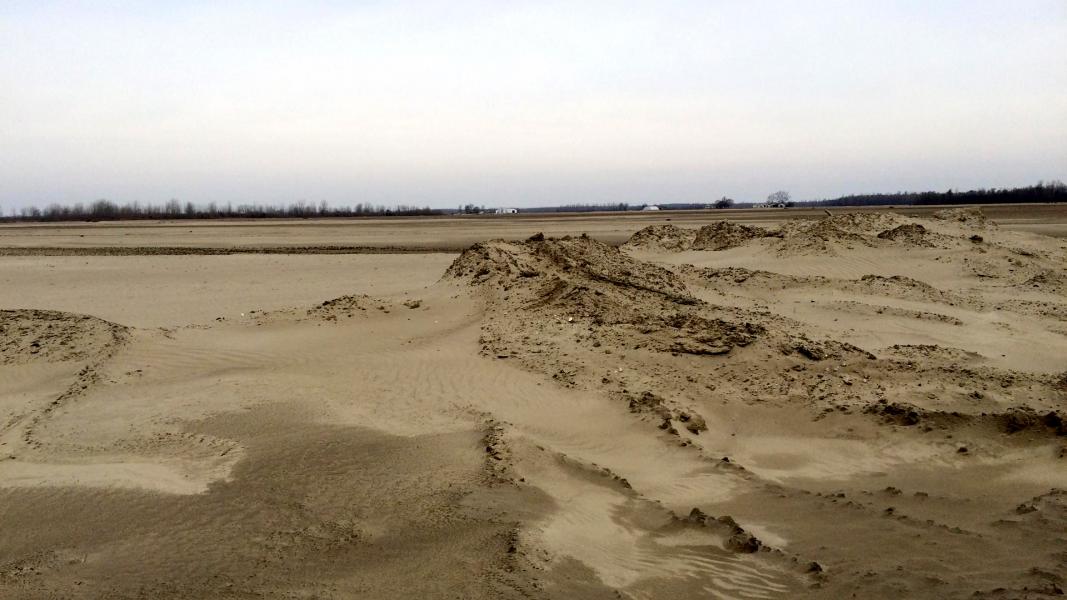
Nowadays, his farmland in Miller City, Illinois, looks like a scene from “Lawrence of Arabia.” Layer upon layer of sand as much as 4-feet deep covered nearly 100 acres. Large sand deposits, fallen trees and fragments of a damaged road wreaked havoc on his once fertile farm ground.
The damage is the result of a massive winter flood, which left thousands of acres of Missouri and Illinois farmland damaged.
In January, excessive rainfall in the Mississippi River caused a rare winter flood. Floodwaters shattered records, plunging nearly 43,000 acres of land underwater and causing a mile-long hole in the Len Small levee, according to the Natural Resource Conservation Service.
After nearly three months, the levee still has a gaping hole and farmers like Thomas are left in limbo.
“As long as there's a hole in that levee, it can put the sand right back where it was,” Thomas said. “There's no point in fixing the roads. There's no point in digging the ditches. There's no point in cleaning anything up, because if you do all that come April it could just put it all right back on it.”
Fields today essentially open right onto the river, which could bring water, sand and silt right back onto farm fields this summer. With normal flood season approaching and a chunk of the levee gone Alexander County Engineer Jeff Denny said time’s running out.
“There's just not enough time and enough working conditions, working days to be able to get in and make some sort of repair or do something,” Denny said.
The U.S. Army Corps of Engineers said it is placing rocks along the Mississippi River’s bank to prevent it from cutting another channel. As for the levee, there aren’t current plans to fix it.
Illinois’ Alexander County farmers are part of a familiar debate about farmland in the floodplain, and who’s responsible for its protection. Farmers on the Missouri River experienced similar damage after a massive flood in 2011.
Rivers are unpredictable and despite efforts to manage them, they can’t always be contained. That can leave farmers, business owners and residents of the floodplain in the midst of a confusing situation.
“The Midwestern floodplain soil is some of the richest in the world exactly because it has flooded periodically for a millennia,” said Christine Klein, a law professor at the University of Florida.
When farmers plant in the fertile floodplain they’re left at the mercy of both the river and the engineers that try to control it. Throughout the 20th Century, Klein says, huge levee systems, government disaster relief programs and subsidized federal flood insurance were generally created with good intent, but have created untenable futures.
“The net result of those three things is that people are lured into harm’s way,” Klein said. “They say, ‘Well there’s a levee there. They, somebody – someone who’s hopefully omniscient is telling us it’s safe to be here.’”
Now, farmers in Alexander County are left to play a game of Russian Roulette. To plant or not to plant? Farmer Adam Thomas is planning to delay planting his crop, thanks to the potential for flooding through the busted levee.
“The farmers can't fix it back,” Thomas said. “If the farmers could fix it back, we'd be fixing it back right now. But we just can't do it alone this time. And we need some help.”
Source - netnebraska.org
EVENTS

ScaleAgData Stakeholder Engagement Event
22.10.2024The ScaleAgData project is pleased to invite you to our second stakeholder event. Building on the discussions and connections formed during our first webinar, this event will focus on fostering collaboration among stakeholders, providing updates on our project’s progress, and outlining future opportunities for engagement.
RISK EVENTS

Moldova - May frosts caused heavy damage to fruit orchards
10.05.2026The first frosty nights of May have significantly worsened estimates of damage to Moldova's fruit sector from spring frosts. According to initial assessments by fruit market operators, between a quarter and a third of the country's total orchard area was seriously affected.
04.06.2026

India - Delhi raises crop damage compensation after 10 years by over 50% to Rs 75,000 per hectare
In a major relief for farmers, the Delhi government has increased compensation for crop loss caused by rain and hailstorms from Rs 20,000 per acre to Rs 75,000 per hectare.
04.06.2026

Why Tech-Driven Agro-Insurance Has Stumbled in Ethiopia
For decades, Ethiopia’s agricultural sector has remained trapped in a dangerous paradox.
04.06.2026

UK - Rural crime cost Wales £2.2m last year despite fall in offences
Rural crime cost Wales an estimated £2.2 million last year, with organised criminals continuing to target tractors, livestock and farming equipment despite an overall fall in offences, according to a new report.
04.06.2026

Kenyan Agro-Insurance Startup, Pula Raises US$ 20 Million in Series B Round
Pula, a Kenyan startup that offers insurance to small-scale farmers, aims to serve more than 100 million farmers in Africa after raising US$ 20 million in its Series B round.
04.06.2026

USA - USDA announces $52M to boost public access to private lands for hunting, fishing
The U.S. Department of Agriculture is announcing $52 million to help state and tribal governments encourage private landowners to allow public access to their land for hunting, fishing and other wildlife-dependent recreation through the Voluntary Public Access and Habitat Incentive Program (VPA-HIP).
04.06.2026

Hope Grows in Malawi’s Grain Stores as Farmers Battle Post-Harvest Losses
Some grain rots in poorly ventilated storage. Some is eaten by pests. Some is damaged during drying or transportation before it ever reaches the market.
03.06.2026

Canada - AFSC extends several northern Alberta seeding dates for 2026
Alberta’s Agriculture Financial Services Corp. (AFSC) is extending the recommended seeding dates in the province’s northeast, northwest and Peace regions for several crops for the 2026 growing season only.
03.06.2026

India - Elephants run amok in Konaje agricultural farm, cause massive crop damage
A herd of elephants, including calves, wreaked havoc on an agricultural farm belonging to Yashodhara Gowda at Pallattadka in Konaje village of Kadaba taluk.
