Water and weather affect Californian & Mexican bell peppers

10.10.2016 412 views
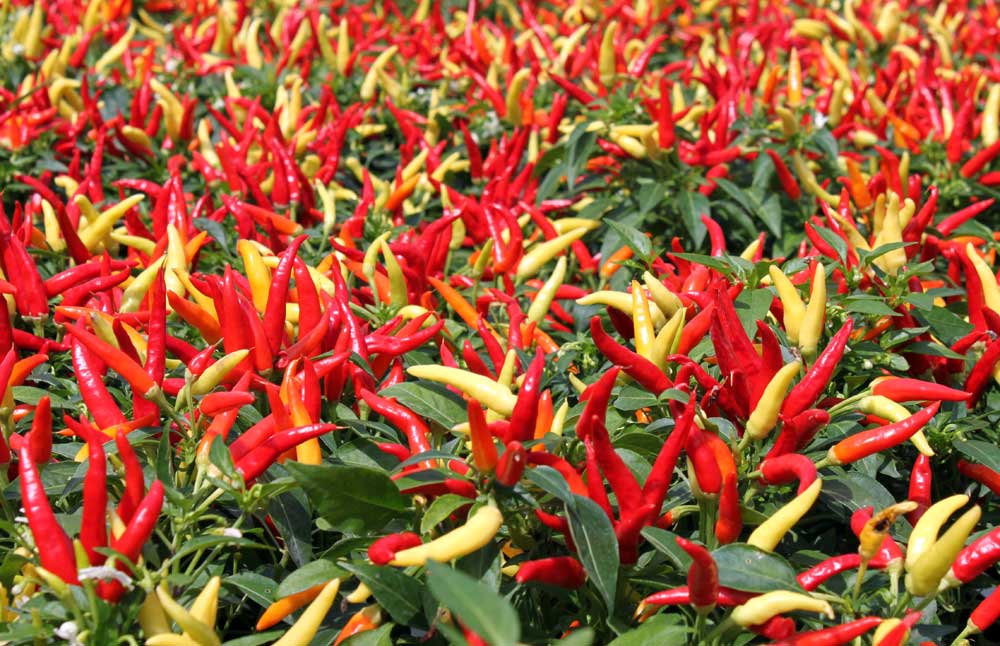
“We grow bell peppers 365 days of the year in seven locations in California and Mexico,” said Mike Aiton of Prime Time Produce. This means, that despite the long-standing drought plaguing California, this grower has to address several challenges to achieve its goal of harvesting enough bell peppers to satisfy consumers’ demand for this vegetable.
“We have to water daily to keep the pepper flowers growing,” Aiton said. “When it’s hot, as it has been this past summer, we have to give the plants more water. Right now, we’re harvesting our bell peppers on the coastal areas—in Ventura and Orange counties. Further inland, the peppers are still growing and not yet ready for harvesting.”
The drought means that Prime Time has had to get creative as it works to ensure a sufficient supply of water for its plants. “The need for water varies by growing region,” pointed out Aiton. “We have three resources available: wells, water rights or buying water. Water is more expensive this year than it was last year, and it was more expensive last year than the year before.
“We rely on the ‘three Ws.’ Those are workers, weather and water, and all three give us challenges all the time. With this drought, weather and water are always problematic,” Aiton said.
“This is a difficult time of the year. Peppers are available in 25 other states, which means there’s plenty of product available. Prices are weak. It’s the low point of the year for us in September and October. As the killing frost moves in, that will force the market back up,” Aiton predicted.
Because Prime Time has farms located in several areas, it has been able to continue growing and harvesting conventional, hothouse and organic peppers to meet consumer demand.
Source - http://www.freshplaza.com

04.06.2026

India - Delhi raises crop damage compensation after 10 years by over 50% to Rs 75,000 per hectare

In a major relief for farmers, the Delhi government has increased compensation for crop loss caused by rain and hailstorms from Rs 20,000 per acre to Rs 75,000 per hectare.

04.06.2026

Why Tech-Driven Agro-Insurance Has Stumbled in Ethiopia

For decades, Ethiopia’s agricultural sector has remained trapped in a dangerous paradox. 

04.06.2026

UK - Rural crime cost Wales £2.2m last year despite fall in offences

Rural crime cost Wales an estimated £2.2 million last year, with organised criminals continuing to target tractors, livestock and farming equipment despite an overall fall in offences, according to a new report.

04.06.2026

Kenyan Agro-Insurance Startup, Pula Raises US$ 20 Million in Series B Round

Pula, a Kenyan startup that offers insurance to small-scale farmers, aims to serve more than 100 million farmers in Africa after raising US$ 20 million in its Series B round. 

04.06.2026

USA - USDA announces $52M to boost public access to private lands for hunting, fishing

The U.S. Department of Agriculture is announcing $52 million to help state and tribal governments encourage private landowners to allow public access to their land for hunting, fishing and other wildlife-dependent recreation through the Voluntary Public Access and Habitat Incentive Program (VPA-HIP). 

04.06.2026

Hope Grows in Malawi’s Grain Stores as Farmers Battle Post-Harvest Losses

Some grain rots in poorly ventilated storage. Some is eaten by pests. Some is damaged during drying or transportation before it ever reaches the market.

03.06.2026

Canada - AFSC extends several northern Alberta seeding dates for 2026

Alberta’s Agriculture Financial Services Corp. (AFSC) is extending the recommended seeding dates in the province’s northeast, northwest and Peace regions for several crops for the 2026 growing season only.

03.06.2026

India - Elephants run amok in Konaje agricultural farm, cause massive crop damage

A herd of elephants, including calves, wreaked havoc on an agricultural farm belonging to Yashodhara Gowda at Pallattadka in Konaje village of Kadaba taluk.