Rice farmers of Morogoro, Tanzania,have adapted a new system that is weather friendly and cost effective.They are happy that with the new system, their rice can stand prolonged droughts and storms.
Until recently, farmers in this village located 218km (135 miles) from the capital Dar es Salaam, believed it was impossible to grow rice without flooding the field.But due to water shortages, the new technique known as 'System of Rice Intensification' (SRI), reduces the need to supply water to the fields.
With this system seedlings are grown in a non-flooded nursery and replanted, at a shallow depth of only 1-2 cm deep in a paddy field.
The plot is then left to dry until cracks become visible when another thin layer of water is introduced, unlike in the past when large amounts of water were supplied in the field.
As the rice seedlings grow some farmers irrigate every evening, others leave the fields to dry over a 3-8 day period, depending on soil and climate conditions.
With this system farmers have been able to reduce on the use of chemical fertilizers and production costs and as a result, their incomes have greatly improved.
Happy farmers
Mwajuma Ramadhani, a farmer from Kiroka village can now plan for her children's education better than before as she doesn't have to worry about food for her family anymore.
The 47-year-old widow is among farmers who can testify on the benefits of the new system. "I am very happy with this technique because since I started using it, my crop yields have gone up, she told DW," I can now get enough food for my family and sell the surplus."
From her humble beginnings, Ramadhani hardly got 5 bags of rice per acre when she was still using the old method, but with SRI her yields have remarkably improved.
"I harvested 30 bags of rice last season and that was the highest since I started using this method" she said.
Morogoro Rural Agriculture Field Officer who oversees farming activities in the village, Edith Kija told DW that with SRI paddy seedling can thrive well with minimum soil moisture.
"We tell them to keep a distance of 25cms between paddy seedlings to provide room for the robust growth and redistribution of the stems," she said.
Every farmer in Morogoro has a positive story to tell about SRI because the new technique has not only enabled them to conserve land but also be mindful about the effects of climate change.
International support
Under the project,' Strengthening the capacity for climate Change Adaptation through Sustainable Land and Water Management', the United Nation's Food and Agriculture Organization (FAO) has trained 268 farmers with multiple skills to prevent soil erosion, reduce deforestation and manage water and soil fertility.
FAO representative to Tanzania Diana Tempelman, told DW that the agency promotes conservation agriculture in Tanzania with the view to reduce carbon emissions and also to increase carbon sequestration in the soil.
"We are aiming to work together with local populations in Tanzania who can identify crop varieties suitable for drier circumstances," she said.
Farmers don't have to grow rice only in flooded fields after the SRI technique was introduced
Fighting soil erosion
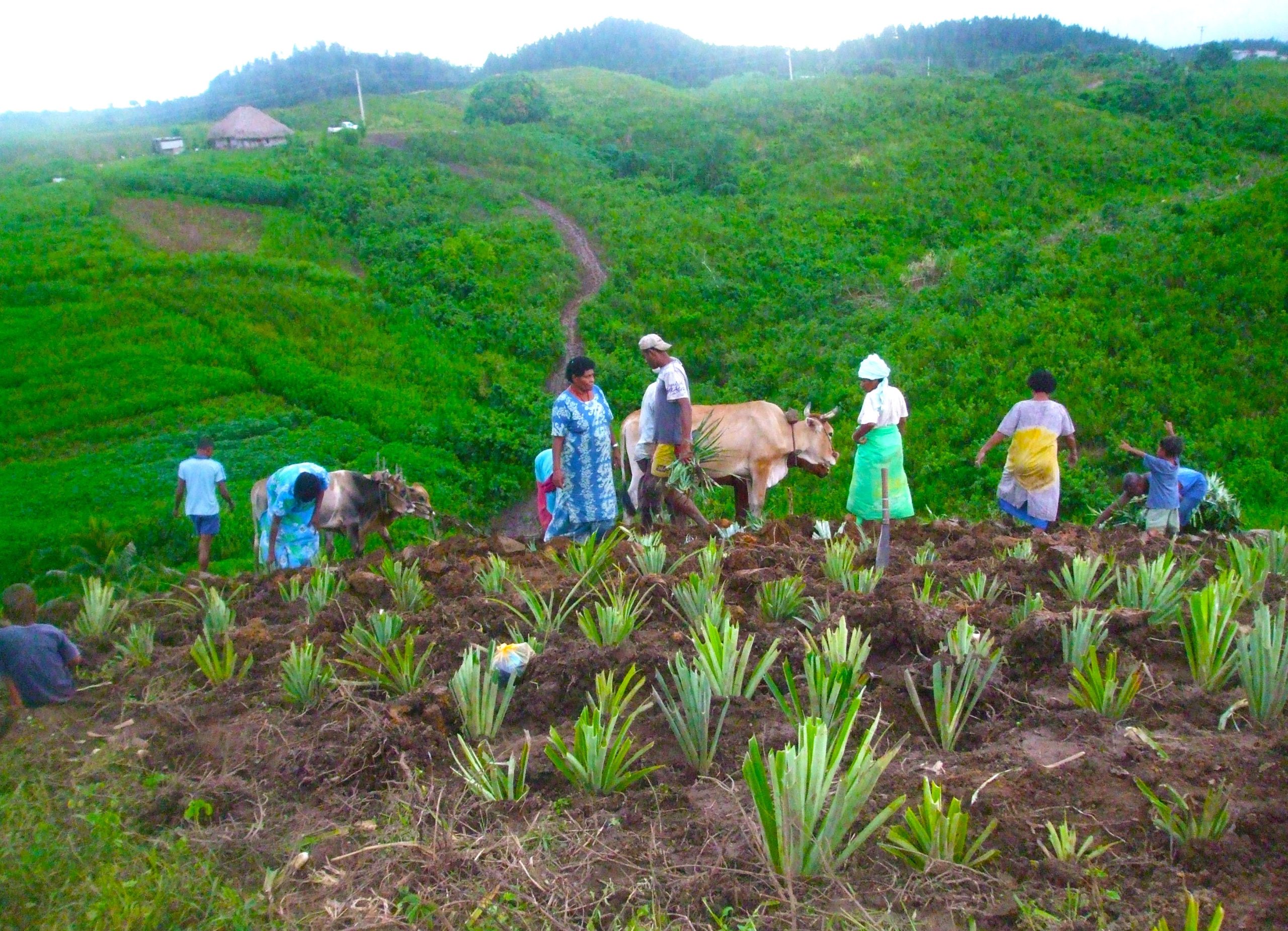
To address soil erosion, farmers in Tanzania have been taught to dig contours bunds locally known in the Swahili language as 'Fanya Chini' in order to maintain soil fertility.
"We trained them how to align the contours using local tools, we also encouraged them to grow barrier crops including pineapples and bananas to strengthen the bunds," said Henry Mahoo, a professor of agricultural engineering who supervised the project.
Rajabu Juma is one of the veteran farmers at Kiroka who finds water and soil management skills useful as he applies them on his farm.
"My friends see digging of trenches as an inconvenience, but I have seen the benefit since I am able to retain water and soil fertility," he said.
The 60-year-old is among Kiroka farmers who have accepted multiple interventions to protect their livelihoods.
Climate change impacts
According to Economics of Climate Change study published in 2011, the country's average temperature has increased over the last 30 years with rainfall becoming erratic.
The government estimates that, without proper adaptation, yields from crops like maize could fall by up to 16% by 2030 which translates into a million tonne per year.
According to Prof. Mahoo, climate change has triggered the dwindling of water resources which have affected irrigation schemes thus causing water conflicts.
"We may not be the major cause of climate change but since it is a global issue we are entangled," he said.
Prof. Mahoo said rice intensification system has been effective to most farmers in the lowlands who are affected by water shortages."
Most farmers are better off with this method because rice production can increase up to four folds, last year we had a farmer who produced11.6 tonnes of rice per hectare," he said.
Source - http://allafrica.com/