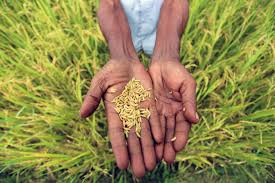
Wheat farmers in Barani (rain-fed) Khyber Pakhtunkhwa are worried due to below seasonal to no rains so far this month, affecting their crop’s growth.
The weather forecast for the next 30 days does not offer the growers a favourable proposition either. According to the meteorological department, rains are expected to improve after January 15, 2014.
“The first half of the current winter is expected to remain dry and mild whereas the second half starting from January 15 next year is expected to get good rains,” said Dr Hanif, a federal government meteorologist.
This creates potential problems for the Barani area wheat growers, who contribute 52 per cent of the crop produced in Khyber Pakhtunkhwa every year.
The seed sowing was completed more than three weeks ago in Barani areas of Peshawar, Mardan, Swabi, Charsadda, Nowshera, Dera Ismail Khan, and other districts.
According to one farmer, low rains would result into low crop yield in the Barani areas, dimming growers’ hope for a better wheat crop and some income this year.
The above normal rains recorded in November this year encouraged farmers to cultivate wheat. As a result, the province has four per cent more area under wheat this season as compared to 2012.
Information collected by Anjuman-e-Kashtkaraan (an association of farmers) suggests that the wheat germination process has been affected due to no rains in district Mardan’s several areas, including Mian Khan, Shamozai, Babuzai, and Rustam.
Similarly, reports from district Swabi’s Chotta Lahore, Jalway, Jalsay, and Gandhak areas are also not encouraging and growers are feeling worried.
Facing water shortages, farmers have turned to call for divine mercy as special prayers are being offered in villages.
“Farmers in my village (in district Swabi) offer special DUA (prayers) after every prayer five times a day at the village mosque, calling for God’s help to rain,” said Alamzeb, a senior meteorologist at Peshawar, highlighting growers’ worries.
He said Peshawar has recorded only 1.2 millimetre rain so far this month as compared to 77 mm last December.
Similarly, Dir, a northern Khyber Pakhtunkhwa district with sizeable rain-fed agricultural tracts, has so far received 3 mm rain this December against 114.4 mm rainfall recorded in the same month last year.
Dera Ismail Khan, another wheat growing district of the province, recorded only 0.3 mm rain this month so far. Last year in December the district had recorded 17.1 mm rainfall.
Since Khyber Pakhtunkhwa received normal rains or slightly better in November this year, soil moisture in the rain-fed areas has greatly helped in wheat crop sprouting.
“Further rains are needed in rain-fed areas for better soil moisture condition and normal growth of wheat crop,” says the Monthly Agromet Bulletin, a monthly publication of the National Agromet Centre, Pakistan Meteorological Department.
Weather specialist Dr Hanif said farmers who cultivated wheat late in the season would not be affected due to delayed rains, expected in the second half of the current winter. “Those who sowed the seeds in later October or early November, they would experience problems due to low rains,” said Dr Hanif.
This does not sound good for growers in Barani areas of Khyber Pakhtunkhwa.
However, Naimat Shah, a grower from district Mardan, said the wheat growers dependent on the canal-based irrigation system would also face water shortages in a two weeks’ time.
The provincial irrigation department has scheduled to close down canals across the province from January 1, 2014 as part of its annual campaign to remove silt from the watercourses.
“The government should delay the canal cleaning campaign till rains come in,” said Mr Shah, President of Anjuman-e-Kashtkaran, Khyber Pakhtunkhwa.
Farmers from Mardan and Swabi, he added, would take up the matter with the provincial irrigation department.
Source - http://www.dawn.com/