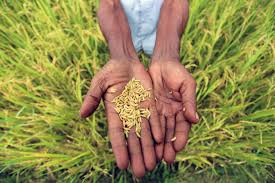
Periods of prolonged drought will mean there will be less food for Africa’s rapidly expanding population.
Agriculture dominates the economies of countries in East Africa: if plans aren’t made to adapt to climate change the region’s rapidly expanding population faces a grim future.
The report, East African Agriculture and Climate Change, published by the International Food Policy Research Institute (IFPRI), looks at threats to food supplies in 11 countries in East and Central Africa – Burundi, the Democratic Republic of Congo (DRC), Eritrea, Ethiopia, Kenya, Madagascar, Rwanda, Sudan, South Sudan, Tanzania and Uganda.
Agriculture accounts for more than 40% of gross domestic product across the region. The report says soil deficiencies in many parts mean agricultural productivity is falling.
Ecosystems are depleted, infrastructure is poor and there’s a lack of reliable information and policy coordination. Meanwhile weather systems are becoming more erratic and violent.
“Climate change will have far-reaching consequences for the poor and marginalized groups, among which the majority depend on agriculture for their livelihoods and have a lower capacity to adapt…this situation is likely to become more desperate and to threaten the very survival of the most vulnerable farmers as global warming continues,” says the study.
Bleak prospect
Crop production across the region depends overwhelmingly on rainfall. Many areas are likely to see less rainfall in future and an increased incidence of droughts. In 2011 there were prolonged droughts in Ethiopia, Kenya and Tanzania.
Rising temperatures in many areas are likely to result in reduced crop yields: harvests of wheat, soybean, sorghum and irrigated rice could decline by between 5% and 20%, with irrigated rice production being the hardest hit. However, output of rain-fed maize and rain-fed rice might increase slightly, due to increased rainfall in some areas.
Endemic poverty affects more than 50% of the region’s 360 million people. Overall – unless adaptation measures, including the introduction of new crop varieties, better land management and the advancing of planting dates to cope better with changes in climate are adopted – the outlook for the region is bleak, warns the report.
“Recent trends and the current performance of agriculture expose a region that is progressively less able to meet the needs of its burgeoning population.”
Insurance unaffordable
The countries of East Africa have among the highest population increases in the world: between 1988 and 2008 the region’s population – excluding that of the DRC – increased by “a staggering” 74%. By 2050, that population could double.
While there’s growing urbanisation across the region and more industrial development, agriculture will continue to dominate the countries’ economies.
The report says there’s a role for insurance schemes which would enable farmers to cope better with changes in climate. But persuading those working on the land – mainly smallholders – to invest in such schemes is hard, with no spare cash available to spend on even small premiums.
Source - http://www.rtcc.org/