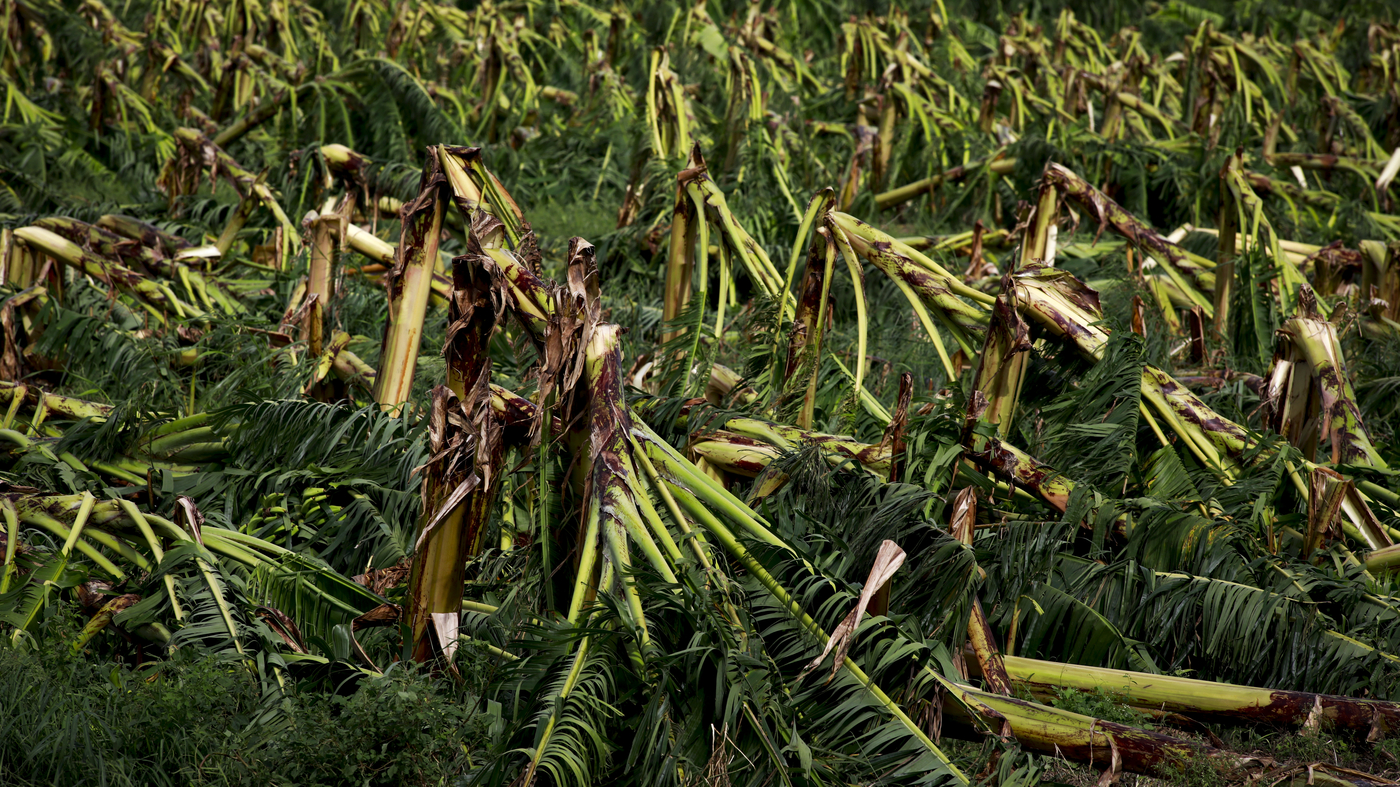
The University of Illinois has been receiving reports since corn harvest began this fall about an unusual phenomenon: yields of the outside 8 to 24 rows on the south or west edges of corn fields show lower or much lower yields than corn farther into the field. The damage tends to be relatively uniform down or across the field, and is on field edges that border a soybean field, road, ditch or another short-growing crop (such as forage legumes or grasses) other than corn. Ears in affected rows are shortened, pinched (missing some rounds of kernels) or they have scattered kernels. We don't have a good idea of how many fields or acres were affected, but have had reports of this over a fairly wide area in Illinois.
Relatively uniform damage across the end or side of fields downwind of prevailing winds, next to adjoining fields of a different crop or anything else that was shorter in height than the damaged crop, is typically an easy call: this pattern points to something sprayed on adjoining or nearby fields, under windy conditions or conditions that led to drift, of something to which the affected crop was very sensitive. The taller crop - in this case corn - slows air movement and allows the material to settle out, with damage diminishing as one moves into the field.
Corn ear development is initiated at about stage V6, and the uppermost ear starts to develop quickly after stage V10 or so, reaching its peak at about V12-V13, when plants are 5 to 6 feet tall. A number of chemicals can cause ear shortening or disruption of kernel initials, and that that reach the ear during this stage can do damage. Scattered kernels can also result from problems at pollination, but when pollination conditions are as good as they were in 2013, it's much more likely that this came from something that reached the ear before tassels emerged. Most of the corn was planted in mid-May this past season, and reached damage-sensitive stages in late June or early July. It's likely that most of the damage took place during that period. By the time the crop pollinated, it would have been too late to get cob and ear shortening.
Some have suggested that the outside rows of corn were damaged when they took the brunt of dry, windy conditions before or during pollination. There are several reasons why this does not explain very well what we saw in 2013. One is that the outside rows in a corn field have access to water and light from outside the field, and tend to yield more, not less, than interior rows under stress conditions. Another clue is the fact that most affected plants tended to be of normal height this year, and if stress had occurred in time to damage developing ears, plants would likely have been shortened at least to some extent.
The main reason for questioning weather-related stress as a cause for this problem is that we didn't have stress conditions in late June and early July. July temperatures were below normal, with 12 days having high temperatures less than 80 degrees here at Champaign, only 5 days at or above 90 degrees and the high temperature for the month of only 93 degrees. There was little or no water stress until well into August. I believe it's more likely that the unusually cool conditions somehow made corn plants more physiologically sensitive to whatever might have drifted into fields than it is that high temperatures and winds caused these symptoms by increasing stress.
In terms of timing, soybeans were planted even later than corn, and it's very likely that the last applications on soybeans took place in July, in some cases when ear development was occurring and the plant was subject to damage like we saw. The fact that we saw damage in some cases where soybeans sprayed around this time were across the road or some distance away tells us that trying to pin down exactly when (and from where) this happened may be difficult.
What moved into fields to cause this damage is likewise not going to be easy to identify after the fact. Glyphosate is part of most late post applications on soybean, and scattered kernels are characteristic of glyphosate applied (off-label) in late vegetative stage, before tasseling. But many applications also contain other herbicides that can cause injury to corn, and we showed several years ago that even nonionic surfactant (NIS) by itself can shorten ears and cause substantial yield losses. So any of several products sprayed, under conditions windier than normal and to corn with ear formation underway and sensitive to damage, could have contributed.
One additional possibility is that aerial application of fungicide and insecticide, perhaps made to soybeans, might have moved into non-target fields and caused this damage. Based on what we saw several years ago, these products by themselves are unlikely to produce damage like this on corn. Adding NIS can make such applications capable of damaging corn, but adding NIS with corn fungicide generally is no longer on the label for pre-tassel applications, and most such applications made to soybeans were made later than this.
It's likely that this damage, given that it affected only some fields, was unusually severe in some cases, and came during a season with late-planted crops and unusual stretches of cool weather in mid-season, will not often repeat itself. We have seen it before, however, and it certainly makes sense to do what we can to lessen the chance of damage. The first thing is to not apply when wind speeds are too high. We need to be especially careful when using herbicides or other products that can damage corn at low concentrations in fields next to corn, especially when corn is between head-high and silking, and is downwind from fields being sprayed.
The other lesson is to check fields more carefully to try to find such problems before harvest. This wouldn't have helped prevent this, but it could have provided clues to help prevent it next time.
Source - http://www.midwestproducer.com/