Lack of precipitation so far this season has California farmers and ranchers bracing for a third consecutive dry year that they say could have wide-reaching impact on the state's agricultural landscape.
2013 closed out as one of the driest years on record, with reservoir and groundwater levels falling to historic lows. The state's dismal snowpack—with water content at about 20 percent of average for this time of year—also points to how dry California's winter has been.
The most immediate impact of the dry weather is being felt by the state's ranchers, who depend on fall and winter rains to keep grasses growing for their livestock.
"Our pasture is as dry as it has been all summer in the hills," said John Pierson, a Solano County cattle rancher and hay farmer.
Even though his region received some rain in November, he said grasses that had germinated then have since died off with the cold weather, and what's left on the ground is so brittle that there's not much feed value in it.
Pierson said he's now feeding his cattle "a significant amount more" hay for this time of year while trying to maintain enough for the rest of the season, anticipating little help from Mother Nature. Despite the high price of hay, he said he decided to stock his barns rather than sell it, "not knowing what was coming this year." Because of this move, he said he won't need to start selling his cows just yet.
"A lot of things can still happen," he said.
Because forage has been scarce, Glenn Nader, a University of California Cooperative Extension livestock and natural resources advisor, said some ranchers have reported seeing their cattle "aggressively eating" large amounts of oak tree acorns, which can be toxic to them.
Dry years seem to increase acorn production, he said. While acorn kernels are high in energy, they also contain tannins that can cause problems for cattle if they over-consume.
"The consumption of acorns always occurs, but during a drought, cattle seem to increase their consumption in spite of the tannin levels," Nader said. "At lower levels, (acorns) protect against bloat, but at high levels, they can damage internal organs."
John Cubiburu, a San Joaquin County sheep rancher, said January through March are critical months for forage and putting weight on his lambs, as he tries to finish them in time for the spring and summer markets. The state's commercial sheep ranchers typically start lambing in the fall. During that time, their flocks graze on alfalfa fields, where they are kept through the winter.
With no rain, frost destroyed much of the alfalfa, he said, and there has not been any new growth. The growing lambs are also now eating more, he added, and finding more ground to feed them has been tough, especially as they transition off of alfalfa onto native grasses.
"The challenge is that the entire state is in a drought. There's just nowhere to go," he said. "We're spreading ourselves thinner by going greater distances to keep feed in front of our animals right now."
Bill Koster, who grows orchard and field crops in San Joaquin County, said the dryland barley he planted in the fall has not even germinated and could potentially be a total loss if dry weather persists.
Because his water comes from the federal Central Valley Project, which allocated 20 percent of contracted amounts to growers in 2013, Koster said he cannot afford to irrigate his barley and has had to fallow more than half of his field crop acreage so he could conserve enough water to keep his tree crops alive this year.
"If we have another bad year next year, I might be able to keep one block of trees alive with a deep well, but that's about it," he said.
Fresno County farmer Paul Betancourt said he has not started irrigating his almond crop yet, but he noticed some of his neighbors have and expects he will need to do the same if the forecast does not improve.
In preparation for another dry year, he said he's refurbishing an old well, installing a drip system on an orchard and adjusting his crop rotation, which includes winter wheat and cotton. He said he expects his water pumping cost will increase, but that he will get by for the year.
Bill Diedrich, who grows a variety of crops in Fresno and Madera counties, said he plans to fallow his cotton fields in favor of his permanent crops. He said he also sold some of his land in western Fresno County that depends on surface water deliveries.
And while the current conditions are "dry enough that it's making me feel uncomfortable," he said, "it's not an emergency or panic situation."
Larry Hunn, who farms wheat in Yolo County, said he does not have some of the water-supply concerns that farmers south of the delta have, but the lack of rain so far this season will increase his production costs. He has already had to irrigate his wheat, which he planted in October and November. This is unusual, he noted, as the Sacramento Valley typically gets enough rainfall that he doesn't need to irrigate this time of year.
Despite the scant rainfall so far this season, Jim Parsons, a dryland farmer in Tulare County, said he's optimistic that Mother Nature will come through and he will get a crop this year. He acknowledged that not much materialized last year, and of the crop he had, he saved a portion for seed and sold the rest to a rancher for grazing.
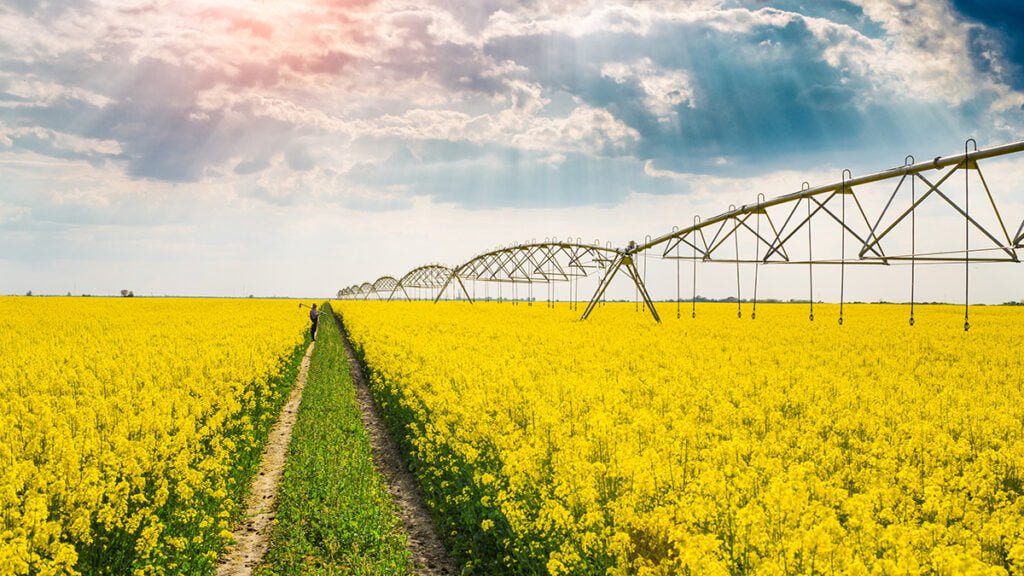
Even so, he said he decided to expand his acreage this year and rented some additional ground in Kern County to plant barley, in part because of higher market demand for feed crops. His other dryland crops are wheat and canola.
"Everything is kind of pointing to a dry year, but I keep hearing that we're going to have a wet January," he said.
Source - http://goldrushcam.com/