News articles in recent months raise the alarm that “2013 was the driest year in recorded California history.” Each of those proclamations is consistently accompanied by a litany of worries associated with water supply availability for the 2014 water year — whether municipal, industrial, recreational, environmental and/or agricultural.
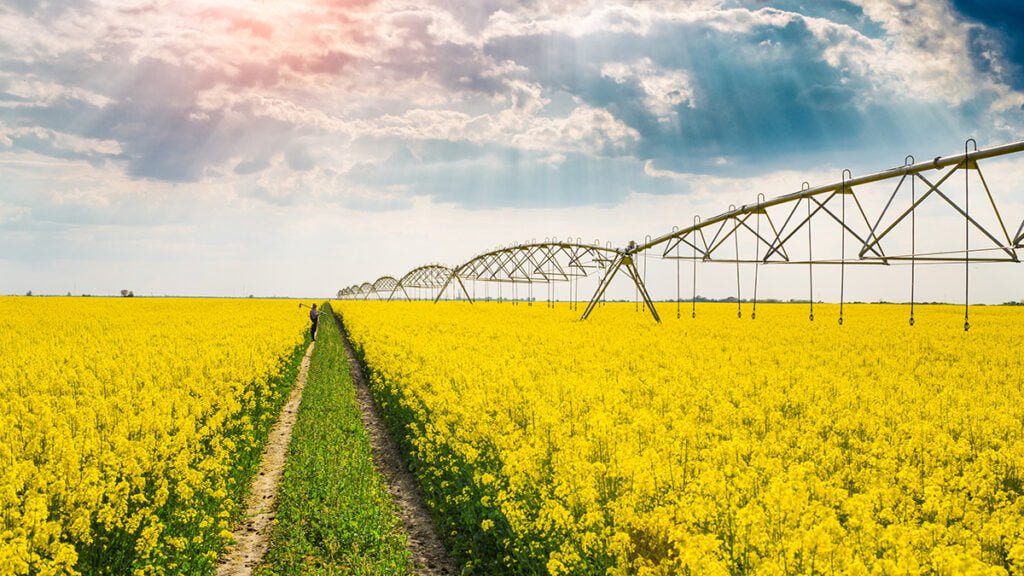
Agriculture will be especially vulnerable if, as forecast, little precipitation falls in the months ahead. Almonds are particularly at risk in the coming crop year. Due to their permanent nature, almonds cannot be rotated or irrigation discontinued like an annual crop because of the long-term investment. In order to insure a productive cycle, almonds need a very specific amount of water not only to produce, but to survive. Presently, the surface water supplies needed to insure this continued productivity appear to be extremely limited.
Late in 2013, the Department of Water Resources (DWR) came out with its initial allocation estimate for the State Water Project (SWP) of only 5%. Snow surveys conducted in the first few days of 2014 verify what everyone already knew: California’s largest reservoir (the snowpack) is between 10 % and 20% of normal for this time in the year — a harbinger of a third year in a row of drought for California. Current reservoir levels are below the historical average, many well below the average.
The shortage of surface water supplies for 2014 only exacerbates the groundwater situation in California and highlights the current ineffectiveness and cumbersome nature of the current water transfer and exchange programs. The state and federal agencies continue to tout progress in talks about streamlining the exchange and transfer processes, but agriculture remains skeptical about timely progress to address the deficiencies present in the current water year.
Almond challenges
As for groundwater, when surface water supplies are limited, the natural need of almonds necessitates the move to groundwater. Increased groundwater pumping will only increase the present overdraft problems and accelerate the potential of ground subsidence. This trend will necessitate that almond growers/handlers remain actively engaged in current and future discussions and actions that address the imbalance between extractions and recharge. If regions are found to be inadequately addressing this imbalance, there is the strong likelihood of the state stepping in to intervene.
Whatever way you look at it, almond growers (no matter where they are in the state) are in for a challenging year ahead.
Source - http://westernfarmpress.com/
USA - Agriculture especially vulnerable to California droughtNews articles in recent months raise the alarm that “2013 was the driest year in recorded California history.” Agriculture will be especially vulnerable if, as forecast, little precipitation falls in the months ahead. Almonds are particularly at risk in the coming crop year. Due to their permanent nature, almonds cannot be rotated or irrigation discontinued like an annual crop because of the long-term investment. In order to insure a productive cycle, almonds need a very specific amount of water not only to produce, but to survive. Presently, the surface water supplies needed to insure this continued productivity appear to be extremely limited.