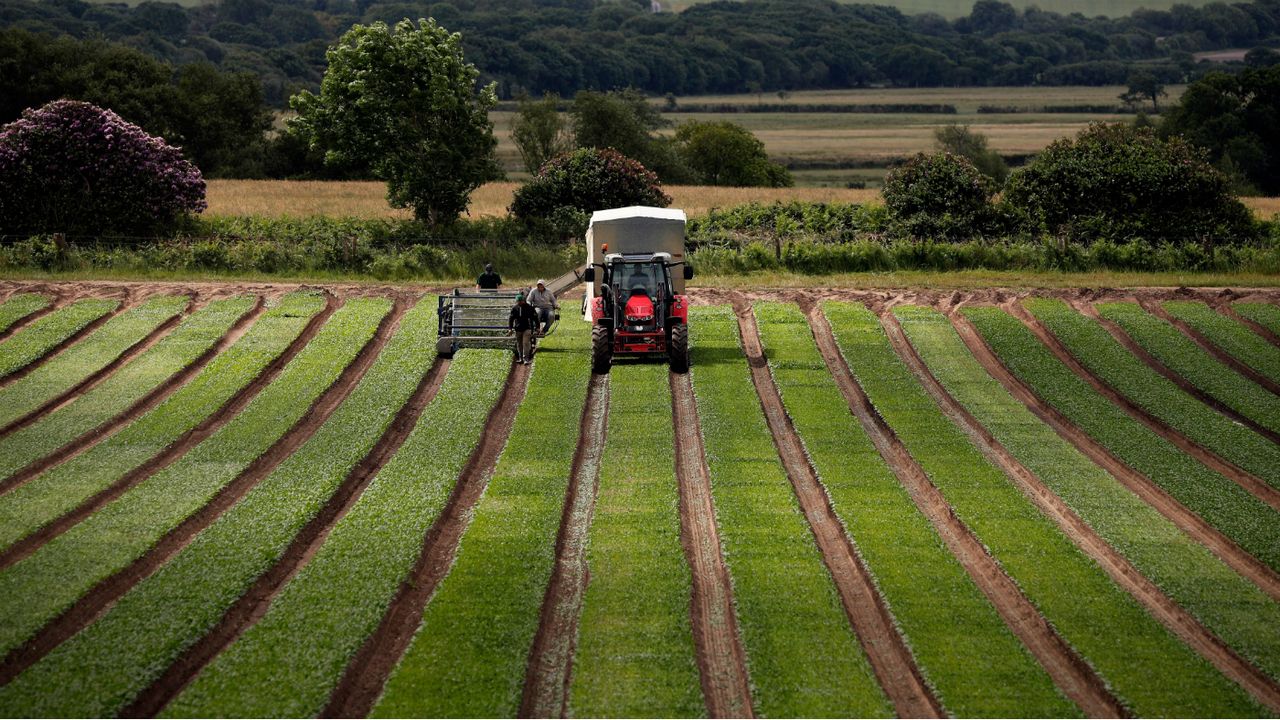
Canada - Strawberry farmer loses 70% of crops to tropical storm

22.07.2014 253 views

Strawberry crops in southern New Brunswick were hit hard during post-tropical storm Arthur. About 120 mm of rain fell on Brian Walker’s Mill Stream farm over a 24-hour period as Arthur rolled through the Maritimes on July 5.

Walker says floodwaters coated his strawberries in silt and nearly 70 per cent of his crop is a write-off. “I thought I was in for a great season, but Arthur really did a number on us,” says Walker.

Walker says his farm has flooded three times this year. Prior to that, it had not flooded since 1991. With no insurance, Walker is afraid he may have to rethink his strawberry business, if he doesn’t receive compensation.

“Other sectors get compensation, so I think strawberry producers should as well,” says Walker.

Walker says strawberries are a significant part of his income and estimates Arthur slashed $100,000 from his bottom line.

Public Safety Minister Bruce Northrup is urging Walker to apply for disaster relief assistance. “Other farmers in the area have filled out their paperwork and got it into us,” says Northrup. “We’re fortunate we have a satellite office here in Sussex where people can go and get information, but we haven’t got that information out there yet and we’re in the process of getting that information out there.”

Northrup says the province will give more direction on compensation options for people early next week. In the meantime, he is asking people to be patient.

Walker says this year’s bad weather has motivated him to get crop insurance. He says he never had it before because things were never this bad.

“I did everything I could possible to have a good crop this year, but Mother Nature took it away from us.”

Source - http://www.freshplaza.com/

12.05.2026

India - Storms damage mango, watermelon, and vegetable crops in Jharkhand

High-velocity winds, heavy rainfall, and hailstorms across Jharkhand in recent days have caused damage to seasonal fruit and vegetable crops, including mangoes, watermelons, tomatoes, coriander, okra, and gourds.

12.05.2026

Canada - AFSC rethinking honey insurance programs offered to Alberta beekeepers

Despite offering coverage for everything from bear attacks to parasitic mites, Alberta’s honey insurance programs continue to see remarkably low participation rates among the province’s beekeepers.

12.05.2026

Myanmar - Bago Region CM attended the loan disbursement ceremony

Bago Region Government held the 2026 monsoon season agricultural input loan disbursement ceremony under the 100-Day Plan on the morning of May 12 at Bago City Hall.

12.05.2026

Rwanda - Subsidised insurance for greenhouse growers launched

Rwanda Agriculture and Animal Resources Development Board (RAB) on Thursday, May 7, launched a subsidised insurance for greenhouse agriculture to protect farmers against climate shocks, while encouraging investment in commercial agriculture. 

12.05.2026

Bangladesh - Tk7.50b Boro paddy spoilt by rains, flash flood in Sylhet

While the farmers in greater Sylhet are still continuing their high labour-intensive venture to harvest Boro paddy, about 40 per cent of the job is yet to be completed for the extensive inundation of their fields caused by incessant rainfalls and runoff.

12.05.2026

USA - USDA Offers Disaster Assistance to Agricultural Producers in Oklahoma Impacted by Recent Tornadoes

Agricultural operations in Oklahoma have been significantly impacted by recent severe weather and tornadoes. The U.S. Department of Agriculture (USDA) has technical and financial assistance available to help farmers and livestock producers recover from these adverse weather events.

11.05.2026

India - Erratic weather cuts Himachal Pradesh apple crop by up to 70%

Himachal Pradesh may face one of its lowest apple harvests in recent years, with growers reporting crop losses of up to 70% across major producing regions due to prolonged erratic weather.

11.05.2026

Mongolia Could Face Severe Economic Crisis From Overlapping Climate Shocks

A World Bank Group study warns that Mongolia could face a devastating economic crisis if collapsing coal exports, deadly dzud winters, and catastrophic urban floods strike together, potentially shrinking GDP by over 20 percent in three years.