Sometimes prayers for rain go unanswered, and sometimes they get answered with more vigor than crops can take.
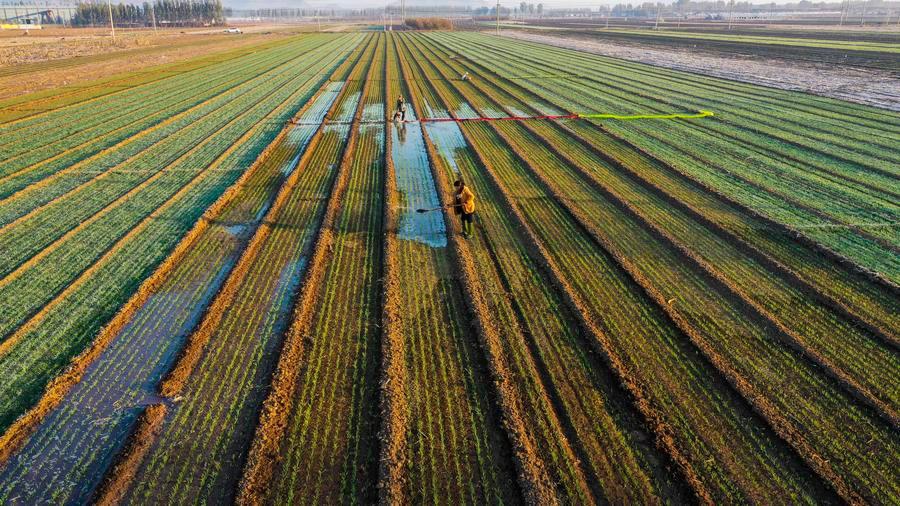
Monday and Tuesday evening, rain and hailstorms hit parts of the Klamath Basin hard, tearing into plants and flooding fields.
Official reports from the National Weather Service said Klamath Falls clocked in with 0.73 inches of rain Monday and Tuesday. But farmers claim to have seen several inches fall on their fields during these severe storms.
“The farmers want water, but we’d like it at a little less rate than that,” said Terry Guthrie, a potato farmer near Malin. “It’s bizarre. We’re in a drought all summer long for the last eight or nine months, and we have two storms that dump that kind of moisture on us.”
A heavy toll
Guthrie was one of several farmers whose crops were damaged by the storms. He said his potato fields suffered between 20 and 90 percent damage.
“They flooded, pounded us with hail, everything,” Guthrie said, noting the hail defoliated his potato plants.
Rob Unruh, a potato and grain farmer in the Malin area, suffered between 40 and 95 percent damage in his fields and his son’s fields, he said.
“In all, 40 to 95 percent of the plant itself was damaged by hail,” Unruh said. “It strips the leaves off, it breaks the stems, it opens them up to sunlight and other diseases.”
The storms also damaged crops at Unruh’s son’s grain fields.
“Over 50 percent of his wheat crop is laying on the ground,” Unruh said.
Scott Seus, of Tulelake, lost one onion field near Malin to the heavy storms.
“I had one onion field wiped out that we’re going to end up walking away from,” he said. “The onions were just shredded. People in Malin were talking about being able to smell onions the night of the storm because the hail defoliated the onion tops.”
A swath two miles wide
Guthrie described the storm damaged area as a swath between Lost River High School and Malin.
“It was approximately a mile or 2 miles wide and went on for 10 miles,” Unruh said.
In addition to the outright hail damage to plants, Guthrie saw flooding from the sheer amount of moisture hitting the ground all at once.
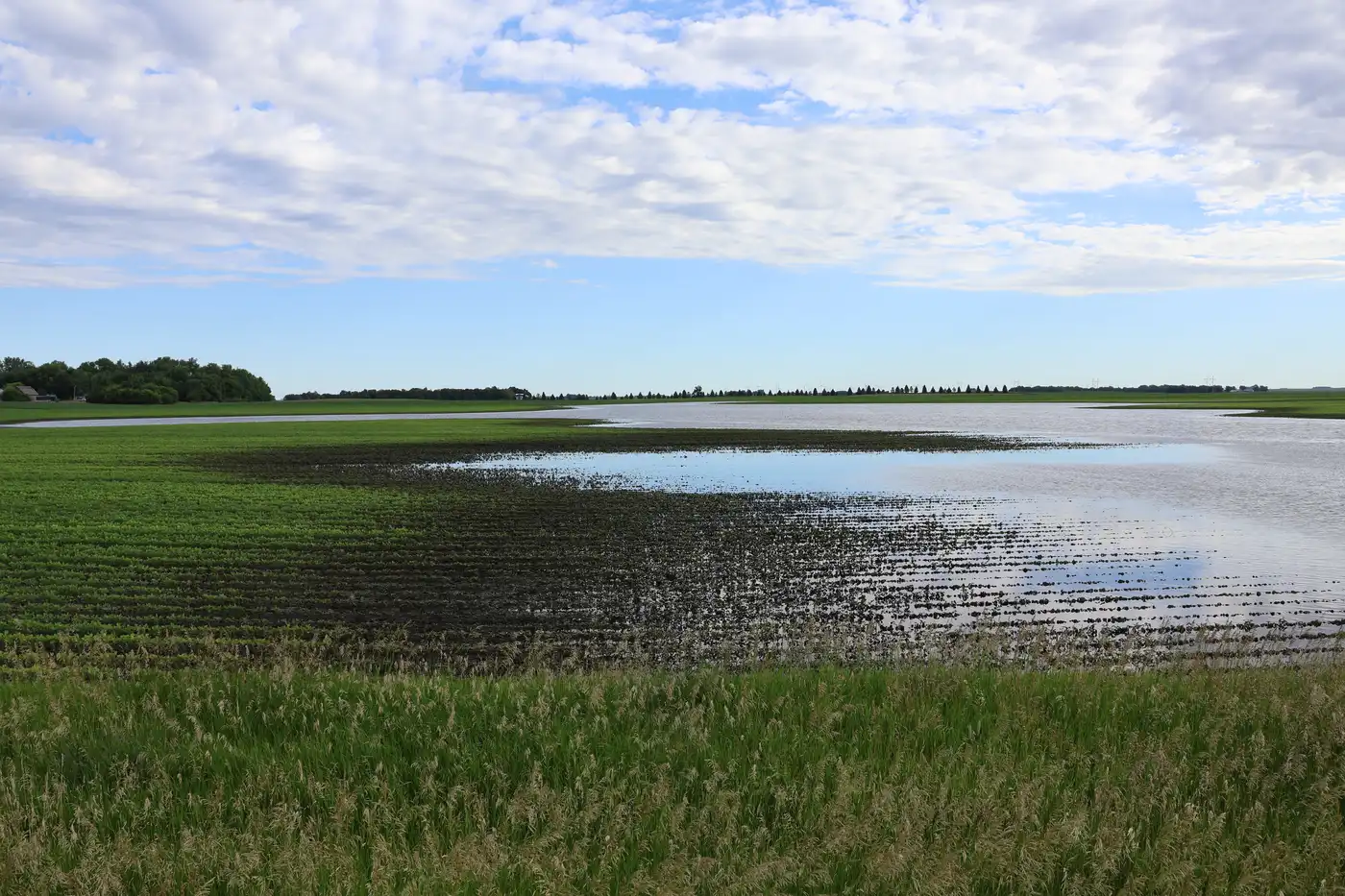
“There were fields down there under water, 20 to 25 acres of lakes,” Guthrie said of the areas below Bryant Mountain. “The road up toward Malin dump was cut nine feet deep on both sides, water coming off the mountain.”
Mark Trotman, a Klamath Basin potato farmer, lost about 25 percent of his crop to the storm, a recoverable amount, he said. But the massive amount of precipitation cut gullies between his potato rows.
“The amount of rain we got in the short amount of time, that’s a little on the unusual side. My worst field as far as rain got up to two inches in the short period; that was Monday night. And last night the same field got another 63 hundredths of an inch, according to our rain gauge,” he said on Wednesday. “Gullies washed out through the rows of potatoes. I’m not sure how to handle it at harvest. I’ll have to fill them in before I harvest somehow. Some are close to 3-foot deep.”
Seus said fallowed fields showed how much water covered the area.
“The rain hit hard enough that it smoothed out the ground and melted clods,” Seus said. “It smoothed out the ground in some areas and left the field slicked off.”
Buckets of rain
The National Weather Service listed official rainfall at 0.73 inches in Klamath Falls, 0.17 inches at Mount Shasta and 0.39 inches in Alturas, said Charles Smith, meteorologist intern at the National Weather Service office in Medford. He also confirmed hail the size of eight-tenths of an inch in the Klamath Falls area Monday.
The Community Collaborative Rain, Hail and Snow Network (also known as CoCoRaHS) unofficial precipitation measurements listed 0.27 inches in Klamath Falls, 0.6 inches in Keno, 0.2 inches in Merrill and 0.47 inches in Bonanza on Tuesday.
“I know guys that had a bucket in their yard and there was 4 to 5 inches of water after the storms went across,” Guthrie said. “There’s a strong possibility there was 3 to 4 inches of rain in those storms.”
“The discomforting thing about that whole situation is the smoke being so thick you can’t see it coming,” Seus said, referencing the smoke covering the entire region from wildfires. “It’s pretty unnerving to have lighting crack over your head and rain hitting before you know the storm is coming at you.”
Insurance claims
“I’m standing out in my grain field with five insurance adjustors right now,” Unruh said in an interview with the Herald and News Wednesday afternoon. Unruh has seen severe rainstorms and hail storms damage his crop often enough that he has insurance for it.
“It averages about every fifth year,” he said, “but I’ve never had this much of my crop damaged this severely.”
Even with insurance he estimated he was losing $1,000 to $2,000 an acre.
Though potato farmers don’t harvest until the end of September into October, these summer months are important to potato growth.
“They’re in a critical stage right now,” Guthrie said. “This is when potatoes do their most sizing, in the last two to four weeks of growth.”
For now the farmers will do everything they can to try and keep their plants alive.
“The first thing we’d do this morning after the hail, we had some micro-nutrients blown on and fungicide to try to reduce disease,” Unruh said. “Keep them as healthy as you can and see what happens. Some fields do amazing after the damage and some fields just die. You don’t know until it’s finished. Until they die or you harvest the crop.”
“It weakens the plant and they become susceptible to early blight and they just die off,” Guthrie said of the damaged plants.
Trotman said he would be able to bring his potatoes back to health and harvest, because his damage was only about 25 percent.
Seus will walk away from one onion field, but another that was damaged looks like it will survive, he said. But the rainstorms are a reminder to farmers of where they stand when it comes to nature.
“You’re at Mother Nature’s mercy,” Seus said, “and every once in a while she reminds you of it.”
Source - http://www.heraldandnews.com/