There is no escaping the inevitable fact that larger crop farms perform better financially, on average, than smaller farms. The difference results mainly from lower costs of production.
Lower costs
Larger farms don’t have higher revenue or yields per hectare—they simply have lower costs per unit of labour and capital.
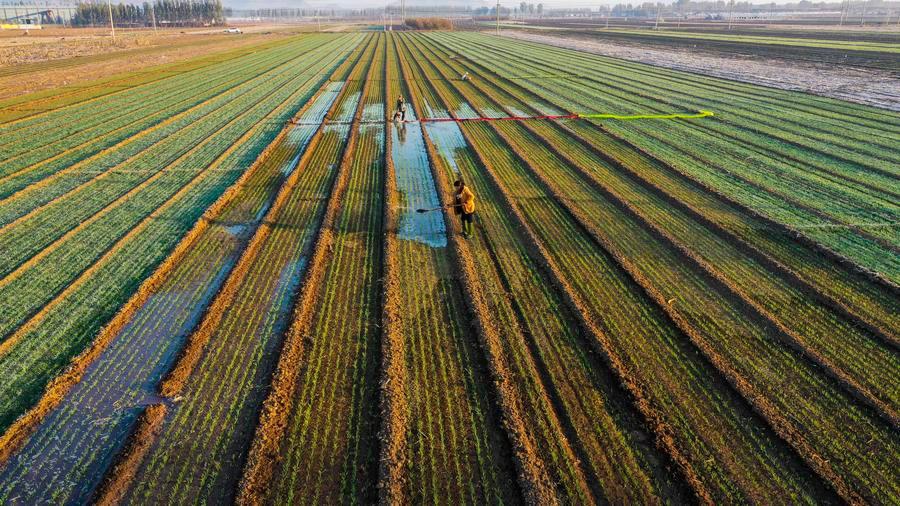
Take for example the case of farmers in the US, where large farms now dominate crop production. In the early 1980s most cropland was operated by farms with less than 245 crop hectares.
However today most cropland is on farms with at least 450 hectares and many farms are five and ten times that size.
Meanwhile in 1987, the midpoint dairy herd size was 80 cows; however today the size has climbed to 570 cows. The change in hogs has even been more striking, from 1,200 hogs removed in a year to now over 30,000.
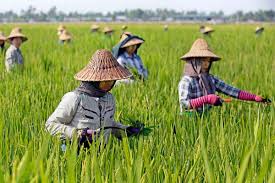
In an interview with Countryside Today newspaper late last year, head of CIEM's Rural Development research department Luu Duc Khai said that it is very difficult to improve labour productivity in the Vietnamese agriculture sector due to its small and fragmented scale of production.
For example, in the northern provinces, 60% of farmer households had less than 0.5 hectares of land in 2011, compared with 71% of in 1994. In addition, Vietnam’s labour productivity in agriculture has been extremely low, even compared to Laos and Cambodia, he said.
Stuck in a treadmill
Many leading economists have suggested that by and large Vietnamese farmers, like farmers around the globe, have also been stuck in a treadmill. They are forced by competition to increase productivity and the increased productivity in turn leads to lower prices.
Product development and innovation, which allows industrial companies to stay out of a similar treadmill, doesn’t help the crop farmer, though it does benefit those businesses higher up the food chain such as the food processors and retailers.
This treadmill is the reason for the enormous pace in increase in size and productivity in farming in countries like the US, Russia and Argentina. The lower profit margins per hectare force farmers to constantly develop and improve and compensate by making up the loss of earnings by doing a larger volume of business.
Competitive disadvantages
Khai said for farmers who can’t participate in this stiff competition there is no way out – or rather there is only one way out – get out.
We have no choice but to shift the country's rural economic and agricultural production structure to industries with higher added values, Khai said, adding that specifically the nation needs to expand industrial parks including processing industrial zones in rural areas.
We need to put more farm workers into the industrial and service sectors, he stressed.
Vietnamese farmers will never be able to produce grain for the same costs as their competitors in the US – or even Russia or Argentina for that matter – even if they could intensify production and get higher yields per hectare.
The nation needs to perfect the overall agricultural production system and lay a foundation for making investment plans to concentrate on infrastructure development and management for higher value added agriculture products and get out of the commodity market, Khai concluded.
He suggests that the state should create policies to encourage investment and support agricultural expansion and infrastructure development for fields with high added value such as breeding and aquaculture. If the state does that, these fields could develop and attract more productive labour to the field.
Source - http://english.vietnamnet.vn/