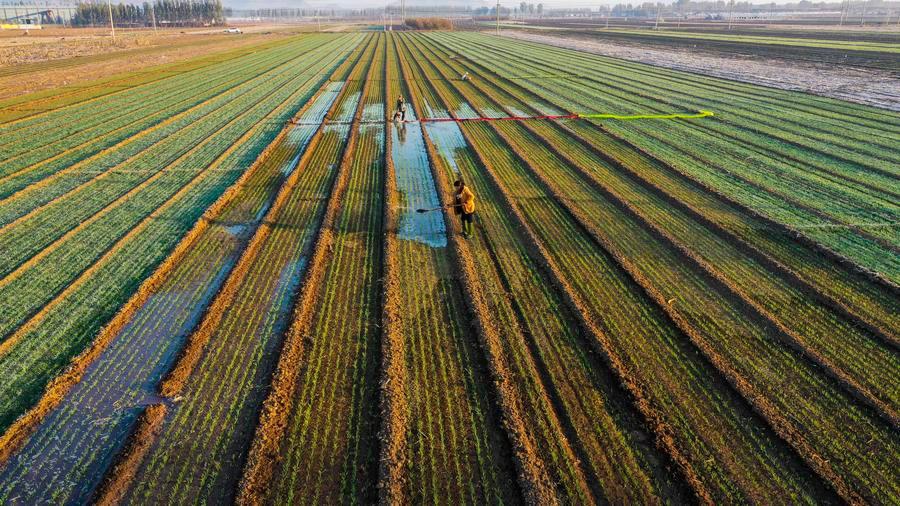
A Texas-based consulting group is seeking grower feedback regarding a pilot crop insurance program for triticale in the Pacific Northwest.
Pacific Northwest farmers met last week to hear more about a federal crop insurance program that would allow them to raise more triticale.
“Without that insurance, in the event of a catastrophic situation where they have total or significant loss, the capability of paying their farm loans back to the banks is greatly reduced,” said Clif Parks, AgriLogic consultant.
AgriLogic is developing the program, for approval by the USDA Risk Management Agency.
AgriLogic held meetings in Pendleton, Ore., and Almira, Wash., for growers and industry members to offer feedback on a proposed program.
Jeff Shawver, a Connell, Wash., farmer, usually grows 1,000 acres of triticale, but said he’s taking a break from growing the crop this year because of the lack of a crop insurance program. He has a contract to raise more in the upcoming season.
“It would be huge,” he said of a crop insurance program, estimating he would increase to 1,500 acres, depending on his rotations. “It’s more risky to grow without the crop insurance. You’re really dependent on the weather and if the weather’s really dry or you have a freezeout, it’s really your own dollar. Too many bad years in a row, you’re probably not farming any more.”
Jason Ludeman, crop insurance agent with Crop Insurance Solutions in Spokane, said more growers in dryland areas are raising triticale as an alternate to winter wheat. It’s an area where they don’t have many crop choices, he said.
“I think it is easier to grow winter triticale than it is winter wheat,” said Bill Schillinger, director of Washington State University’s Dryland Research Station in Lind, Wash. “It has excellent winter hardiness, it doesn’t have any stripe rust problems, so you save your money on herbicides.”
Schillinger estimated a price of $136 per ton for triticale compared to $193 per ton for wheat.
Planting in a normal year with moisture, it makes more sense to plant winter wheat, Schillinger said. But when a grower plants triticale late into low seed zone moisture, the crop produces the same amount of biomass as early planted wheat, Schillinger said. If planted into moisture, triticale produces roughly 18 percent more grain than wheat.
“On those years where you can’t plant wheat early, winter triticale might be something to look at, especially with a crop insurance package,” Schillinger said.
Triticale is a durum wheat-rye cross, but not related to feral rye, Schillinger said. It volunteers like wheat or barley and is easily taken out, he said.
Central Washington Grain Growers hedging manager Howard Nelson expects growers to start growing triticale this summer in order to establish their yields and production history.
There hasn’t been enough triticale to meet demand, Nelson said. But as production grows, the market must also grow, he said, calling for customers to be brought on board as production increases to avoid an oversupply.
The program initially targets the triticale growth area in California, Idaho, Oregon and Washington, with the possibility of expanding, Parks said.
AgriLogic has gotten preliminary approval from USDA for the concept, and is showing growers a draft of the program for feedback. It will submit the product for federal review later this year. The program could be available in 2016-2017, Parks said.
Source - http://www.capitalpress.com/