Olam Nigeria Limited, a leading agri-business company in Nigeria, has announced the annual results of its Olam Livelihood Charter (OLC).
In a press statement by Ade Adefeko, Head Corporate and Government Relations, Olam Nigeria, the company announced the provision of over N536 million as financing at zero interest rate to 12,000 Nigerian cocoa, cashew and sesame farmers under the charter.
It says that as the OLC enters its fourth year, the Charter sets stringent standards for supporting smallholder communities in Olam's networks through eight principles.
The statement says the principles are financial support, improved yields, better labour practices, market access, improved crop quality, traceability, social investment and minimising environmental impact.It says only by meeting all eight of these principles can a sustainability programme be awarded OLC status.
According to the statement, three of Olam International's 30 flagship OLC initiatives are in Nigeria, where Olam works with cashew, cocoa and sesame smallholder farmers.
It says this programme is in collaboration with TechnoServe based in Washington and New York based Rainforest Alliance as well as other local agronomists in Nigeria.
The statement says these and other initiatives provide zero interest financing and agri-inputs, training on good agricultural and labour practices, as well as social investment in the community.
It says such investment include providing educational materials, creating bore wells for safe water, building a police station and school, development of local roads and the installation of solar-powered lighting.
The statement says since the OLC's launch in 2010, the number of Nigerian farmers benefitting from all eight OLC principles has risen to over 12,000 small-scale farmers, spanning almost 25,000 hectares of cultivated land.
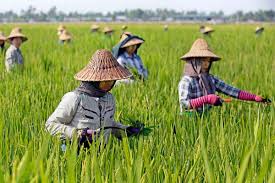
Highlights from 2014 OLC initiatives in Nigeria include working with 12,000 farmers in Osun, Ondo and Cross-River for cocoa. Also, Kwara and Oyo farmers were assisted for the production of cashew, while Jigawa, Bauchi, Nasarawa and Benue farmers were supported for sesame, with about 18 percent of the total farmers being women.
Other highlights included 24,140 hectares under cultivation, N536 million in finance to farmers, including short-term micro-financing, advances for crop purchases and mid-term loans for the procurement of farming inputs.
Olam also gave a total of 578 training days to farmers for them to imbibe good agricultural practices among others. In his comment, Adamu Sani, a sesame farmer from Kirikasama village in Jigawa State, said "Olam Nigeria is the only company that has come to our village to conduct a workshop on training farmers. Not only that, they introduced improved sesame seeds which they distributed to farmers free of charge. More than 95 per cent of my fellow villagers are benefitting from Olam Nigeria," Sani said.
In addition to the OLC programmes, Olam Nigeria has launched an outgrower programme around its rice farm in Nasarawa State, in collaboration with USAID and the National Agricultural Development Programme.
Mukul Mathur, Olam Nigeria Country Head, said Olam Nigeria has grown a lot in its 25 years of operation. "We've grown from exporting cashew to investing along the whole agri - supply chain, from wheatmilling and rice farming to manufacturing family favourites such as Tasty Tom tomato paste, employing around 8,500 Nigerians.
"And where we are able to work directly with smallholders, we are proud to see the principles of the Olam Livelihood Charter helping them to increase yields and quality.
"Our commitment to Nigeria and its ambition to provide food security is unshakeable," Mathur said.
Source - http://www.blackseagrain.net/