Excessive rain and extensive flooding and ponding have taken a toll on corn fields across Ohio, and could leave some growers facing sudden death of their plants now or diseased crops and potential long-term yield loss later, according to an agronomist in the College of Food, Agricultural, and Environmental Sciences at The Ohio State University.
Even if the flooding and ponding don’t kill some corn crops now, some growers could be faced with fields exhibiting stalk or root rot and stalk lodging later in the season, said Peter Thomison, an Ohio State University Extension agronomist. OSU Extension is the statewide outreach arm of the college.
“While above-normal rainfall is not unusual in Ohio during the spring, the amount of rainfall this year has been extraordinary,” Thomison said. “Crops that are at earlier growth stages are the ones most likely not to survive or to be less productive.
“Even if the ponding doesn’t kill plants outright, it may have a long-term negative impact on crop performance. Growers need to watch their fields closely for root and stalk rot, which can lead to lodging problems later in the season and could have negative impact on yields.”
Widespread heavy rains last week brought most fieldwork to a halt in Ohio, according to the June 22 U.S. Department of Agriculture crop progress report.
“Heavy rains through the state have brought many concerns for producers,” the federal agency said in a statement. “Standing water is evident in nearly every field, drowning out crops and favoring disease.
“The muddy, saturated fields have prevented producers from being able to spray and fertilize causing concerns over disease, growing pest presence, and increasing weed pressure. Fields washed out from prior rain events have yet to be replanted due to continued rain, and there is speculation it will be too late to replant. Yellowing of field crops and areas of sudden death are popping up around the state.”
According to Thomison, how well corn crops are able to survive the impact from flooding and ponding is dependent on three factors: what growth stage the crops are in at the time of the flooding event; how long the plants experience ponding; and the air and soil temperatures during the event.
“Plants past the V6 growth stage should survive pretty well,” he said. “Prior to the 6-leaf collar stage, as measured by visible leaf collars, or when the growing point is at or below the soil surface, corn can usually survive only two to four days of flooded conditions.
“Plants prior to the V6 growth stage are more vulnerable to damage from ponding and saturated soil conditions. The oxygen supply in the soil is depleted after about 48 hours in flooded soil. Without oxygen, the plant cannot perform critical life-sustaining functions. If temperatures are warm during ponding — greater than 77 degrees F — plants may not survive 24 hours.”
Corn that does survive flooding might face a nitrogen deficiency later, Thomison said.
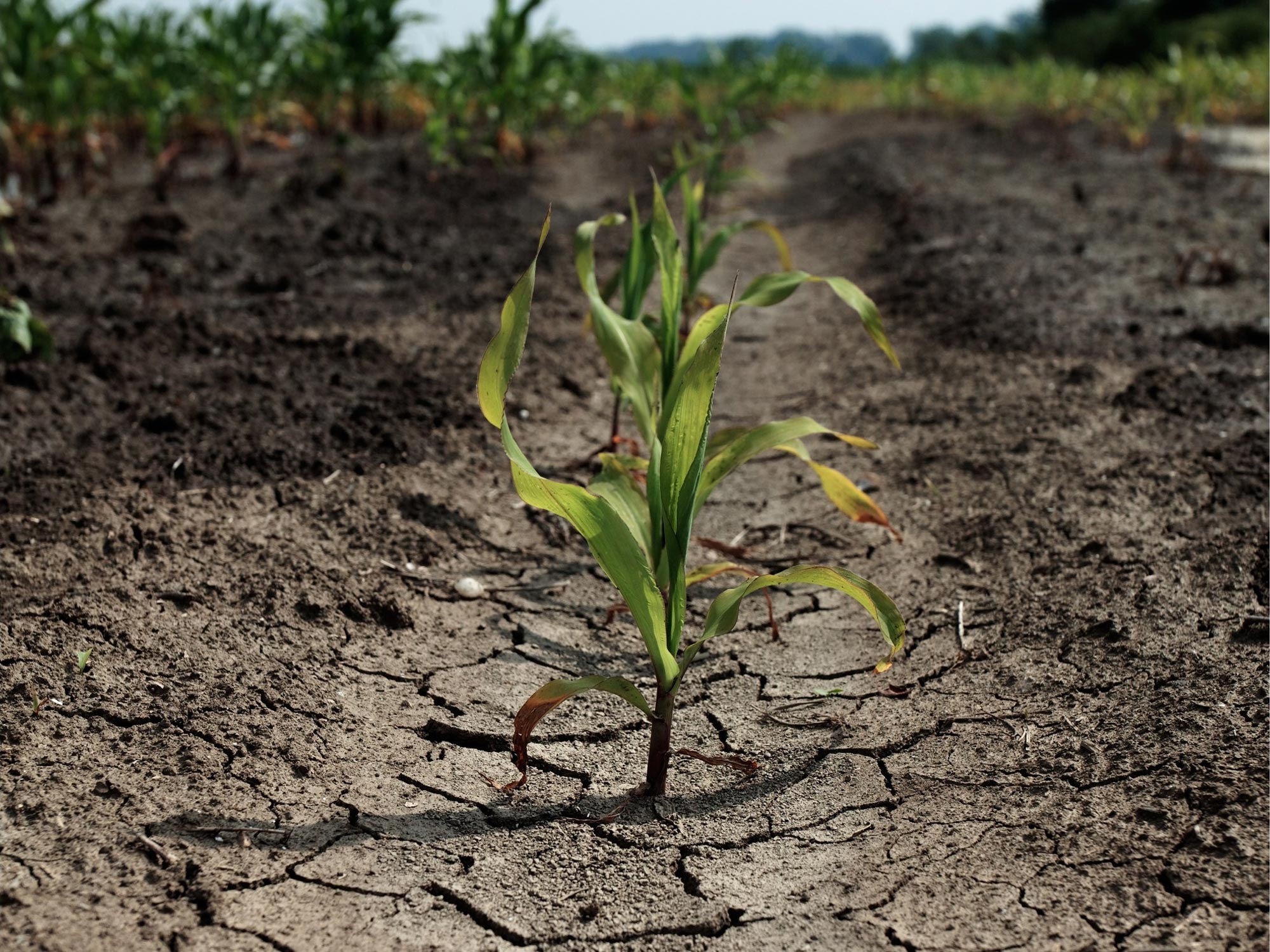
“Excess moisture during the early vegetative stages retards corn root development,” he said. “As a result, plants may be subject to greater injury during a dry summer because root systems are not sufficiently developed to access available subsoil water.”
“Many Ohio fields are pockmarked with spots where the corn plants are stunted, which is exacerbated by the nitrogen-loss issue.”
For corn that is emerged, growers should check the color of the growing point after the water recedes to assess the plant’s survival, Thomison said.
“It should be white to cream colored, while a darkening and/or softening usually precedes plant death,” he said.
Source - http://www.porknetwork.com/