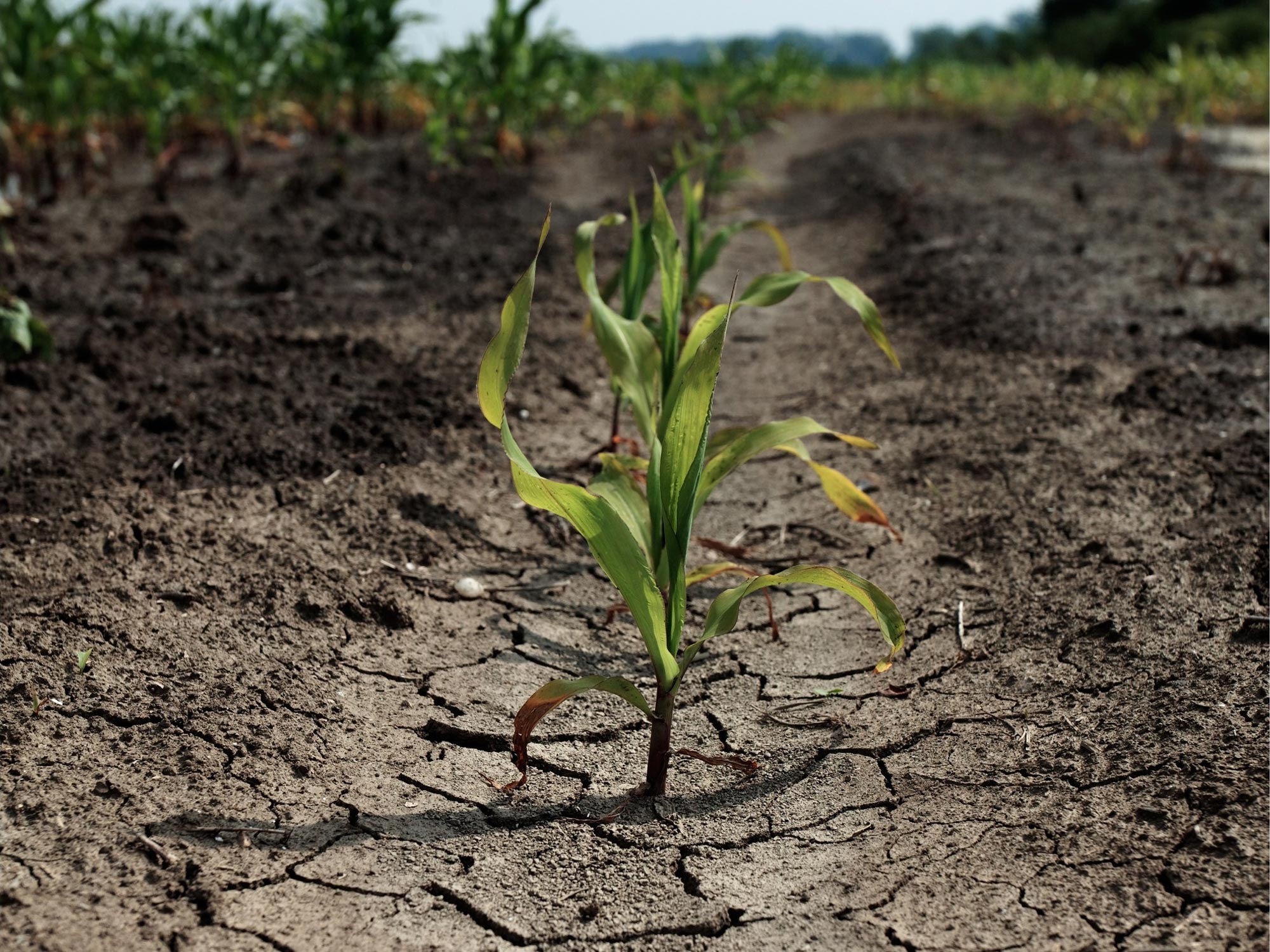
A plant pathologist at Iowa State University is warning Iowa farmers to keep their eyes open for an emerging corn disease, which has the potential to reduce yields of impacted crops to near zero.
Alison Robertson, associate professor of plant pathology and microbiology at ISU, said there have been increased sightings of Physoderma, a corn disease that had gone unseen in the U.S. for decades but has been spotted more and more since 2007.
The disease is caused by the fungus Physoderma maydis, and first appeared in India in 1910. In the 1930s, the disease hit the southeastern region of the U.S. and led to yield losses of between 5 and 10 percent in the area.
Robertson said affected crops would show one of two symptoms: brown spots on the leaves of the plant or stalk rot, which can rot the lower nodes of the plant’s stalk. Robertson first saw leaf spots in 2007 but said stalk rot began appearing in 2013, and the disease has been seen in several Iowa fields this year.
“The stalk rot isn’t evident until they walk across the field and push those stalks aside, and then the corn is going to break. If it breaks, they need to examine where it broke,” Robertson said. “If it broke in the node and the node is rotted, chances are they have Physoderma.”
Robertson said researchers are still unsure as to what exactly is causing the disease’s return but said it might have to do with wet springs in recent years, as the disease needs moisture early in the plant’s development to infect the plant. But Robertson said she plans to further research the disease in the coming year.
“We have no idea why all of a sudden we’re starting to see the disease on the stalk at the nodes,” she said. “It could be a function of the resistance in the hybrids, it could be something to do with how the pathogen is infecting the corn, maybe it’s infecting earlier or later in the growing season, but we don’t know.”
But for now, Robertson said fields where the disease has been spotted could be infected for up to three to seven years, and she recommends farmers should rotate corn out of the field in the following years, as well as possibly change their seed varieties to a less-susceptible hybrid.
Robertson said Iowa fields have yet to see large yield damage from the disease, but noted that “maybe we’ve just lucked out so far.”
“If we do get a big wind coming up, we could get pick-up-sticks in the fields, where all the corn falls over and breaks, and then it’s going to be a nightmare to harvest,” she said. “So far, we haven’t seen a large yield lost to it, but the potential is there if we get a big wind and your corn is lying all over the field.”
Source - http://amestrib.com