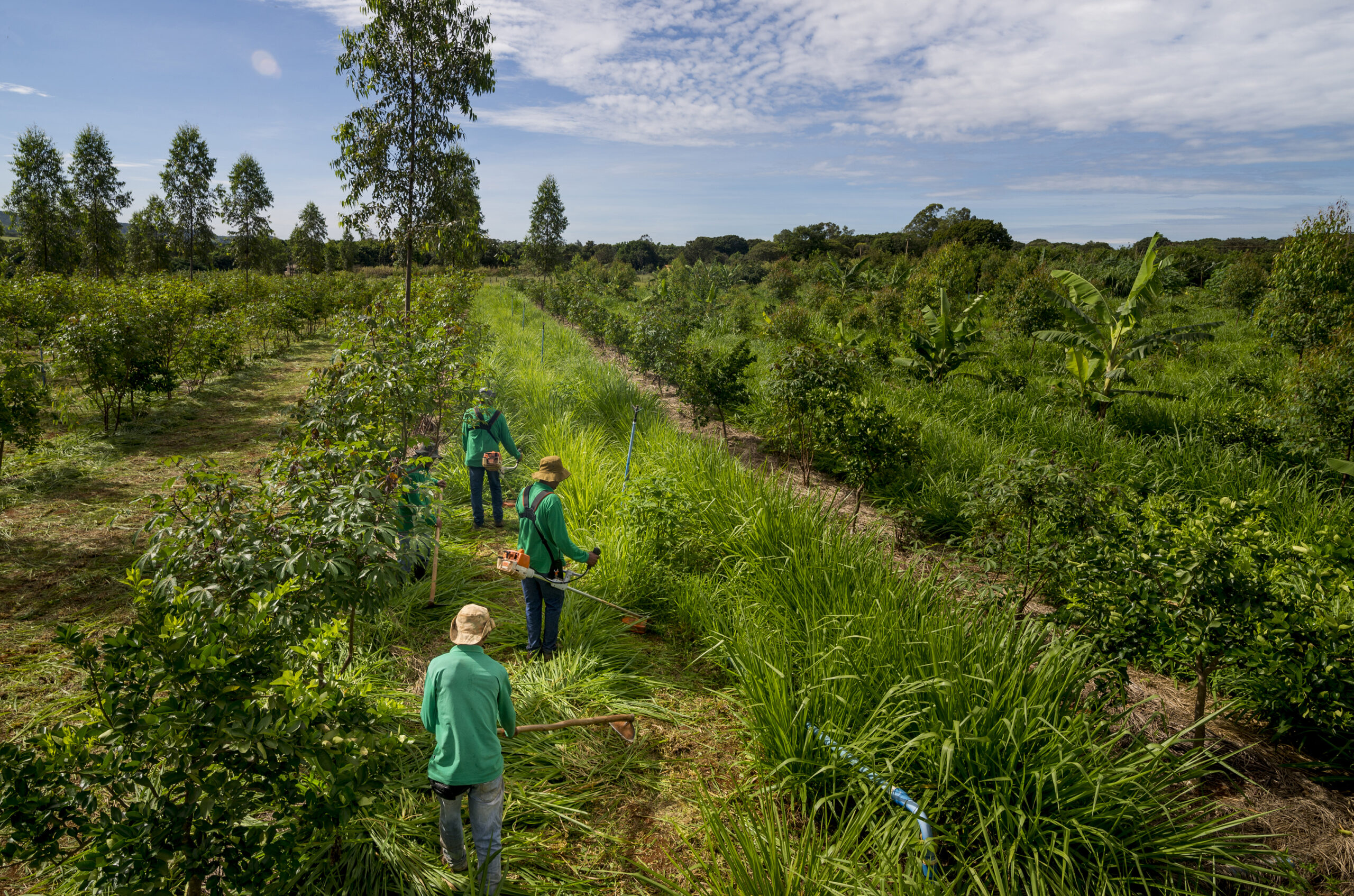
On a sun-scorched wasteland near India's southern tip, an unlikely garden filled with spiky shrubs and spindly greens is growing, seemingly against all odds.
The plants are living on saltwater, coping with drought and possibly offering viable farming alternatives for a future in which rising seas have inundated countless coastal farmlands.
Sea rise, one of the consequences of climate change, now threatens millions of poor subsistence farmers across Asia. As ocean water swamps low-lying plots, experts say many could be forced to flee inland.
"It's hard to imagine how farmers will live," said Tapas Paul, who as a World Bank official helped channel about $100,000 to help build the small garden a decade ago in a swampy, seaside town dominated by salt flats in southern Tamil Nadu state. "In the places subject to inundation and sea level rise, there are few options."
A team of Indian scientists is searching for solutions to what they describe as a fast-approaching agricultural crisis. Their neatly plotted rows of naturally salt-tolerant plants, known as halophytes, could be a part of the answer. The scientists from the M.S. Swaminathan Research Foundation are also trying other approaches: tweaking genes and cross-breeding plants by conventional means to discover which might grow and even flourish.
"Sea level rise is inevitable, and we are not prepared," said Swaminathan, who pioneered high-yield wheat and rice varieties for India in the 1960s. "The biggest problem in India is just the very large population. We can say people can relocate, but where could we even accommodate all those who need to move inland?"
Source - http://www.foxnews.com