The big issues facing many on the land at the moment are the growing chance of drought and, in the opinion of an increasing number of farmers, the inevitability of climate change. North American and European farmers enjoy a type of safety net for these uncertain times - a generous government-subsidised crop insurance program. No such government-supported scheme exists in Australia. But in the past two years, two unsubsidised, multi-peril insurance policies have come on to the market. Today, we examine whether this type of insurance has a future in Australia and whether it could reduce reliance on government drought assistance. Autumn is sowing time in Australia's grain-growing regions. It's expensive and nerve-wracking, as the cost of fertiliser, seed and diesel can run to hundreds of thousands of dollars. And once the crops are in, growers spend months waiting for rain to bring their crops home.
PHIL KOSCHITZE, TOPKAT GRAINS, WARRACKNABEAL, VIC.: We've got only natural precipitation. There's no irrigation or anything here, so we rely purely on what comes out of the sky.
PIP COURTNEY: A great start doesn't necessarily make for a great finish either, as Warracknabeal grain grower Phil Koschitze found last year.
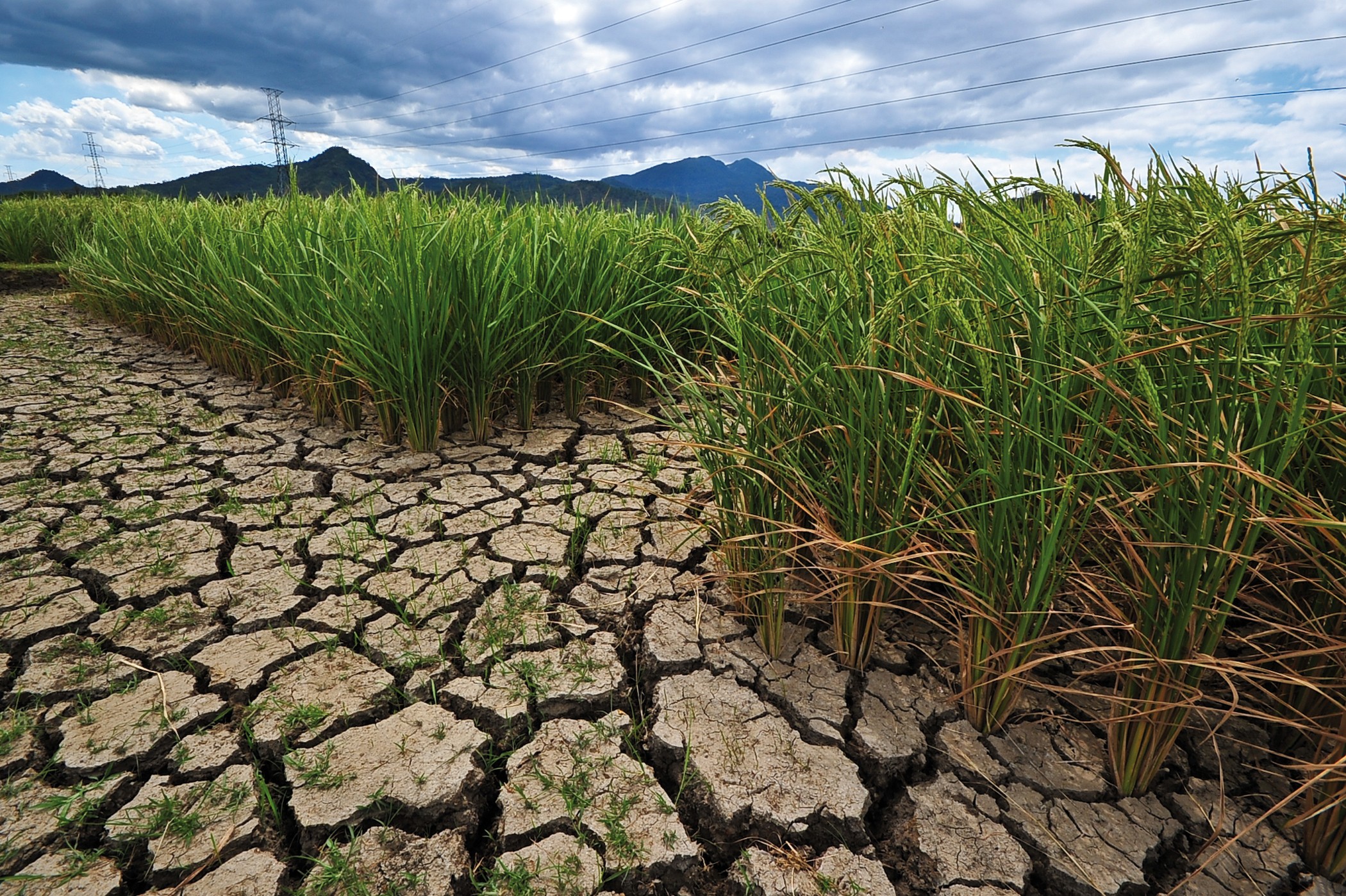
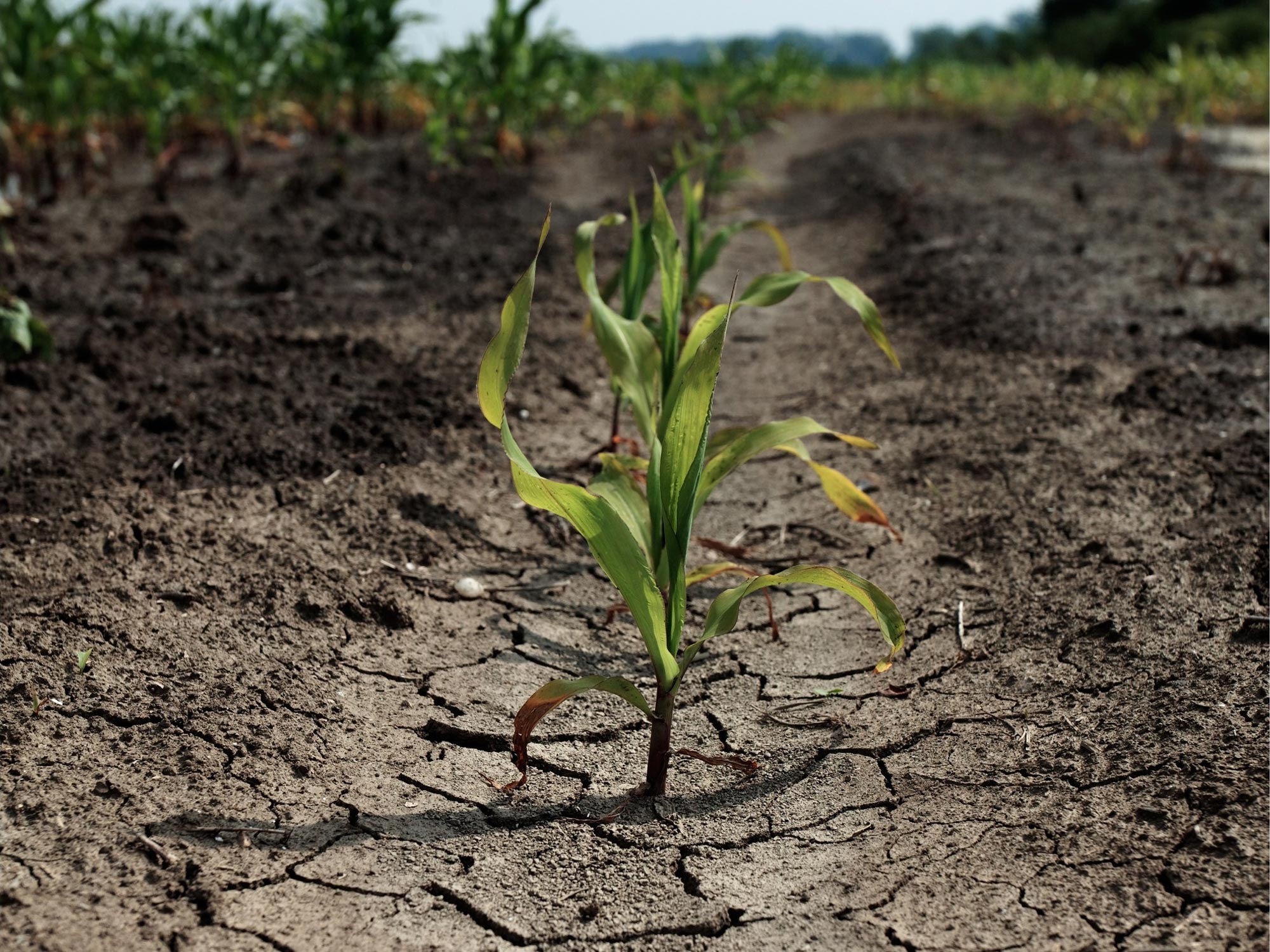
PHIL KOSCHITZE: And at the end of May, all of my crops had bounced out of the ground and they were as good as we could have hoped for and we actually thought we were unbustable from then because our crops looked fine. But I don't get paid at the end of May, I get paid in November. And six months later when we hadn't had any follow-up rains, well, there was basically very small production around here. It was bad as a drought gets for us.
PIP COURTNEY: In the past, Phil Koschitze could not insure against drought, for traditionally, Australian farmers have only been able to insure for three perils: hail, fire and frost. In many overseas countries though, farmers have access to government-subsidised multi-peril crop insurance.
ALISTAIR MACE, MALANGA, NINDIGULLY, QLD: Farmers sit around in the pub in Australia and whinge about the US - "The Yanks get subsidised. They've got a competitive advantage," and some people don't know what they're actually talking about, but this is what they're talking about. This is what the US's competitive advantage is. They get multi-peril insurance provided to them, so they have a worst-case scenario year-in, year-out and can farm with a bit of security.
PIP COURTNEY: Since 1988 five government reports have found this type of insurance unviable in Australia unless it's subsidised by government. But agronomist Andrew Trotter took a Canadian policy, tweaked it and last year, through his company Latevo, offered a multi-peril policy covering 16 perils. There is a catch, though: it's only available to grain growers. Five companies have tried and failed to introduce multi-peril cover in Australia. Andrew Trotter is convinced Latevo will survive.
ANDREW TROTTER, LATEVO: We've got an alternative model. Because we do this due diligence up front, it enables us to make this program work. But with that baggage from the past, it is difficult to get the message out to people.
PIP COURTNEY: He says he's got it right, with premiums low enough to attract enough farmers to make it viable. But some have questioned the $5,000 fee farmers are charged for their farm records and finances to be audited.
ANDREW TROTTER: We're looking for the last five years of financial and production records from the farmer and from that we can then model over the environmental models to make sure that we're making the correct decisions. ... We will not insure dud farmers. We are about insuring good farmers that mitigate the vast majority of the risk in their farm with their farm management and then we mitigate the catastrophic risk, the things that they can't do themselves.
PIP COURTNEY: So what percentage of the income that they think they're going to get do they - are they able to ensure?
ANDREW TROTTER: So the national average last year was 70 per cent of their five-year average, which is very similar to income protection.
PIP COURTNEY: Give us some numbers. If a farmer is gonna spend a million dollars putting a crop in and he expects to get $1.4, can you walk us through that?
ANDREW TROTTER: What that means is that you're aiming to produce about a $1.4-million crop off a million-dollar cost in your business. The concept of our insurance enables you to commit to that million-dollar expenditure knowing that if a drought or a frost or a flood hits, you will then be protected if you don't make that million dollars. So, it will cost, depending on your risk profile, between $50,000 and $80,000 to insure that million dollars.
PIP COURTNEY: Phil Koschitze was one of 29 grain growers who bought a Latevo policy last year. It was the Millennium Drought which convinced him to pay the $33,000 premium.
PHIL KOSCHITZE: Through the 2000s we had a pretty dirty run. We had some - three or four very bad years and the recovery years in between weren't very good either, so we were really getting belted around by basically natural conditions. So, ever since then I've been looking for some sort of product where I could basically stabilise my income and take out some of this volatility.
PIP COURTNEY: When his crops failed, he filed a claim and was paid in five weeks.
PHIL KOSCHITZE: I had to justify every grain I'd harvested and all that was valued. It was - the process was very thorough, but it was also very efficient. It worked as it read on the label, basically, so I paid the premium and they topped my income back up to the agreed level and that allowed me to basically carry on for this year. It's a generational drought, last year for us, a one-in-20-year backwards step and I was the only one around here that was fortunate enough to have this. So, my whole little neighbourhood is hurting very badly and I wish we all had it. I wish all my neighbours had it last year.
PIP COURTNEY: What really excites Phil is the potential impact on rural towns if crop insurance grows.
PHIL KOSCHITZE: One of the impacts that people don't understand is on communities like ours that only has agriculture in it, when I have a drought, so does every other service and shop in town. If we can get rid of these big negative stuffs that happen in my direction, it just benefits the whole community immensely and that's something that most people don't appreciate. It's not just me that has one, it's our whole little one-horse town.
PIP COURTNEY: Latevo's entry into the market was welcomed by farm leaders and politicians.
SIMON TALBOT, NATIONALS FARMERS FEDERATION: Unfortunately, many Australians, particularly in the cities, are becoming increasingly weary of the drought relief, or the hand-outs. This is a hand-up and this gets a lot of farmers back on the front foot and creates better management of our farms. This will stabilise rural communities, it'll help with mental health issues and it'll make farmers more confident to invest in the land.
PIP COURTNEY: Eight of the 29 farmers with a Latevo policy made a claim last year - seven for drought, one for frost. Was that a bad start to your first year?
ANDREW TROTTER: Well, you can look at it two ways. So, it was a great start because it showed proof of concept and it was able to demonstrate that the global insurers would stand behind the program. Yes, there are insurers that would have liked to have not have had to have done that, but they understand that they're in this for the long haul. So they thought it was also very good because proof of concept to the farmers in Australia is actually the biggest challenge.
PIP COURTNEY: Convincing farmers to buy a new product from a new company was not easy, so Andrew Trotter spent months travelling the country explaining the policy. If this audience in Goondiwindi was wary about taking an insurance salesman's word, they were more well disposed to hearing from one of Latevo's customers, Queensland farmer Alistair Mace. He's become the poster boy for multi-peril because of a near $1 million payout last year. In the audience was Queensland grain grower Rodney Hamilton. Well, he was a grain grower. He never recovered financially from the 2011 floods and was recently forced to sell his Condamine property.
RODNEY HAMILTON, FORMER GRAIN GROWER: It was the most destructive thing that's probably ever happened in my life and it went on and did it again the next year as well, when poor, old St George had to be evacuated. We got hit two years in a row. And, yeah, if I'd had that insurance then, things would be completely different.
PIP COURTNEY: The response from this audience was mixed.
MATTHEW CAMPBELL, BOONGRARGIL, TOOBEAH, QLD: I got a wow factor out of it. I think it's a great feeling to have an insurance company now to be able to take on flood, hail, rain, drought.
ALINNA BOURCHIER, GOONDIWINDI ACCOUNTANT: Still a little bit undecided whether it's something that I will be recommending to my clients, but it was certainly good to get a different viewpoint and hear from some of the farmers and the agros in the room about what they thought.
PIP COURTNEY: Alistair Mace, who received the near million-dollar payout last year, farms with his younger brother and parents at Nindigully in south-east Queensland. It was high debt which convinced the family to insure.
ALISTAIR MACE: For the last six years our cropping hectares have sort of grown from probably 1,500 or 1,600 hectares up to 5,800 hectares, so in doing that we've taken on a lot of debt, and so, our insured amounts at $429 a hectare was definitely a number that appealed to us and then that cost less than a contract header. It's - yeah, it was a no-brainer to take out the insurance.
PIP COURTNEY: The Mace's crop started well, but the season turned and their resulting poor harvest meant they qualified for a claim. It was Latevo's first payout and at $944,000, its biggest.
ALISTAIR MACE: Some of our suppliers, such as the fertiliser and chemical companies, should be the ones pushing this barrow as well because if we get paid, they get paid , then our suppliers' suppliers get paid and it filters the whole way down the system and it shores up the flow of capital through the whole chain, I think, yeah.
PIP COURTNEY: Without the payout, the Maces were facing an uncomfortable chat with their bank.
ALISTAIR MACE: If we didn't have the insurance policy, we would have been coming up with a plan now if the next one fails, so we needed to come up with a get-out plan, so to speak, if everything went awry again. So, oh, it was a massive thing really for an expanding business like ourselves, yeah.
PIP COURTNEY: The Federal Government's long-awaited white paper on agricultural competitiveness was released last month. Andrew Trotter expected multi-peril insurance would receive considerable attention, going so far to say it would be a cornerstone of the document. It wasn't. Instead, multi-peril insurance was one of a number of drought preparedness measures with a modest $30 million allocated over four years for farm insurance advice and risk assessment grants.
BARNABY JOYCE, AGRICULTURE MINISTER: I'm happy we've got money on the table to basically encourage people into this product, but it's not an ongoing thing. It's - what I can say: it's there now. I want people to utilise that money. I want them to become aware of the product. I want them to see if they can adapt the product to their production. And if it works in that cash flow, use it.
PIP COURTNEY: The Insurance Council is talking to government about how the money will be allocated and predicts it will help increase the number of policies written.
KARL SULLIVAN, INSURANCE COUNCIL OF AUSTRALIA: In the past - and this has been examined a number of times by the Productivity Commission and others - it's come down to an appetite to pay for the product without any kind of subsidies. That's why I think that the approach that the Government's taken in this instance to provide subsidies or rebates to help people take the steps to lower their risks to get into a product is quite a good mix.
SIMON TALBOT: It needs at least 10,000 farmers to be on board. The second thing is we'd love to see the Government give some form of tax relief, a tax rebate to incentivise farmers to get on board. And the third thing is farmers need to be on board for the long haul. These systems have actually failed because farmers have actually stopped their insurance in the good years then take it out in the bad years. You need to be in there for the long haul. I would suggest policies over five to seven-year cycles will enable insurers to actually have certainty.
PIP COURTNEY: Phil Koschitze applauded the white paper's inclusion of multi-peril insurance.
PHIL KOSCHITZE: They should be, not insisting, but just encouraging farmers to take it up, because I'm the prime example that I would have been at Centrelink's door last December saying, "What can you do for farmers?" I had multi-peril crop insurance, I had a claim, I didn't go anywhere near the joint, because I don't need to. I would prefer to look after myself through insurance rather than rely on government assistance.
PIP COURTNEY: Because of his payout, Phil Koschitze was not forced to trim his budget to plant this autumn. He can afford to give it everything he's got, and at the moment, his paddocks are looking good. But with an El Nino looming, he's signed on again.
PHIL KOSCHITZE: I would have signed up even if they said it was gonna be the best year in history because this removes the problem of these big negative values for me. So when I've got no production, I've got no income - and they take a bit of managing - this just puts an income floor into my production so I don't have to worry about going backwards an awful long way. And this the ultimate way to drought-proof for me. I mean, building dams or supplying interest rate subsidies are all good and well. Just get rid of my loss problems and I'll look after it. I'm a commercial entity. I'm in the business of being a business and I'll make money in the good years if I can just stabilise the bad ones and that's what this product does.
PIP COURTNEY: Last year, Latevo insured 29 farmers. This year, it's signed 68. They're in all grain growing states except Tasmania and the acreage covered is 150,000 hectares of crops worth over $40 million. But Latevo doesn't have the market to itself. This season, Primacy, Australia's largest provider of crop insurance, offered its multi-peril policy. It's not the same as Latevo's. There's no audit fee and Primacy won't cover Queensland farmers.
MARCUS PEARL, PRIMACY: There's a number of people trying to - trying to get into this market and crack the chestnut that is multi-peril crop insurance. The reality is most farmers in Australia are becoming much more risk-savvy and they want ways to mitigate that risk. So, as the climate has been changing and becoming less predictable over the past few decades, particularly with the onset of El Nino, etc. this year and particularly it could be a severe one potentially on the data that we've been seeing out of both the United States and Australia, we think the uptake will be more consistent than it has been in the past - let's put it that way.
PIP COURTNEY: As well as several weather derivative products which cover too much or too little rain, four companies now offer multi-peril cover in Australia. The Insurance Council predicts, as Australian farmers become increasingly sophisticated risk managers, more companies will move into the market.
KARL SULLIVAN: It is early days at the moment with some of these products, but we see no reason why these products won't be here in five to 10 years' time and I think the indications from the farming sector are that they are getting better at risk management, they are much more actively involved in making sure that they're sustainable for the long run and this will be an important part of the mix.
MARCUS PEARL: If we can get that working in the next five years, which is no mean feat in itself without a government subsidy, the industry would have done a pretty amazing job.
PIP COURTNEY: It's in the interests of both federal and state governments for crop insurance to become widespread, as self-insurance is much cheaper than government aid. Barnaby Joyce warns if insurance becomes more commonplace, those who choose not to insure will struggle to argue the case for taxpayer help.
BARNABY JOYCE: I'd like to see everybody insure their house. I can't force them to. They make their own choice. But in the future, it might be hard to say, "Look, I want you to pick up the costs if my house burns down."
Source - http://www.abc.net.au