Last year, as the harvest season drew closer, Olabokunde Tope came across an unpleasant surprise.
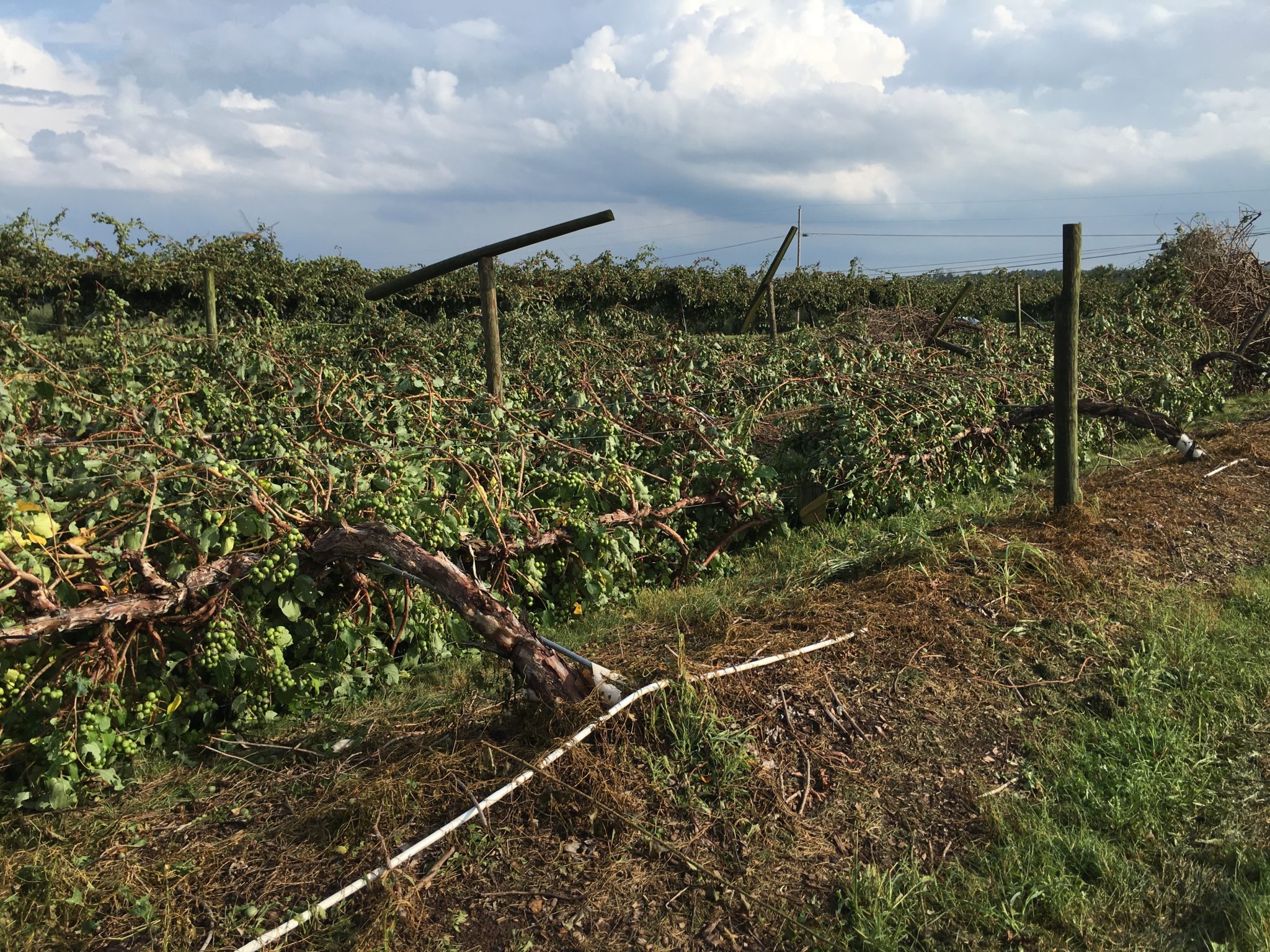
While certain spots on his 70-hectare cassava farm in Ibadan, Nigeria, were thriving, a sizable parcel was pale and parched—the result of an early and unexpected halt in the rains. The cassava stems, starved of water, had withered to straw.
“It was a really terrible experience for us,” Tope says, estimating the cost of the loss at more than 50 million naira ($32,000). “We were praying for a miracle to happen. But unfortunately, it was too late.”
When the next planting season rolled around, Tope’s team weighed different ways to avoid another cycle of heavy losses. They decided to work with EOS Data Analytics, a California-based provider of satellite imagery and data for precision farming. The company uses wavelengths of light including the near-infrared, which penetrates plant canopies and can be used to measure a range of variables, including moisture level and chlorophyll content.
EOS’s models and algorithms deliver insights on crops’ health weekly through an online platform that farmers can use to make informed decisions about issues such as when to plant, how much herbicide to use, and how to schedule fertilizer use, weeding, or irrigation.
When EOS first launched in 2015, it relied largely on imagery from a combination of satellites, especially the European Union’s Sentinel-2. But Sentinel-2 has a maximum resolution of 10 meters, making it of limited use for spotting issues on smaller farms, says Yevhenii Marchenko, the company’s sales team lead.
So last year the company launched EOS SAT-1, a satellite designed and operated solely for agriculture. Fees to use the crop-monitoring platform now start at $1.90 per hectare per year for small areas and drop as the farm gets larger. (Farmers who can afford to have adopted drones and other related technologies, but drones are significantly more expensive to maintain and scale, says Marchenko.)
In many developing countries, farming is impaired by lack of data. For centuries, farmers relied on native intelligence rooted in experience and hope, says Daramola John, a professor of agriculture and agricultural technology at Bells University of Technology in southwest Nigeria. “Africa is way behind in the race for modernizing farming,” he says. “And a lot of farmers suffer huge losses because of it.”
In the spring of 2023, when the new planting season was to start, Tope’s company, Carmi Agro Foods, had used GPS-enabled software to map the boundaries of its farm. Its setup on the EOS crop monitoring platform was also completed. Tope used the platform to determine the appropriate spacing for the stems and seeds. The rigors and risks of manual monitoring had disappeared. Hisfield-monitoring officers needed only to peer at their phones to know where or when specific spots needed attention on various farms. He was able to track weed breakouts quickly and efficiently.
This technology is gaining traction among farmers in other parts of Nigeria and the rest of Africa. More than 242,000 people in Africa, Southeast Asia, Latin America, the United States, and Europe use the EOS crop-monitoring platform. In 2023 alone, 53,000 more farmers subscribed to the service.
One of them is Adewale Adegoke, the CEO of Agro Xchange Technology Services, a company dedicated to boosting crop yields using technology and good agricultural practices. Adegoke used the platform on half a million hectares (around 1.25 million acres) owned by 63,000 farmers. He says the yield of maize farmers using the platform, for instance, grew to two tons per acre, at least twice the national average.
Adegoke adds that local farmers, who have been struggling with fluctuating conditions as a result of climate change, have been especially drawn to the platform’s early warning system for weather.
As harvest time draws nearer this year, Tope reports, the prospects of his cassava field, which now spans a thousand hectares, is quite promising. This is thanks in part to his ability to anticipate and counter the sudden dry spells. He spaced the plantings better and then followed advisories on weeding, fertilizer use, and other issues related to the health of the crops.
“So far, the result has been convincing,” says Tope. “We are no longer subjecting the performance of our farms to chance. This time, we are in charge.”
Source - https://www.technologyreview.com