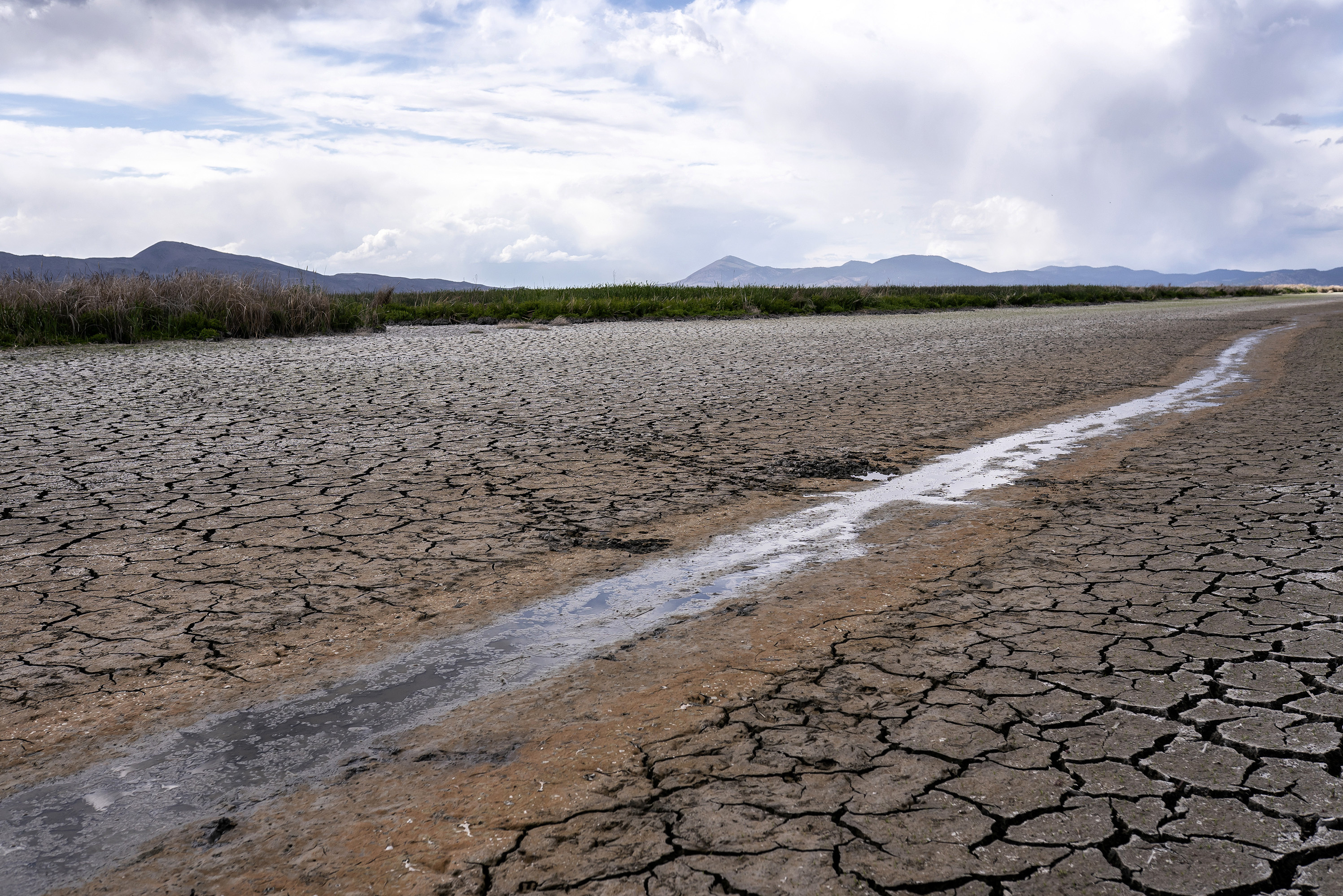
While the swing toward a mild La Niña weather pattern in recent months has seen a significant recovery in the production outlook in Australia, the opposite is playing out in Argentina on the other side of the Pacific Ocean. This is quite normal in such circumstances, but does not bode well for the rainfall and winter-crop production outlook for the balance of the Argentine growing season, as La Niña tends to drive a warmer and drier-than-normal spring.
Some requisite rainfall came to the parched winter-cropping fields of Argentina’s central agricultural zone over the first weekend of August, arriving at a crucial time for the 2024-25 crop following the driest month of July in almost 60 years. These early August falls were followed last week by some intense rains that brought relief and some flooding to the winter-cropping areas in the country’s east, while crops in western regions continue to worsen due to intensifying drought conditions and freezing nights.
With the winter-crop planting campaign now completed, most of Argentina’s farmers still require well above-average rainfall throughout the balance of winter to boost soil-moisture reserves ahead of the spring, when the longer and warmer days will boost crop growth, significantly increasing plant moisture requirements.
Uninterrupted seeding
This season’s seeding finished earlier than last and was one of the fastest in recent history due to very few rain interruptions. But a series of frosts in recent weeks has sapped the upper soil-moisture profile dry, jeopardising germination in the later-sown paddocks. There have been reports of freshly germinated plants dying off in the most severely affected areas.
According to the most recent update from the Buenos Aires Grain Exchange (BAGE), the condition of the wheat crop closed out the first week of August at 32 percent good to excellent, up fractionally from 31pc a week earlier. While this was down from 39pc on July 24, it is still well ahead of the 24pc recorded at the same time last year. The proportion of the crop in the poor category decreased from 16pc a week earlier to 10pc on August 7, only marginally ahead of the 12pc recorded at the same time in 2023.
However, the soil-moisture conditions on August 7 reflect the dire winter-crop situation exceptionally well. The proportion of the wheat area falling into the optimum-to-favourable rating band remained at 42pc week on week, but it is well below the 55pc rating just two weeks earlier, and the 72pc recorded at the same time in 2023. Accordingly, with the moisture profile across none of Argentina’s wheat plantings currently considered too wet by BAGE, the poor-to-dry category remained at 58pc of the crop area, more than double that of the same week last year when it was just 28pc.
The estimated area planted to wheat for harvest in the 2024-25 season varies considerably among analysts, with the Rosario Grain Exchange (RGE) setting the high mark on 6.7 million hectares (Mha), down from its early season forecast of 6.9Mha due to unseasonably low precipitation registrations in June and July. There is a significant spread down to the BAGE forecast, currently 6.3Mha, up from its early season projection of 6.2Mha and 6.8pc higher than the final 2023-24 harvested area of 5.9Mha.
Lower again is the USDA Buenos Aires Foreign Agricultural Service (FAS) bureau, which recently increased its area estimate to 6.2Mha, compared to 5.6Mha last year. However, the USDA’s official forecast is still 200,000ha lower again at 6Mha, and it will be interesting to see if this is revised higher in this week’s global update.
Early encouragement
According to FAS, improved conditions through April and May encouraged farmers to add wheat paddocks to their original plans. At that time, wheat prices had rallied, agricultural input prices had fallen, and abundant rainfall in April brought good soil moisture to secure decent sowing conditions in many production areas previously suffering relatively dry conditions. Unfortunately, rainfall registrations have been well below average across much of the grain-growing area since then, leading to an extremely dry seedbed for the late-planted winter crops.
The central-northern parts of the country, the region that felt the greatest effects of an unusually severe outbreak of corn stunt disease this season, is where the most significant expansion in the wheat area has been recorded. Farmers have gone into paddocks with seeders immediately after their corn harvest, despite the poor soil-moisture profile in many districts, executing a targeted disease and pest-management plan to reduce corn plantings later this year by switching the worst-affected summer-crop fields to a winter-focussed rotation.
According to BAGE, the area planted to barley is 1.3Mha, up a smidge from the 1.25Mha seeded last year. Early in the autumn, when farmers were planning their new crop seeding program, FAS projected plantings of 1.4Mha, but an improvement in the weather and economic conditions for wheat as the new-crop planting window opened, prompted a last-minute switch to wheat, predominantly in the marginal areas. While the FAS is unchanged season on season at 1.3Mha, its US-based parent is yet to concur, sitting fractionally lower than last year on 1.25Mha.
Yield outlook reasonable
On the production front, BAGE is currently pegging the average 2024-25 wheat yield at 2.87t/ha and total production at 18.1 million tonnes (Mt) against final yield and production in 2023-24 of 2.56t/ha and 15.1Mt respectively. While the RGE is yet to post an official new-crop wheat estimate on their website, they have been quoted in the press at 20.5Mt, down from an early season projection of 21Mt. That implies a yield of 3.06t/ha based on RGE’s aforementioned planted area. The FAS in Argentina is using a yield estimate of 3t/ha, which puts production at 18.6Mt, while the official USDA stance remains 18Mt ahead of this week’s report.
BAGE currently has 2024-25 barley output ahead of last year despite the challenging start to the season. It has the crop pegged at 5.1Mt, which implies a yield of 3.92t/ha against production and yield from last season’s harvest of 5Mt and 4t/ha respectively. FAS is not as optimistic, expecting new-crop production to fall by 100,000t compared to the 2023 harvest to 4.9Mt, implying an average yield of 3.77t/ha, and the USDA itself is lower again at 4.7Mt, down 400,000t year on year.
Any decrease in Argentina’s wheat and barley output will be reflected in a lower exportable surplus, potentially decreasing competition into some of Australia’s traditional export markets in the 2024-25 marketing year.