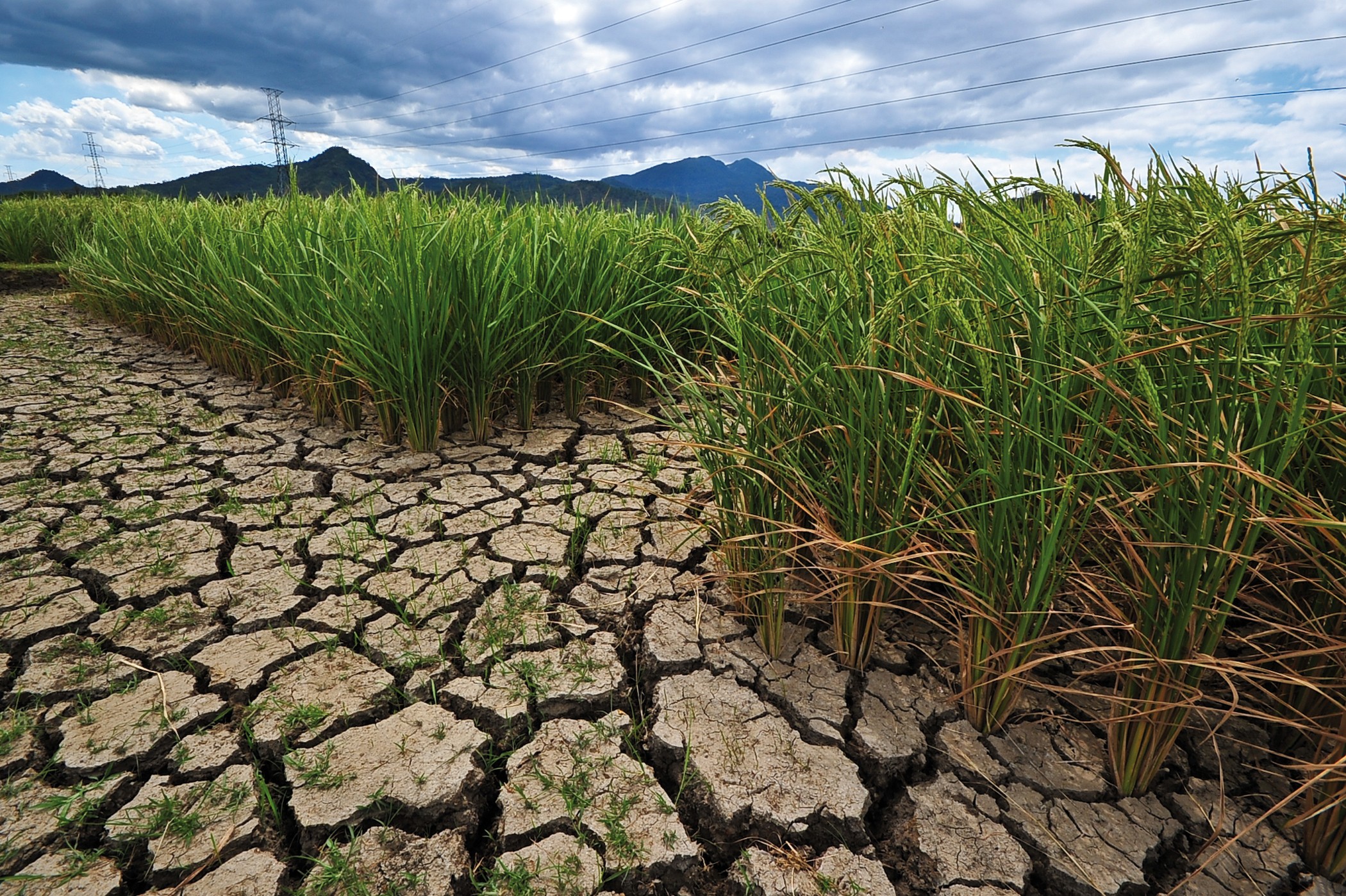
Dams have dried up and the paddocks of Yvette McKenzie's New South Wales Riverina sheep farm are dry and bare.
While torrential rain lashes eastern Australia, conditions could not be more different at Ms McKenzie's Bethungra property.
"I haven't seen it this dry in the 25 years that we've had this property," she said.
Cattle have been sold in record numbers, farmers have brought in feed for their livestock and the potential of newly planted grain crops has waned across southern NSW.
According to the Bureau of Meteorology, parts of the Riverina received 1–10 millimetres of rain last month.
Ms McKenzie said she had been forced to reduce livestock numbers.
"We've had to sell a lot of sheep that we normally wouldn't at this stage … as well as hand-feeding every day now,"
she said.
Ms McKenzie said feeding the sheep with silage and grain helped her get a good price for the surplus livestock, despite the dry conditions.
She said she had focused on keeping her best sheep.
"It's keeping the top line so we can keep our genetics and selling off anything that is not a breeder," she said.
Record livestock numbers
Record numbers of cattle have been sold at the Wagga Wagga saleyards amid worsening drought conditions.
An offering of 5,000 head of cattle would normally be considered large, so when almost 8,700 cattle were sold earlier this month at the saleyards, the agents were stretched to capacity.
Cattle auctioneer Tyler Pendergast said truckloads of cattle had been moved to the "greener pastures of the north".
Mr Pendergast said that was providing an opportunity for local producers to offload stock.
"Hay prices are dear and stock prices are dear, so just sell, it's pretty simple at the minute,"
he said.
'Two different planets'
According to the Department of Primary Industries, 1.7 per cent of NSW is in drought, and a further 23.1 per cent is drought-affected.
Almost all of that is in the Riverina and Murray.
Local Land Services drought adoption officer Geoff Minchin said the difference was "chalk and cheese".
"Two different planets, really very dry in the south and very wet in the north," he said.
Mr Minchin, who advises farmers on drought management strategies, said producers were drawing on their experience in previous droughts to adapt farming practices.
"I think there's a higher percentage of landholders that are better prepared and making some really good decisions," he said.
"Things around trimming up the cropping program or changing varieties early puts us in good stead for the rest of the season."
He said destocking, making sure feed was at hand and planning grazing to protect ground cover were good strategies.
At Marrar, north of Wagga Wagga, farmer Ben Langtree has been planting crops into dry ground after several months without rain.
"Sometimes we've started the sowing and it's been a bit dry but not the whole way through," he said.
Mr Langtree said he had cut back on crops that were more expensive to plant, such as canola, instead using barley and oats.
"We are trying to choose crops that will give us a shorter growing season and a bit cheaper to grow with the most potential,"
he said.
According to the Bureau of Meteorology, there is a 20 per cent chance of exceeding the median rainfall in Marrar in May, which is 5.9mm.
It is expected to rise to 52 per cent in June, with a historical median chance of 48.9mm of rain.
There is a 48 per cent chance of Wagga Wagga exceeding its medium rain fall next month, which is 53.3mm.
Despite the tough conditions, Mr Langtree said it was not too late for the season to turn around.
"Rain sooner than later would be great and it would get us back on track," he said.
"Every farmer is a gambler, they take a fair bit of risk every year so this is just a different type of risk for us now."
Source - https://www.abc.net.au