Grape growers are battling to avoid major crop losses after severe frosts swept across southern parts of Australia in recent days.
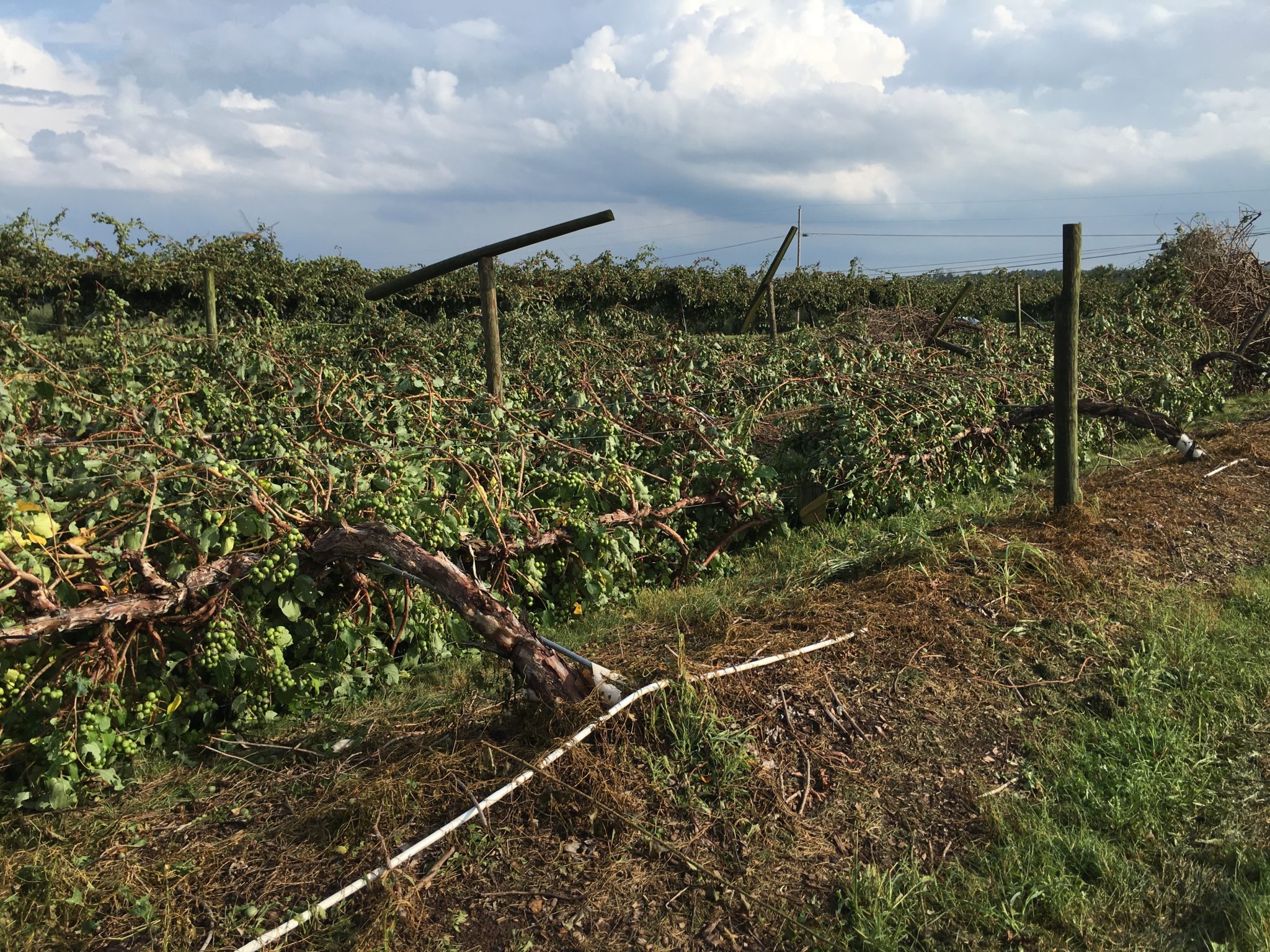
Overnight temperatures have dipped below zero and the string of cold nights has caused extensive crop damage in some of South Australia's wine regions, including the Barossa and Clare Valleys and the Riverland.
It is a crucial time for the wine growing regions, which have experienced earlier budburst after a drier than usual winter.
Some growers remain positive the vines will undergo a secondary growth and produce higher quality grapes.
So, what has caused the latest frost and will it affect the quality and taste of wine?
Wine growers in some of Australia's largest growing regions have suffered crop losses in recent overnight frosts. (ABC News: William Hunter)
What causes frost?
According to the Bureau of Meteorology, frost is most likely to occur under clear skies with little or no wind.
Frost is most common in southern and central Australia and generally occurs from late autumn to early spring when the temperature at ground level dips below zero.
Factors including cloud cover, wind and humidity can help provide protection against frost because they slow the rate of cooling on the ground, where temperatures are usually colder than in the air.
In South Australia, Adelaide shivered through its coldest September morning in a century, recording a low of 1.3 degrees Celsius on Tuesday morning, while several towns around the state shivered through sub-zero temperatures.
How does frost affect vineyards?
Fifth-generation Barossa grape grower Adrian Hoffmann, who is also the chair of the Wine Grape Council of SA, said vines had undergone earlier growth, or budburst, this season due to a drier winter and a recent blast of warm weather.
"It's basically that young green tissue that freezes, and breaks open the cell. As it thaws out, it collapses on itself," he said.
Wine grape growers say the recent frosts have been very challenging for the industry. (ABC News: William Hunter)
He said vines were "very resilient" and would grow another bud with "a little bit of fruit left in it".
"If that one gets frosted it will push another [bud] as well, but that won't have any fruit," Mr Hoffmann said.
"Vines will try and compensate but at this stage it's the primary fruit production that you want … and, unfortunately, on a lot of vines that's not going to be happening this year."
He said the recent frost was "very extreme", and damage to vines because of the frosty weather could also impact yields into the future.
How much damage has it caused?
Mr Hoffmann said he was aware of some growers who had lost entire crops, while he estimated losses of up to 50 per cent for his own vines.
Michael Stivahtaris says 20 per cent of his crop had been destroyed by the September frosts. (ABC News: William Hunter)
In the Riverland, Australia's largest wine grape growing region, grower Michael Stivahtaris said one fifth of his crop had been wiped out due to frost this month.
He said the lack of rainfall — just 50mm over the past three months, compared with an average for the area of 250-300mm in the same period — meant the region could be susceptible to frost until late October.
In the Clare Valley, Matriarch & Rogue winemaker and owner Marnie Roberts said as much as 85 per cent of some vineyards in the region had been affected by the frosts.
"[But] it's so early that there are ways that we can try and push through and try and get some growth," she said.
Does frost affect the flavour of wine grapes?
Mr Hoffmann said growers affected by frost would turn their attention to the quality of the crops.
"At this stage it's early enough that the secondary [bud growth] will catch up with the primary [growth] so it won't impact on the quality," he said.
He said the secondary fruit would ripen later and would "develop a lot more balanced and elegant flavour".
"The quality through lower yields is generally slightly better," he said.
Frosts will become less likely as the weather warms further into spring. (ABC News: Bethanie Alderson)
Ms Roberts agreed and said she did not expect the frost would impact upon the quality of the wine produced from the affected vines.
"If the vine produces fruit, then we can make something out of it that is absolutely delicious," she said.
What can be done to protect crops?
Mr Hoffmann said many grape growers — including himself — used frost fans to circulate air around vineyards to prevent the ground from cooling too much.
He said about 300 fans were used in vineyards around the Barossa alone.
Adrian Hoffmann says he takes multiple measures to protect his crops from frost. (ABC News: Guido Salazar)
Across his 150 hectares of vineyards, he has 26 fans which switch on when temperatures dip to 1.5C, and switch off when temperatures reach 3.5C.
Other measures to help keep frost at bay include keeping weeds and grass below vines clear to try and keep some warmth in the soil.
Ms Roberts said a number of growers were "madly slashing underneath the vines so the frost doesn't settle on the vine itself".
Are more frosts expected?
The Bureau of Meteorology's Simon Timcke said relief from freezing overnight temperatures was in sight.
The senior meteorologist said it would "still be a little bit cold" Wednesday morning but another cold front was on its way, which meant windier and cloudier conditions were expected later this week.
He said that, in the weeks and months ahead, warmer temperatures would reduce the risk of frost.
"It's not unusual to get a cold outbreak," he said.
"[But] the further we go into spring, the harder it gets to get those really low minimum temperatures."