Azerbaijan - There is not enough data yet to apply drought insurance

24.09.2024 494 views

There is not enough data yet to apply drought insurance, Azerbaijani Minister of Agriculture Majnun Mammadov said in an exclusive interview with Report.

“There is an agrarian insurance system that has been operating for several years with the mechanism of public-private partnership. Currently, the number of insured plants has been increased to 41 species. Livestock, including dairy cattle, and beef cattle are also insured. However, agricultural insurance indicators are still characterized by the results of the initial stage. For example, in 2023, 46,500 contracts were signed, which covered 429,000 ha of arable land and 7,901 head of animals. However, there is a positive point here, as a generalized indicator, collected insurance premiums exhibit growth dynamics every year compared to previous years, which in turn shows that farmers and entrepreneurs benefit from insurance services,” the minister said.

“At the moment, measures are being taken to expand the provision of insurance services to the agricultural sector due to the increase of the insurance subject and the number of insurance risks. There is not enough data yet to apply drought insurance. For this reason, the risk probability in any area, its scope and the damage it can cause cannot be calculated. In such circumstances, the application of this type of insurance exposes the insurance institution to the risk of not being able to meet its insurance obligations and may lead to the bankruptcy of the insurance institution. In this case, other insurers will also lose. For this reason, drought insurance can be applied over time as reliable and measurable data is collected,” said Majnun Mammadov.


27.08.2026

Crop Insurance Add-Ons Surge as U.S. Farmers Expand Subsidized Coverage Nationwide

U.S. farmers sharply expanded area add-on crop insurance in 2026 after federal subsidies rose to 80%, reshaping coverage and federal costs.

27.08.2026

China grain imports in focus as crop damage hits key producing regions

Extreme heat, heavy rain and flooding across key Chinese farming regions are putting global grain and cotton exporters on alert, as markets assess whether crop damage could increase China’s import needs.

27.08.2026

Philippines - Benguet crop loss worst in Cordillera

The strong monsoon rains that have been pouring in the Cordillera region for nearly three weeks now have cost vegetable-producing Benguet province up to P446.55 million in farm losses, according to data consolidated by the Regional Development Council on Wednesday.

27.08.2026

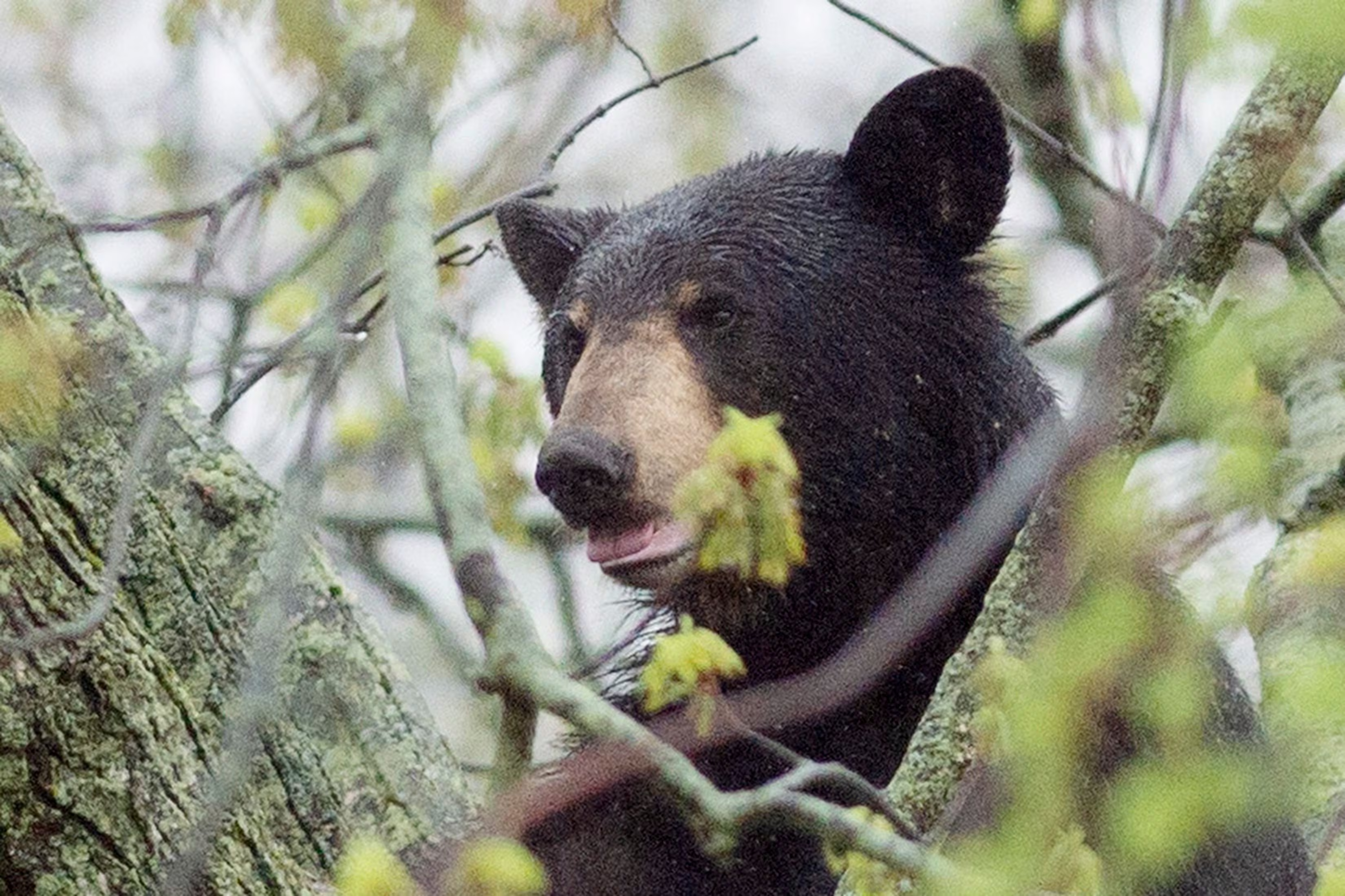
USA - Bear damage costs Benzie County farmer at least $40,000 across 1,100 acres of corn

Corn growers around northern Michigan are getting a really good look at how this year's crop is shaping up before harvest, but one of them in Benzie County is getting to see a lot more than that.

27.08.2026

India - Shivraj Singh Chouhan reviews summer moong procurement and crop insurance in Madhya Pradesh

Union Minister for Agriculture and Farmers Welfare Shivraj Singh Chouhan on Thursday conducted a virtual review meeting with the Agriculture and Horticulture Ministers of Madhya Pradesh at Krishi Bhawan, New Delhi.

27.08.2026

India - Demand to withdraw farmer ID mandate for crop procurement

The Andhra Pradesh Koulu Rythu Sangham (AP Tenant Farmers’ Association) has demanded that the State government immediately withdraw its decision to make Farmer ID (Unique Farmer Number) mandatory for selling crops at government procurement centres, stating that the move would severely affect tenant farmers. 

26.08.2026

Lithuania declares nationwide emergency after storm causes heavy damage

Lithuania’s government declared a nationwide “extreme situation” Wednesday following a severe weekend storm that caused extensive damage to crops, livestock and agricultural infrastructure.

26.08.2026

Cameroon Sets 2026 Planting Windows to Help Southern Farmers Reduce Crop Losses

Planting too early or too late can cost farmers part of their harvest. Cameroon’s National Observatory on Climate Change, or ONACC, has now set rainfall and planting windows for the second 2026 farming season across the country’s southern regions, giving producers a tool to reduce weather-related crop losses.