The scope of the agricultural insurance system in Azerbaijan is being expanded, and along with the insurance of new products, the volume of payments for flood and inundation losses is expected to increase, Deputy Chairperson of the Agricultural Insurance Fund (AIF), Laman Aliyeva-Mamishova, told Trend.
She noted that the fund currently insures agricultural products in crop farming, livestock, and fisheries, covering 41 types of crops, including cereals, oilseeds, industrial crops, and legumes.
"For livestock, insurance is provided for both large and small cattle in terms of meat and milk production. Future plans, taking into account legislative initiatives, include insuring poultry and beekeeping farms. Legislation on this matter has already been proposed. Additionally, nine new plant species are expected to be added to the list, including feijoa, kiwi, pepper, eggplant, and others. Once the relevant regulations are adopted, insurance for these plants will also be possible," she explained.
The deputy chairperson also spoke about insurance claims related to flood and inundation events. According to her, the AIF has received claims regarding damage to approximately 3,000 hectares (7,413 acres) of crops from flooding between March 20 and today, including around 300 claims related to insurance agreements.
"The majority of these claims are related to flooding events. This indicates that this year, most of our insurance payouts will be due to flood risks," she said.
She also mentioned the regions with the highest number of claims, citing unstable weather conditions and the significant damage to agriculture.
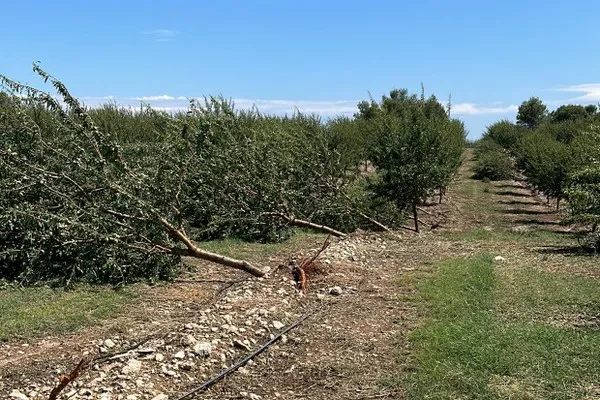
"According to the recent dynamics of claims, we can say that the unstable weather has severely impacted agriculture, causing substantial damage. The highest number of claims came from the Guba-Khachmaz, Karabakh, Shirvan-Salyan, and Mountainous Shirvan economic regions. Specifically, Shabran and Khachmaz districts experienced the most damage. Flooding has affected not only crop fields, such as barley and wheat, but also orchards—cherry, quince, pear, almond, and others. We have received claims from farmers regarding this damage. Some farmers reported that in certain areas, the water level in the fields reached up to 60 centimeters," she clarified.
Aliyeva-Mamishova also revealed when the payments for the damage to farmers will be made.
"First, the insured farmers should contact the AIF's 1651 Call Center and the relevant state authorities within 10 days after the event. Regarding payments, I would like to inform you that if there is no 100% destruction, insurance payments are usually made during the harvesting period, as required by law. This is because natural events may occur again during this period, and the damage to farmers may change. Therefore, to ensure fairness, it's considered more appropriate to make insurance payments during the harvest period. However, if the product has been completely destroyed, the insurance payment is made earlier," she said.
She emphasized that over the past three years, the AIF has paid a total of 4.5 million manat ($2.65 million) in insurance claims for flood and inundation events.
"If we look at the dynamics of the past year, the second most frequent type of event was flooding, with hail being the first in terms of payout volumes. In 2025, insurance payments totaling 1.2 million manat ($718,000) were made for 3,300 hectares (8,150 acres) affected by floods. In 2023, 1.6 million manat ($940,000) was paid for damage to 7,716 hectares (19,080 acres), and in 2024, 1.7 million manat ($1 million) was paid for 6,697 hectares (16,540 acres) affected by floods. Flooding events occur quite frequently, and we have observed this in recent days as well," she concluded.
Source - https://www.trend.az