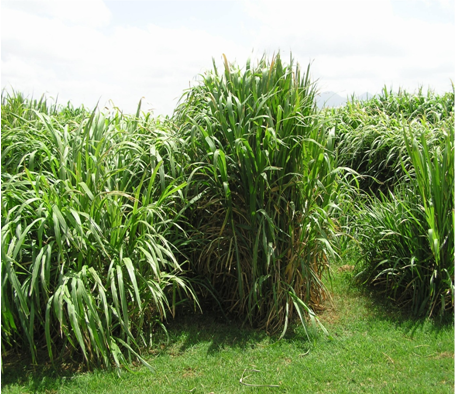
Commercial cultivation of Napier grass has become a boon for many farmers and poor families, helping them achieve self-sufficiency, and boosting the district's livestock sector and milk production in recent years.
As the livestock and dairy sectors are boosting rapidly, demand for the highly nutritious green Napier grass continues increasing as fodder for heads of cattle like cows, goats, buffalos and sheep, attracting more farmers to farming the grass.
"Apart from boosting the livestock sector, Napier grass cultivation has become a profitable venture for farmers in all eight upazilas of Rangpur and Rangpur division as well," District Livestock Officer Dr. Md. Abu Sayeed told BSS.
In the 2016-2017 fiscal years, about 3,000 farmers cultivated Napier grass on 980 acres of land in the district, where its cultivation continued to increase in subsequent fiscal years to meet the growing demand for green fodder for livestock.
"In the last 2023-2024 fiscal year, as many as 5,000 farmers in the district cultivated the highly nutritious hybrid variety of Napier grass on 1,608 acres of land and produced more than two lakh tonnes worth Taka 60 crore.
It costs a farmer a total of 60,000 taka to cultivate Napier grass on one acre of land, which includes fertilizer, agricultural management, and labor costs.
"After harvesting Napier grass six times a year at intervals of every two months on one acre of land, a farmer produces 1.15 lakh tonnes of grass worth Taka 3.45 lakh and makes a profit of Taka 2.85 lakh after deducting the cost of production," Dr. Sayeed said.
Currently, farmers in the district are raising 13.84 lakh cows, 2,279 buffaloes, 10, 29,378 goats and 47,943 sheep in their homes and cattle farms and are meeting most of their food requirements through Napier grass.
Talking to BSS, farmers at different villages said they have been cultivating Napier grass for years to feed their cows, sheep, goats and buffaloes, increasing milk production and earning well through selling the surplus grass.
A small-scale dairy farm owner and farmer Mohammad Hanif of Tantipara village in Rangpur Sadar said he has been cultivating Napier grass on his one-acre of farmland and feeding his 26 cows, including six milk-giving ones.
"I get 90 liters of nutritious milk every day from my six dairy cows," said Hanif, adding that he does not have to buy grass from the market because he meets the green grass requirement for his 26 cows from his production.
Farmer Alamgir Hossain of Baro Hayatkhan village in Pirgachha upazila said he cultivates Napier grass on fallow land on the banks of the re-excavated Aloakuri canal, through which he feeds his three milking cows and four goats.
"I and four other economically backward farmers are raising three to five cows and three to six goats on our jointly cultivated Napier grass on 48 percent fallow land there to achieve self-sufficiency," he said.
Farmer Akhtarul Islam of village Sreerampur in Rangpur Sadar upazila said he has been cultivating Napier grass on only 12 decimals of land for the past ten years spending Taka 8,000 annually as farming costs.
"After meeting demand of my four milk-giving cows, I earn a net annual profit of around Taka 40,000 by selling the harvested grass six to seven times apart from Taka 60,000 from selling milk annually," he added.
Farmer Nanu Chandra of village Matiyapara under Chandanpat union of Sadar upazila said he has been cultivating Napier grass on his one acre of land during the past 12 years.
"I spend Taka 60,000 on average for cultivating grass, including labour costs, on my one acre of land. I harvest the grass six to seven times annually and sell those at Taka 3.50-lakh to earn a net profit of Taka 2.90 lakh every year," Nanu said.
Deputy Director of the Department of Agricultural Extension, Rangpur region, Md. Afzal Hossain said that every year more and more farmers are being attracted to Napier grass cultivation as its farming has become a profitable venture.
Source - www.bssnews.ne
Farmers can earn additional profit by cultivating Napier grass in their fallow fields, roadsides, mango and litchi orchards and abandoned lands, so that regular crop cultivation on cultivable land is not disrupted.
"Green Napier grass contains more vitamins than dry rice straw and it replenishes nutrients and increases the immunity of domestic animals like cows, goats, sheep and buffaloes ensuring their healthy growth to increase meat and milk production," he added.