Every data center generates an enormous amount of excess heat. At the same time, hydroponic greenhouses in colder climates need a tremendous amount of heat year-round to grow fresh produce efficiently. GeoBitmine LLC founder and CEO Jay Jorgensen asked himself a simple question: What if we captured that wasted heat and redirected it to fuel local agriculture?
That question became the foundation of GeoBitmine, a company pioneering an innovative solution that recycles heat from data centers to power adjacent hydroponic greenhouses. By closing the loop between computing and cultivation, GeoBitmine is creating a more sustainable, cost-effective, and community-oriented model for both industries. “We’re not just building data centers; we’re building ecosystems,” Jorgensen explains.
Here’s how the system functions: Inside every data center, powerful GPU chips are constantly processing data, generating large amounts of concentrated heat. These chips are now cooled using advanced liquid-to-chip cooling systems, which pump cold water past the chips to absorb that heat.
Traditionally, the heated water would then pass through dry coolers, large, electricity-hungry systems, to bring the temperature down so it can be reused. This method is costly and inefficient.
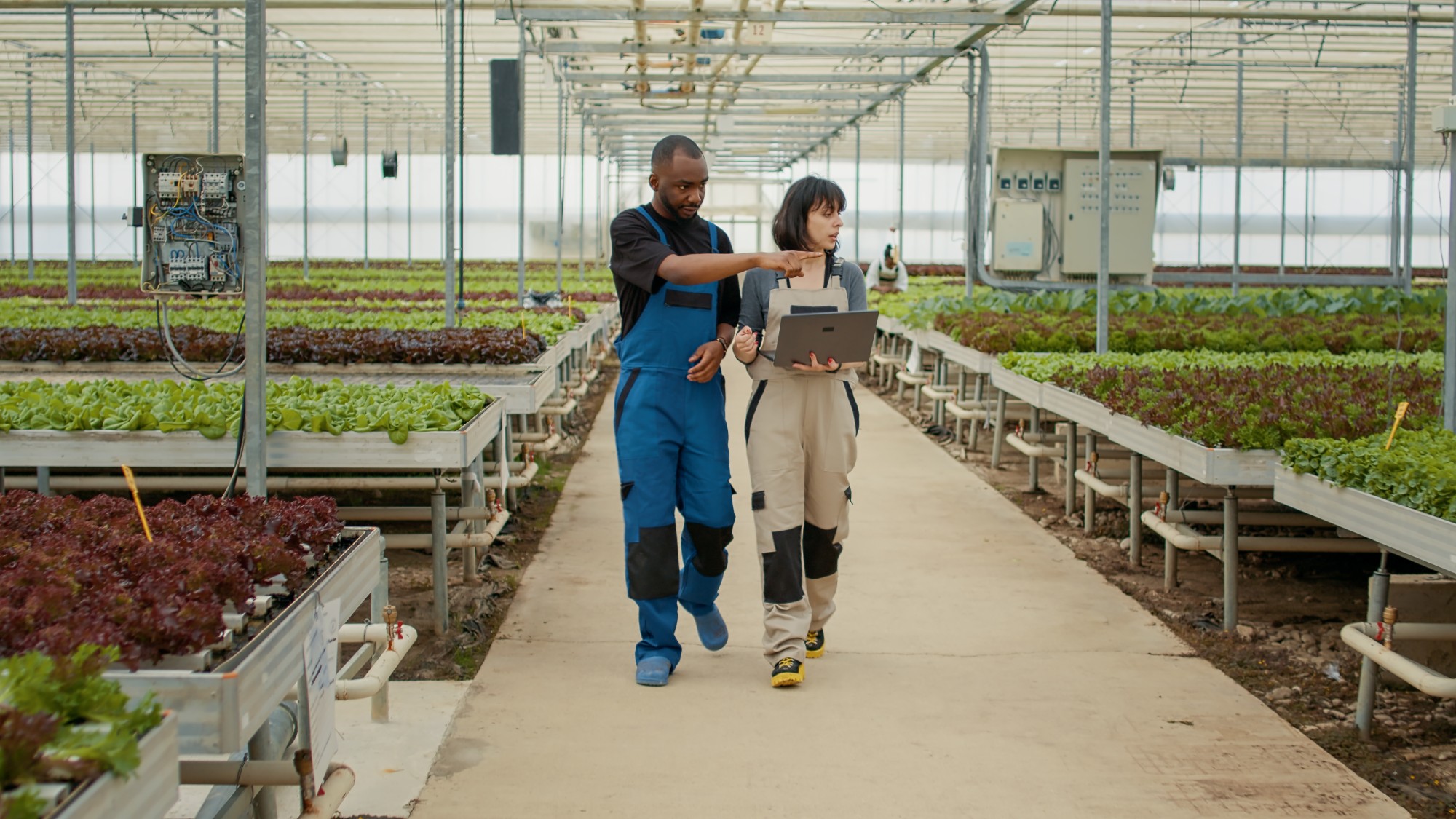
GeoBitmine changes this. Instead of using dry coolers, the company redirects the heated water to an adjacent hydroponic greenhouse. There, the water is used to warm the greenhouse environment, drastically reducing the need for natural gas and potentially slashing heating costs by over forty percent. As the water loses heat in the greenhouse, it naturally cools and is then cycled back into the data center, ready to absorb heat all over again.
This closed-loop system not only eliminates the need for energy-intensive dry cooling but also transforms waste heat into a valuable agricultural resource.
There is no doubt that data centers are poised to consume at least 9% of total electricity demand in the United States, thanks in large part to the growth of AI and cloud computing. That is why GeoBitmine offers this path forward, one that’s sustainable, decentralized, and mutually beneficial.
By pairing computing power with food production, the company is creating hyper-local supply chains that can reduce transportation emissions, lower food costs, and increase food security. Their greenhouses are fully organic, free of herbicides and pesticides, and designed to serve the communities that surround them.
In Jorgensen’s vision, this is just the beginning. “A data center has all utilities a community needs — power, water, fiber optics,” he explains. “So why not build communities around data centers instead of building data centers outside communities?”
He even envisions a future where neighborhoods spring up around these hybrid facilities, complete with housing, transit, grocery stores, and local employment, all within walking distance. A modern, sustainable revival of the ‘company town,’ but with clean tech and climate solutions at the core.
At the heart of GeoBitmine’s innovation is its people. “I’ve been fortunate to work with some of the brightest minds,” Jay says, giving credit to his team, the driving force behind the company’s rapid progress. “Their work ethic is second to none. They put in the overtime because they want this to succeed. They believe in this mission, and they’re the ones making GeoBitmine possible.”
Ultimately, GeoBitmine’s model, according to Jay Jorgensen, is scalable. It’s not limited to new data centers and can retrofit existing ones, regardless of size, and implement the heat recovery system. It’s a flexible, modular solution that works for tech giants and regional hubs alike. As food, energy, and technology converge, it’s hard to imagine a more timely idea.
Source - https://venturebeat.com