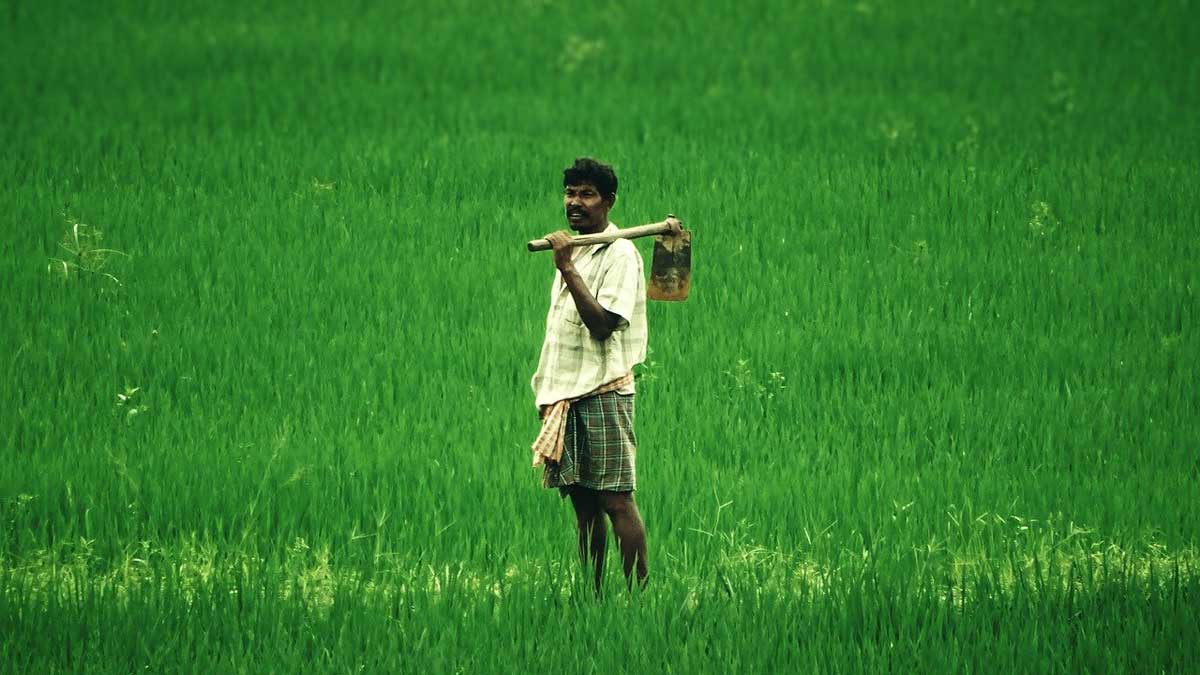
Indian farmers can now access information about government welfare schemes through Kisan e-Mitra, a voice-enabled artificial intelligence chatbot launched by the Ministry of Agriculture and Farmers’ Welfare. The tool allows users to ask questions in regional languages and receive instant responses about programmes including PM-KISAN, crop insurance and agricultural loans.
The chatbot addresses a persistent challenge in rural India: delays and language barriers that prevent farmers from accessing scheme benefits they are entitled to. By providing round-the-clock support without requiring visits to government offices, the tool aims to reduce the information gap between the administration and farming communities across the country.
Kisan e-Mitra is part of the Centre’s broader push to deploy artificial intelligence, a technology that enables computers to understand and respond to human queries, in public service delivery. The chatbot uses voice recognition, meaning farmers can speak their questions aloud rather than typing them, making it accessible to those unfamiliar with text-based digital interfaces.
How the chatbot works
The system allows farmers to ask questions about eligibility criteria, application procedures and payment status for multiple government schemes. These include the PM-KISAN income support programme, the Pradhan Mantri Fasal Bima Yojana crop insurance scheme and Kisan Credit Card loans.
Farmers can check whether their PM-KISAN instalments have been credited, verify their registration status or understand why a payment may have been delayed. The chatbot provides responses in the user’s preferred language, eliminating the need for intermediaries or translators.
According to the Ministry of Agriculture and Farmers’ Welfare, the tool operates continuously and can handle thousands of queries daily. The ministry has stated that the chatbot has already responded to a large volume of farmer questions, though specific figures on total queries handled were not immediately available.
Reducing dependence on officials
Before tools like Kisan e-Mitra, farmers seeking information about government schemes typically had to visit district agricultural offices or Common Service Centres. This often meant travel costs, waiting times and potential miscommunication, particularly for those who did not speak Hindi or English fluently.
The chatbot shifts this dynamic by bringing scheme information directly to the farmer’s mobile phone. A user in Tamil Nadu can ask questions in Tamil; a farmer in Odisha can use Odia. The system processes the query and returns an answer in the same language.
This approach also reduces the workload on government field staff, who previously handled routine queries about payment dates, document requirements and eligibility conditions. Officials can now focus on cases requiring human intervention while the chatbot manages frequently asked questions.
Bridging the digital divide
The voice-enabled feature is significant for rural India, where literacy rates vary and many farmers are more comfortable speaking than typing. By accepting spoken queries, Kisan e-Mitra lowers the barrier to entry for first-time digital users.
The Ministry of Agriculture has positioned the tool as part of efforts to improve transparency in scheme delivery. When farmers can independently verify their payment status or application progress, it reduces scope for misinformation and delays at the local level.
The chatbot joins other digital agriculture initiatives including the eNAM trading platform and the Soil Health Card portal. Each aims to give farmers direct access to services and information that previously required physical visits or intermediary assistance.
The Ministry of Agriculture and Farmers’ Welfare has indicated plans to expand the chatbot’s capabilities to cover additional schemes and services. The tool currently focuses on major programmes but may eventually include information on fertiliser subsidies, minimum support prices and weather advisories.
Farmers seeking to use Kisan e-Mitra can access it through the PM-KISAN mobile application or designated web portals. The service requires a mobile phone with internet connectivity but does not need high-speed data, making it usable in areas with limited network coverage.
Source - https://techobserver.in