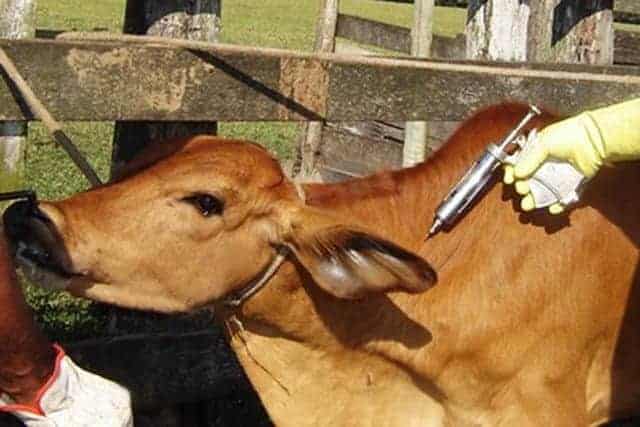
Beginning next week, the government will kick off a national livestock vaccination campaign aimed at protecting 22 million cattle and 50 million goats from deadly diseases, including foot and mouth disease (FMD) and peste des petits ruminants (PPR).
The campaign coincides with the quarantine of four counties due to ongoing FMD outbreaks.
Full quarantine has been imposed in Kakamega, West Pokot, and Trans Nzoia counties, while Nandi is under a provisional quarantine as authorities await confirmation of possible FMD cases.
New reports of potential outbreaks have also emerged in the Meru region, increasing concerns over the spread of the diseases.
The mass vaccination campaign, announced by President William Ruto in November 2024, aims to prevent further damage to Kenya's livestock sector and protect its access to international markets.
In particular, the government fears that failure to control these diseases could lock Kenya out of lucrative markets in the Gulf states, among others.
Livestock Development Principal Secretary Jonathan Mueke confirmed that the Ministry of Agriculture has completed preparations for the campaign, which will begin in Laikipia County next week.
"The government has allocated 1.3 million vaccines for the programme, which aims to create opportunities for expanded local and international markets for Kenyan livestock and related products," Mueke said after meeting with county directors of veterinary services.
International health standards
In addition to FMD and PPR, the vaccination campaign will help ensure that Kenyan livestock meet international health standards.
The government has also sought to reassure farmers and herders who have expressed concerns over the potential harm the vaccines could cause to their animals.
Health authorities have deemed the vaccines produced by the Kenya Veterinary Vaccines Production Institute (KEVEVAPI) safe for use.
However, the campaign has not been without its challenges.
The Kenya Veterinary Association (KVA) has raised concerns over the lack of consultation with stakeholders, including questions about vaccine production, personnel deployment, and whether the public has been adequately involved in the planning process.
Despite these concerns, the Director of Veterinary Services Allan Azegele stressed that the threat posed by FMD cannot be ignored.
"The ongoing dry spell has exacerbated the situation, forcing increased livestock movement in search of pasture. This is a transboundary animal disease that causes significant losses to farmers and interferes with trade both within the country and internationally," he said.
Livestock markets closed
In counties like Nandi, where about 12 livestock markets have closed, the outbreak has already resulted in significant economic losses.
The restrictions have disrupted both local and international trade, with beef and dairy farmers particularly hard-hit.
"When an outbreak is reported, the impact is more severe on dairy farmers as they cannot sell their milk during outbreaks. Beef producers also cannot access markets when a quarantine is enforced," Azegele said.
Kenya's ability to compete in the international livestock market is at risk, with some farmers estimating a potential loss of up to $500 million (Sh64.6 billion) in trade if the disease is not brought under control.
"When we are at the table seeking these agreements, and we want to get our livestock products to these markets, we are told you have FMD. So we have to vaccinate if we want to get into these markets," Azegele noted.
While the vaccination plan has faced resistance from some quarters, particularly veterinary professionals questioning the need for mass vaccination, the government remains firm in its commitment to safeguarding the country's livestock industry.
Source - https://eastleighvoice.co.ke